Bathroom Lighting Ideas: A Complete Guide to Lighting Every Zone Right
Published: 29 Aug 2026
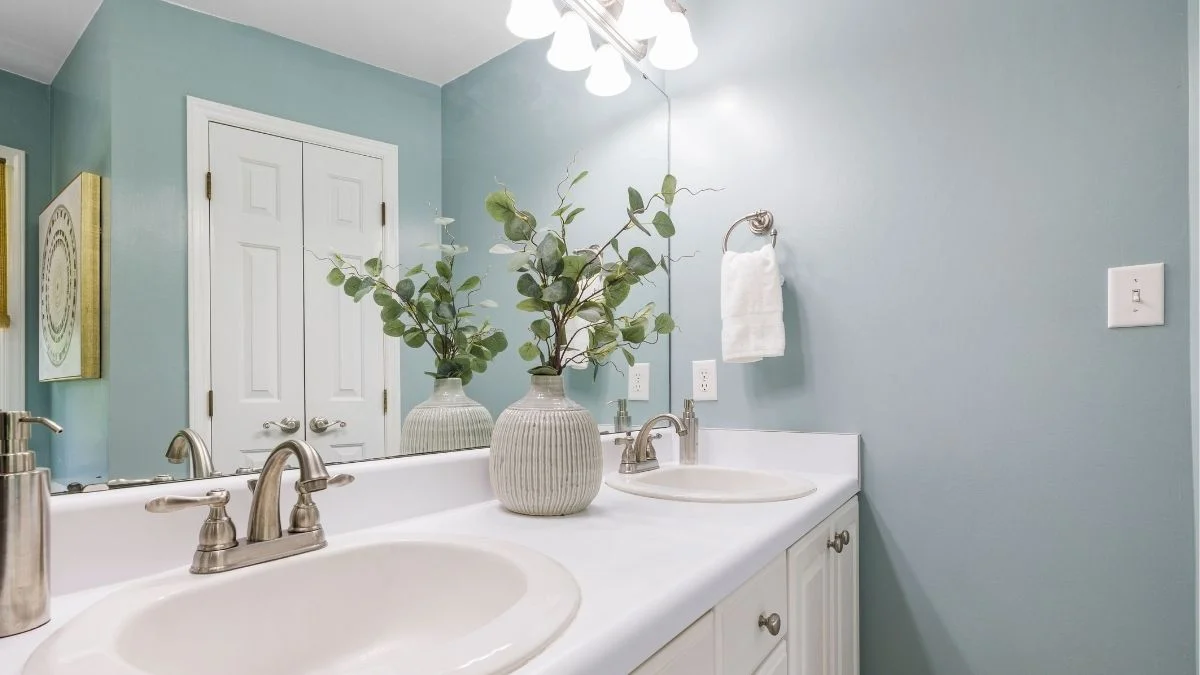
Most people spend more time thinking about their bathroom tiles than their bathroom lighting. That’s a mistake. You could have the prettiest vanity in the neighborhood, but if the light above it is harsh, yellow, or badly placed, you’ll never actually like how you look in that mirror.
Good bathroom lighting ideas aren’t about buying the most expensive fixture in the store. They’re about understanding what each part of the room actually needs and then layering light so the space feels warm, functional, and a little bit spa-like, even on a Monday morning.
This guide walks through everything from safety codes to style choices, so you can plan a lighting setup that actually works.
Table of Contents
Why Bathroom Lighting Matters More Than You Think
A bathroom does double duty. It’s where you shave, apply makeup, or check for that one gray hair you swore wasn’t there last week, tasks that need bright, accurate light. But it’s also where you unwind in a bath at 9 p.m., which calls for something softer. warmer lighting that creates a more relaxing atmosphere.
One overhead bulb can’t do both jobs well. That’s why designers talk about “layered lighting” instead of just “a light fixture.” When the layering is right, the room feels intentional rather than accidental and that alone can make a builder-grade bathroom look custom-designed.
Understanding the Three Layers of Bathroom Lighting
Ambient Lighting
Ambient lighting is your base layer, the general illumination that lets you safely move around the room. This usually comes from a central bathroom ceiling light, a flush mount, or recessed lighting spread evenly across the ceiling.
For most bathrooms, 2-4 recessed lights (or one central fixture plus a couple of supporting cans) is enough to avoid dark corners near the tub or toilet.
Task Lighting
Task lighting is what you need at the mirror for shaving, applying makeup, or checking your part line. This is where most bathrooms fall short, because a single overhead light creates shadows under the eyes and chin.
The fix is simple: light the face, not just the ceiling. Vertical wall sconces on either side of the mirror, or a horizontal LED bar above it, distribute light more evenly across your face than a single downlight ever will.
Accent Lighting
Accent lighting is the finishing touch to the layer that makes a bathroom feel designed rather than just lit. Think a backlit mirror, a toe-kick LED strip under the vanity, or a small statement pendant light over a freestanding tub. None of this is strictly necessary, but it’s what separates a functional bathroom from one that photographs well for Pinterest.
Safety First: IP Ratings and Damp-Rated Fixtures
Bathrooms are wet environments, and not every light fixture is built to handle that. In the U.S., the National Electrical Code (NEC) sets rules about which fixtures can go in which zones of a bathroom for example, fixtures installed within a shower or tub enclosure generally need to be rated for wet locations, while nearby areas may only require a damp rating (NFPA/NEC 410.10).
Internationally, this is expressed through an IP (Ingress Protection) rating the higher the second digit, the better protected the fixture is against water. A fixture directly inside a shower typically needs at least IP65, while one just outside the wet zone can usually get away with a lower rating.
The takeaway: always check a fixture’s rating before installing it near a tub or shower, and when in doubt, have an electrician confirm it meets your local code. This isn’t a place to cut corners.
Choosing the Right Color Temperature and CRI
Light bulbs are measured in Kelvin (K), and this single number changes how your bathroom feels.
- 2700K–3000K (warm white): Cozy and flattering, closer to candlelight. Great for ambient and accent lighting.
- 3500K–4000K (neutral white): A balanced, true-to-life tone. Popular for vanity lighting because it renders skin tones accurately.
- 5000K+ (cool white/daylight): Crisp and energizing, but can look clinical if overused.
For the vanity specifically, most lighting designers recommend staying in the 3000K–4000K range with a high CRI (Color Rendering Index) of 90 or above. CRI measures how accurately a light source shows true colors. A high-CRI bulb near the mirror means your makeup will look the same in the bathroom as it does outside in daylight, which saves you from those “wait, that’s not the color I picked” moments.
Bathroom Lighting Ideas by Style
Modern Bathroom Lighting
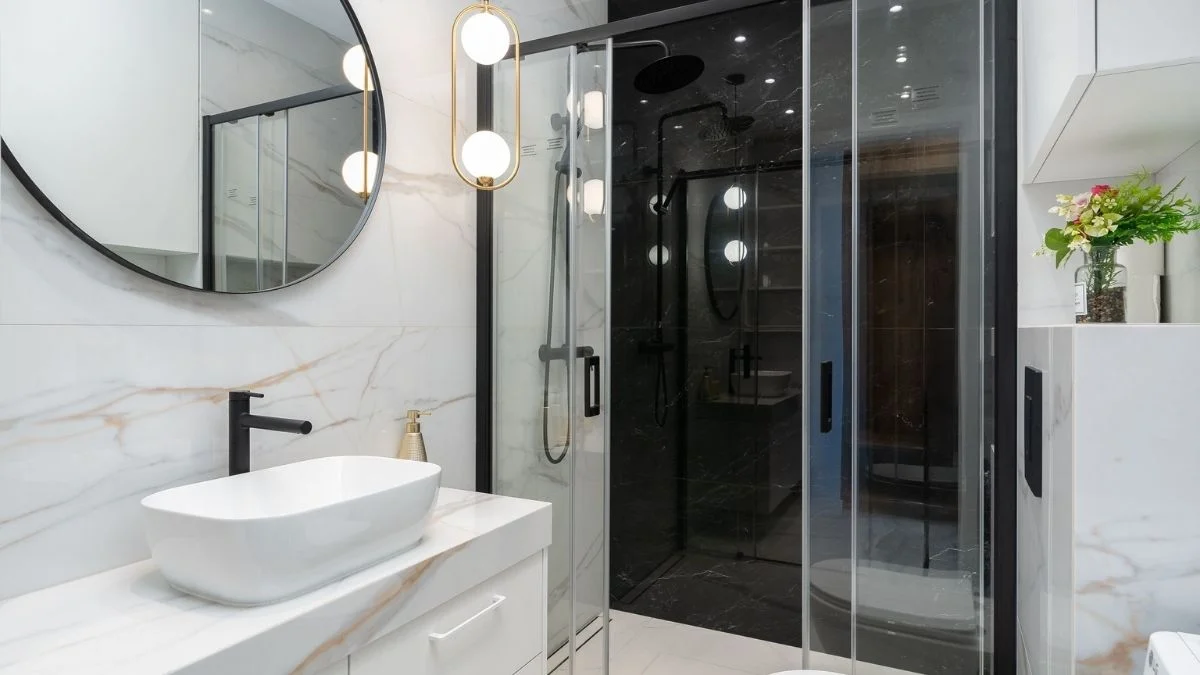
Modern bathroom lighting leans on clean lines and minimal ornamentation, think slim LED bars, matte black sconces, or a single sculptural pendant. Recessed lighting keeps the ceiling uncluttered, while a backlit mirror adds a subtle glow without extra hardware.
Farmhouse Bathroom Lighting
Farmhouse-style bathrooms often use warmer finishes aged brass, matte black, or bronze paired with exposed-bulb sconces or a small chandelier over a soaking tub. The goal is a fixture that looks like it has character, not something purely utilitarian.
Minimalist and Scandinavian
This style favors soft, diffused light over anything decorative. Frosted glass sconces, warm white bulbs, and hidden LED strips keep the room calm and shadow-free without drawing attention to the fixtures themselves.
Bathroom Lighting Ideas by Space
Small Bathroom Lighting Ideas
Small bathrooms actually benefit from more thoughtful lighting, not less, because there’s no room to hide a bad layout. Small bathrooms actually benefit from more thoughtful lighting, not less, because there’s no room to hide a bad layout. These small room lighting hacks can also help you make the space feel brighter and more open without adding bulky fixtures.
A slim LED strip above the mirror, a single flush-mount ceiling light, and a small wall sconce near the door can make a 5×8 bathroom feel noticeably bigger. Skip bulky fixtures because they eat visual space in a room that doesn’t have much to spare.
Large or Master Bathroom Lighting
Bigger bathrooms can handle more layering: a statement pendant light over a freestanding tub, recessed lighting throughout, dedicated vanity lighting, and even a dimmer-controlled accent layer for evening baths. Because the room is larger, you can also mix warmer and cooler tones between zones without it feeling inconsistent.
Vanity and Mirror Lighting Done Right
The vanity is the single most important lighting zone in the bathroom, and it’s also the one people get wrong most often usually by placing a single downlight directly above the mirror.
A few reliable setups:
- Side sconces: Mounted at roughly eye level on either side of the mirror, about 28–36 inches apart. This is the gold standard for even, shadow-free face lighting.
- Horizontal LED bar: Mounted above the mirror, works well when there isn’t wall space on either side.
- Backlit or edge-lit mirrors: Built-in LED lighting around the mirror’s perimeter, popular in modern renovations because they double as both task and accent lighting.
Whichever option you choose, aim for fixtures that flank or surround the face rather than sitting purely overhead.
Shower and Wet Zone Lighting
Shower lighting is often skipped entirely, which is a shame. A single wet-rated recessed light inside the shower makes a huge difference for visibility and safety. Pair it with a damp-rated fixture just outside the enclosure for the surrounding area.
Keep switches and any exposed wiring well away from the wet zone, and again, confirm ratings and placement with a licensed electrician if you’re unsure bathroom electrical work is one area where it genuinely pays to get it checked properly.
Dimmers, Smart Controls, and Energy Efficiency
Adding a dimmer switch is one of the cheapest upgrades you can make to a bathroom. It lets one fixture serve two purposes: bright for tasks, soft for evening baths without installing extra hardware.
On the efficiency side, switching to LED bathroom lighting is worth doing regardless of style. According to the U.S. Department of Energy, LEDs can use significantly less energy and last substantially longer than traditional incandescent bulbs. Over a few years, that can add up in both electricity savings and fewer bulb replacements.
If you want to go a step further, smart bulbs or smart switches let you adjust color temperature and brightness by time of day, which is a nice touch for anyone who showers before sunrise.
Common Bathroom Lighting Mistakes to Avoid
- Relying on one overhead light for the whole room, including the mirror.
- Skipping the IP/damp rating check for fixtures near water.
- Choosing pure white or cool-toned bulbs for the vanity, which can wash out skin tones.
- Mounting sconces too high or too far apart, which recreates the shadow problem of overhead lighting.
- Forgetting a dimmer, especially in bathrooms attached to a bedroom.
Final Thoughts
Bathroom lighting ideas don’t need to be complicated, but they do need to be deliberate. Start with ambient light for general visibility, add proper task lighting at the vanity, and finish with an accent layer if the budget allows. Pay attention to safety ratings near water, pick a color temperature that flatters rather than flattens, and consider LEDs for the long-term savings.
Get those layers right, and even a small, budget-friendly bathroom will feel like it was lit by someone who actually knew what they were doing.
FAQs
1. What is the best color temperature for bathroom lighting?
Most designers recommend 3000K–4000K for vanity lighting, since it renders skin tones accurately without looking too warm or too clinical. Ambient areas can go slightly warmer (2700K–3000K) for a cozier feel.
2. Can I use regular light fixtures in a bathroom?
Only in dry zones away from water. For safer bathroom lighting ideas, fixtures near a tub or shower need a damp or wet rating (IP44 and above, or higher near direct water contact) to comply with electrical safety codes.
3. How many lights does a small bathroom need?
Typically one ambient source (a flush mount or 2 recessed lights) plus one dedicated vanity fixture is enough. More than that can overwhelm a small space.
4. Are LED bulbs good for bathroom lighting?
Yes. LEDs are a great choice for bathroom lighting ideas because they use significantly less energy than incandescent bulbs and last much longer, which matters in a room where fixtures often run daily.
5. Should bathroom lighting be warm or cool?
Neither extreme is ideal. A neutral-to-warm range (3000K–4000K) with a high CRI works best for accurate color and a flattering look at the mirror.
6. What is the ideal placement for vanity lighting?
Side sconces at eye level, roughly 28–36 inches apart, give the most even, shadow-free light on the face better than a single fixture mounted directly above the mirror.
7. Do I need a dimmer switch in the bathroom?
It’s not required, but it’s a low-cost upgrade for bathroom lighting ideas that lets one fixture handle both bright task lighting and softer evening lighting.
8. Is it safe to install lights inside a shower?
Yes, as long as the fixture is rated for wet locations (per NEC/IEC standards) and installed correctly. Always confirm with a licensed electrician for shower or tub-enclosure installations.






- Be Respectful
- Stay Relevant
- Stay Positive
- True Feedback
- Encourage Discussion
- Avoid Spamming
- No Fake News
- Don't Copy-Paste
- No Personal Attacks
- Be Respectful
- Stay Relevant
- Stay Positive
- True Feedback
- Encourage Discussion
- Avoid Spamming
- No Fake News
- Don't Copy-Paste
- No Personal Attacks
