Modern Lamp Decor Ideas for a Home That Actually Feels Lived-In
Published: 6 Jul 2026
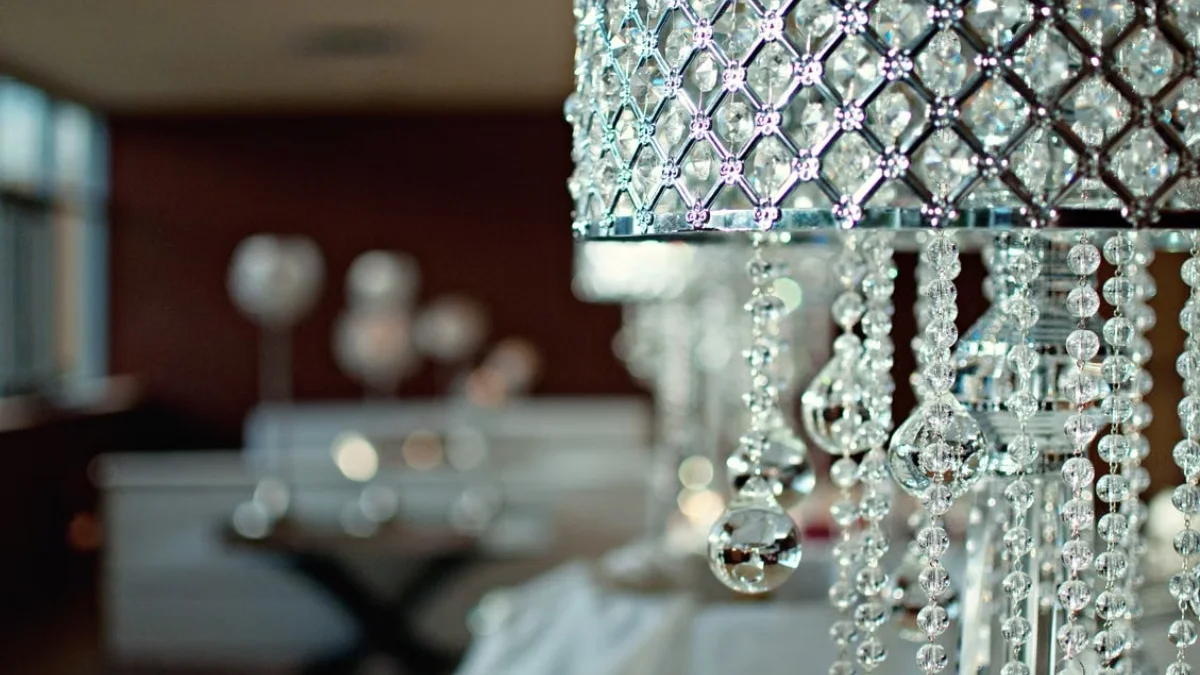
Here’s something most people don’t think about until it’s too late: the room isn’t dull because of the paint color or the furniture. It’s the lighting. You can have the nicest sofa on the block, but if the only light in the room comes from one overhead bulb, the whole space still feels a bit flat. That’s where modern lamp decor ideas come in, and honestly, they solve more problems than people expect.
This isn’t about buying a fancy lamp because it looked good in a catalog. It’s about understanding what each light is doing in the room, and picking pieces that pull their weight both functionally and visually.
Table of Contents
Why One Ceiling Light Isn’t Enough
Most homes were built with a single ceiling fixture per room, and that’s more or less where the lighting plan stopped. The problem is that one light source from directly above creates flat, even shadows everywhere, and it tends to make corners look neglected rather than cozy.
Designers get around this with layered lighting combining light at different heights so the room feels intentional instead of accidental. Think low (table lamps), mid (floor lamps), and high (ceiling or wall fixtures) all working together rather than one bulb doing all the heavy lifting. If you’re working with a compact room, these small room lighting hacks go into more detail on making limited square footage feel brighter and bigger.
There’s a practical side to this too. Swapping old incandescent bulbs for LEDs in your lamps isn’t just a style upgrade, it changes your electricity bill. The U.S. Energy Information Administration notes that traditional incandescent bulbs, which no longer meet current efficiency standards, put out roughly 13 to 18 lumens per watt, while LEDs do far more with the same amount of power. That’s a meaningful jump in efficiency for something as simple as a lamp swap.
Decorative lighting has actually been slower to catch up here than other categories. According to the Department of Energy’s LED Adoption Report, decorative lamps had the lowest LED penetration of any lighting type, but that share still jumped from 7.9% to 16% in just two years and it’s kept climbing since. So if your decorative lamps are still running old bulbs, you’re not alone, but it’s an easy fix.
Know Your Lamp Types Before You Shop
Not every lamp does the same job, so it helps to know what you’re actually looking for before you start browsing:
- Floor lamps: fill empty corners, work well beside seating
- Table lamps: side tables, consoles, nightstands
- Pendant lamps: hang from the ceiling, great over islands or dining tables
- Task lamps: adjustable, focused light for desks and reading
- Arc lamps: dramatic curved floor lamps that reach over a seating area without needing a side table
- Wall sconces: mounted fixtures that free up floor and table space
Once you know the role each type plays, styling gets a lot easier.
Modern Lamp Decor Ideas, Room by Room
Living Room
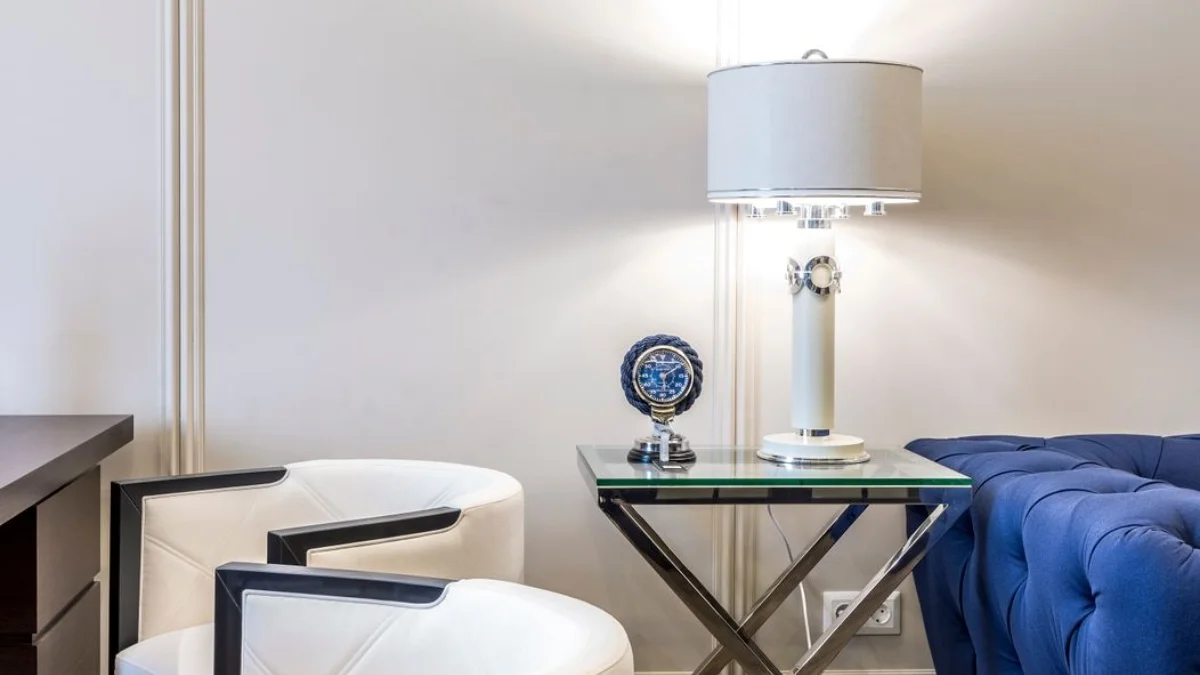
This is usually where lighting layers matter most, since it’s the room people actually spend time in.
An arc floor lamp positioned near the sofa can do the job of a side table lamp without needing extra furniture, which is handy in smaller apartments. If it’s on a dimmer, even better that one switch can turn a bright afternoon reading spot into a relaxed evening hangout.
For something with more personality, a sculptural table lamp with a ceramic or stone base works as decor even when it’s switched off, which is useful if your shelf or console is already busy with other objects. A tall arc or floor lamp also works well for filling an awkward, underused corner these corner decoration ideas for bedrooms cover the same principle in more depth.
One easy thing people miss: match your lampshade’s undertone to your wall color. A warm ivory shade against a cool gray wall can look slightly mismatched, while the same shade against warm white or beige walls blends right in.
Bedroom
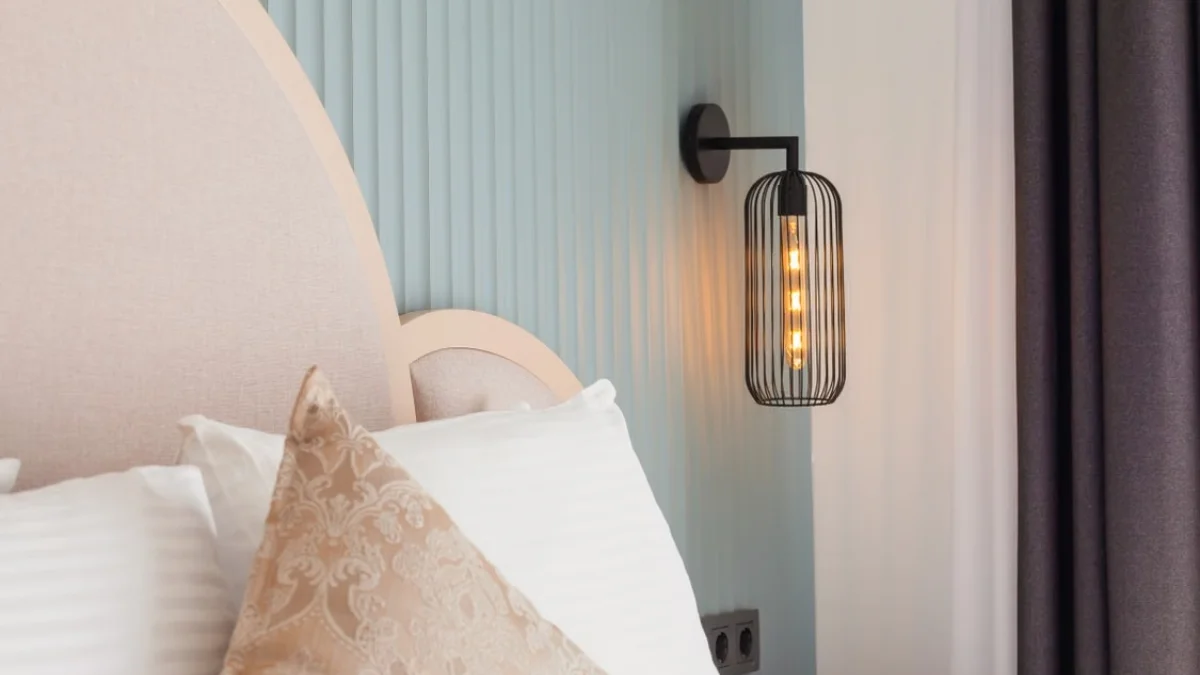
Bedrooms do better with warmer, softer light generally in the 2700K to 3000K range rather than the cooler tones you’d use in a kitchen or office. For a deeper dive into getting that cozy glow right, check out these warm lighting ideas for bedrooms.
Matching nightstand lamps are the safe classic, but a lot of modern bedrooms lean into intentional asymmetry instead: one taller lamp on one side, a shorter or differently shaped one on the other, tied together by a shared finish like brass or matte black. It reads as curated rather than mismatched.
If nightstand space is tight, a wall-mounted swing-arm lamp frees up room for a book or a phone charger.
Kitchen and Dining
Pendant lighting is where kitchens get to have a little fun. A cluster of three small pendants over an island tends to look more current than one large fixture, and it’s more forgiving if the ceiling is on the lower side.
For dining tables, hang the pendant so the bottom sits about 30 to 36 inches above the tabletop close enough to feel intimate, high enough that nobody bumps their head standing up.
Home Office
A proper task lamp isn’t optional if you’re at a desk for hours. Look for an adjustable arm and head so you can point light exactly where you need it, which cuts down on eye strain during long screen sessions.
An architect-style lamp in black or brass can also double as the one design statement in an otherwise purely functional space.
Materials Showing Up in Modern Lamp Design
A few finishes keep coming up in current lamp design, and there’s a reason for it they tend to age well instead of looking dated in a year or two:
- Matte black and brushed brass, for warm-industrial contrast
- Fluted or ribbed glass shades, for softer, textured light
- Natural stone or travertine bases, for something organic and understated
- Woven rattan or linen shades, for warmth in minimalist spaces
- Mixed metals are a lamp that blends two finishes, like black and brass, in one fixture for a look that feels a bit more layered and less matchy-matchy.
Placement Tips That Actually Change How a Room Feels
Even a great lamp looks off in the wrong spot. A few things worth keeping in mind:
- Lampshade height should sit roughly at eye level when seated, so the bulb itself stays hidden
- Aim for at least three light sources in a main living space rather than relying on one
- Skip placing two identical lamps directly across from each other unless symmetry is the actual goal
- Leave a little breathing room between a lamp and the wall behind it, so shadows don’t feel cramped
- Check cord length and outlet placement before falling for a lamp online it’s an easy detail to overlook
A Quick Note on Energy Efficiency
Lighting choices affect more than mood they show up on the electricity bill too. The Department of Energy’s LED Adoption Report estimated that nationwide LED adoption saved U.S. consumers about $14.7 billion in a single year, largely from lower energy use across lighting types.
Choosing ENERGY STAR-certified bulbs for decorative lamps is a small decision, but it pays off quietly over months of regular use.
Budget-Friendly Refreshes for Lamps You Already Own
New lamps aren’t always necessary. If your current ones still work but look a bit tired, try:
- Swapping the lampshade for a different shape or texture
- Spray-painting a dated brass or gold base in matte black
- Replacing a plain shade with linen or bamboo for texture
- Adding a smart bulb so you can adjust warmth and brightness without buying new fixtures
- Grouping two smaller mismatched lamps together instead of spreading them across the room
These small swaps often change the look of a room more than people expect, at a fraction of the cost of new furniture.
Common Mistakes Worth Avoiding
- Relying on one light source for the whole room
- Mixing warm and cool bulbs in the same space, which looks inconsistent
- Oversized lamps sitting on small tables proportion matters more than people think
- Skipping dimmers, which offer far more flexibility than fixed brightness
- Letting cords tangle in plain sight, which undercuts even a well-chosen lamp
Final Thoughts
Good modern lamp decor ideas aren’t about spending the most on the fanciest fixture in the store. They come down to understanding how light behaves in a room and choosing pieces that support both mood and function. A well-placed floor lamp, a warm bedroom light, or a small cluster of kitchen pendants can shift how an entire room feels, often more than a fresh coat of paint would.
Start with one room, get the layering right, and build from there. Lighting is one of the few design choices you can change gradually, without touching a single wall.
Frequently Asked Questions
1. What’s the most popular modern lamp style right now?
Matte black and brushed brass finishes are having a real moment in lamp design right now. You’ll often see them paired with fluted glass or linen shades, and honestly, that combination is one of the easiest ways to nail modern lamp decor ideas without overthinking it.
2. How many lamps should a living room have?
Most designers suggest at least three light sources in a main room, typically a floor lamp, one or two table lamps, and ambient ceiling light if you have it.
3. What color temperature works best for bedroom lamps?
Warmer bulbs in the 2700K–3000K range tend to feel calmer and more relaxing than cooler daylight tones, which is usually what you want in a bedroom.
4. Are LED bulbs worth using in decorative lamps?
Yes they use noticeably less energy and last much longer than incandescent bulbs, making them a practical upgrade even for lamps you only use for ambiance.
5. How high should a pendant hang above a dining table?
A good rule of thumb that comes up a lot in modern lamp decor ideas for dining spaces is to hang the pendant 30 to 36 inches above the tabletop. That height feels intimate without cutting off sightlines across the table.
6. Can mismatched lamps work in the same room?
Yes, as long as they share something in common finish, color, or shade material mismatched lamps can look intentional rather than random.
7. What’s the easiest way to update an old lamp?
Changing the shade or repainting the base is usually the fastest, cheapest way to modernize a lamp without replacing it.
8. Do smart bulbs fit any lamp?
Most fit standard sockets, but it’s worth checking the bulb base size and the lamp’s maximum wattage rating before buying one.



- Be Respectful
- Stay Relevant
- Stay Positive
- True Feedback
- Encourage Discussion
- Avoid Spamming
- No Fake News
- Don't Copy-Paste
- No Personal Attacks
- Be Respectful
- Stay Relevant
- Stay Positive
- True Feedback
- Encourage Discussion
- Avoid Spamming
- No Fake News
- Don't Copy-Paste
- No Personal Attacks
