How to Propagate Indoor Plants in Water: A Complete Beginner’s Guide
Published: 15 Sep 2026
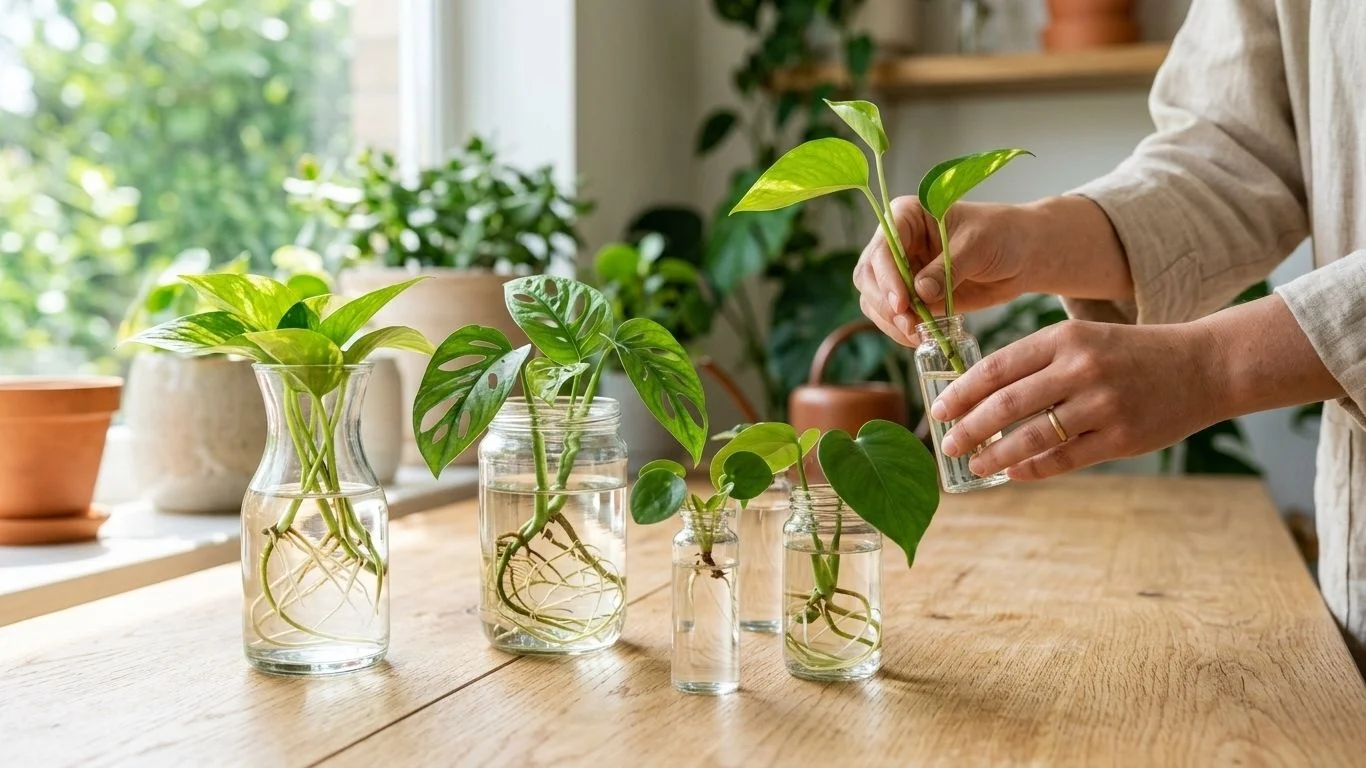
If you’ve ever snipped a leaf off your pothos “just to see what happens” and then watched roots actually sprout in a glass of water, you already know the magic of water propagation. It’s one of the easiest, cheapest, and most satisfying ways to multiply your houseplant collection with no soil, no fuss, and no green thumb required.
Whether you want to fill your shelves with more greenery, share cuttings with friends, or simply rescue a leggy plant, learning how to propagate indoor plants in water is a skill every plant parent should have. In this guide, we’ll walk through exactly which plants root well in water, the step-by-step process, common mistakes, and how to transition your rooted cuttings into soil successfully.
Table of Contents
Why Propagate Indoor Plants in Water?
Water propagation isn’t just trendy, it’s genuinely practical. Here’s why so many plant lovers prefer it over soil propagation:
- You can watch root growth happen. There’s something oddly satisfying about seeing white roots emerge day by day.
- It requires almost no equipment. A clean glass jar and tap water are often enough.
- It’s low-risk. Unlike soil cuttings, which can rot silently underground, water cuttings let you catch problems (like mushy stems) early.
- It’s beginner-friendly. New plant parents find it far less intimidating than juggling soil moisture levels.
According to the University of Wisconsin-Madison Division of Extension, many common houseplants particularly those in the Araceae family, such as pothos and philodendron root readily in water because their stem nodes contain latent root initials that activate quickly when exposed to moisture.
If you’re propagating to fill up bare corners, this is also a budget-friendly way of styling shelves with greenery without buying new plants.
Which Indoor Plants Root Best in Water?
Not every houseplant is suited for this method. Some plants, like succulents or cacti, tend to rot rather than root when left sitting in water for too long. But plenty of common houseplants take to it beautifully.
Easiest Plants to Propagate in Water
- Pothos (Epipremnum aureum)
- Philodendron (heartleaf and other trailing varieties)
- Monstera deliciosa
- Spider plant (Chlorophytum comosum)
- Chinese evergreen (Aglaonema)
- English ivy (Hedera helix)
- Coleus
- Tradescantia (Wandering Jew)
Plants That Struggle in Water
Succulents, cacti, and plants with thick, fleshy stems generally do better with soil or dry-callus propagation methods, since prolonged water exposure encourages rot rather than rooting. Many of these are also plants that handle low humidity well, so they thrive with less frequent watering overall.
If you’re just starting your indoor plant propagation journey, pothos is genuinely the best place to begin. It’s nearly impossible to kill, forgiving of neglect, and roots within one to two weeks in most conditions.
What You’ll Need
Before diving into the propagation process, gather these simple supplies:
- A clean, sharp pair of scissors or pruning shears
- A glass jar, mason jar, or clear container (clear glass lets you monitor root growth)
- Room-temperature water (filtered or tap water left out overnight to dechlorinate)
- A bright spot with indirect sunlight
- Optional: rooting hormone powder for slower-rooting species
You don’t need anything fancy here; recycled glass jars work just as well as decorative propagation stations.
Step-by-Step: How to Propagate Indoor Plants in Water
Step 1: Choose a Healthy Parent Plant
Pick a mature, disease-free plant with active new growth. Weak or stressed plants often produce cuttings that struggle to root.
Step 2: Take the Right Cutting
Using clean, sharp scissors, cut a 4–6 inch stem section just below a node (the small bump where leaves attach is where new roots will form). Make sure your cutting includes at least one or two nodes and a few healthy leaves.
A clean, angled cut reduces stress on the plant and increases the surface area for root development.
Step 3: Remove Lower Leaves
Strip away any leaves that would sit below the waterline. Submerged leaves tend to rot, which can cloud the water and encourage bacterial growth.
Step 4: Place the Cutting in Water
Submerge the node(s) in water while keeping the remaining leaves above the surface. Positioning your jar somewhere with bright, indirect light direct sun can overheat the water and stress the cutting.
Step 5: Change the Water Regularly
Refresh the water every 5–7 days to keep it oxygenated and free from bacteria. Cloudy or smelly water is a sign it needs changing sooner.
Step 6: Be Patient and Watch for Roots
Depending on the plant species, roots typically appear within 1–3 weeks. Fast growers like pothos and Tradescantia may show roots in as little as 7–10 days, while others, like Monstera, can take a few weeks longer.
Step 7: Transplant Once Roots Are Established
Once roots are about 1–2 inches long, your cutting is ready for soil. Waiting too long in water can make the transition to soil harder, since water roots and soil roots function differently.
How to Transition Water-Rooted Cuttings to Soil
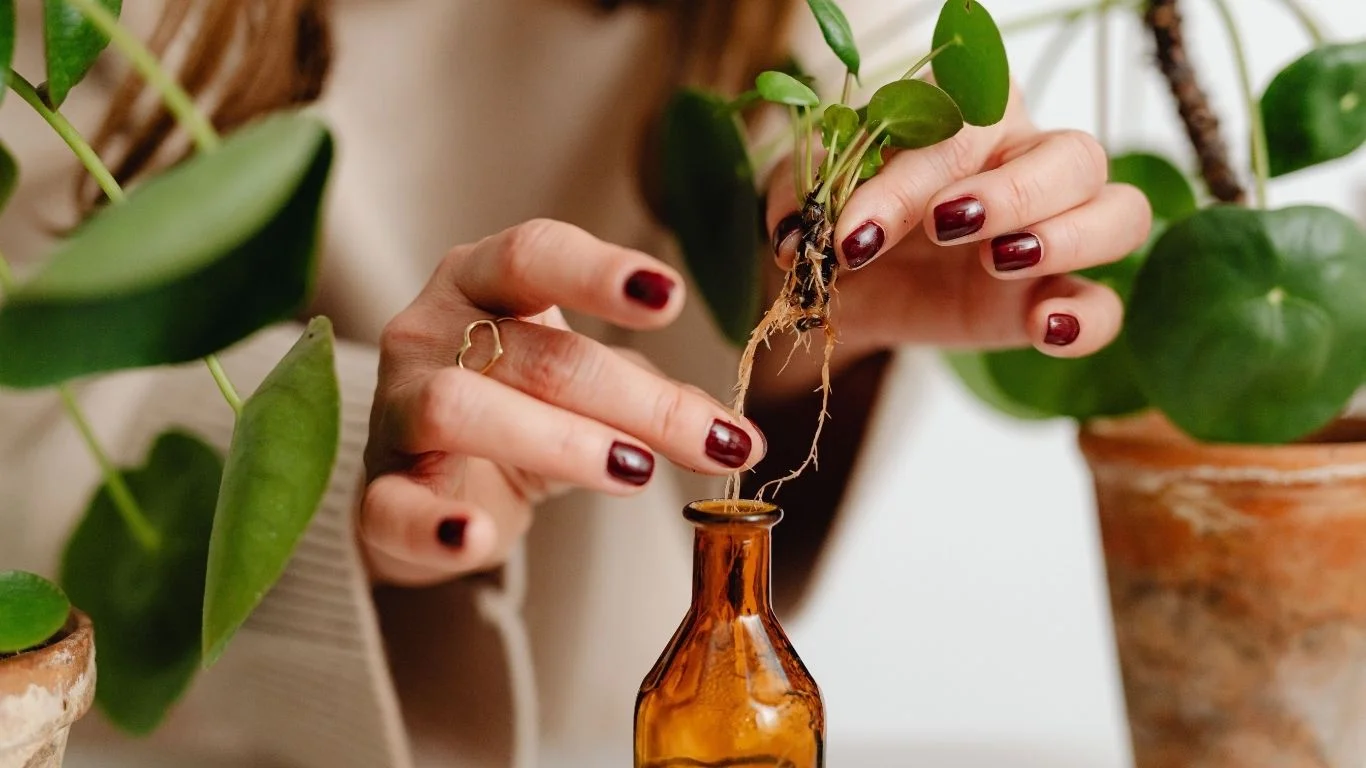
This step trips up a lot of beginners, so let’s slow down here.
- Start with choosing the right pot and a well-draining potting mix suited to the plant type.
- Make a small hole in the soil and gently place the roots in, without bending or crushing them.
- Water thoroughly right after planting to help the soil settle around the roots.
- Keep humidity slightly elevated for the first week or two a loose plastic bag or humidity dome can help ease the shock.
- Avoid direct sunlight for the first several days while the plant adjusts.
Some gardeners choose to keep certain plants like pothos growing permanently in water instead of transferring them to soil at all. Both approaches are valid; it simply depends on your aesthetic and maintenance preference. If you do move it to soil, check out best plants for your living room for pairing ideas.
Common Mistakes to Avoid
Even a low-effort method like water propagation has a few pitfalls worth knowing:
- Using dirty or stagnant water. Bacteria buildup is the number one cause of rot in cuttings.
- Skipping node placement. Roots only grow from nodes, not random points on the stem.
- Leaving leaves submerged. This speeds up decay and contaminates the water.
- Overexposing cuttings to direct sun. This can heat the water and scorch tender leaves.
- Waiting too long to transplant. Overly long, tangled water roots often struggle to adapt to soil.
- Using metal containers. Some metals can react with water and harm root development; stick to glass or plastic.
How Long Does Water Propagation Take?
Timelines vary by plant species, water temperature, and light conditions, but here’s a general idea:
| Plant | Approximate Rooting Time |
| Pothos | 7–14 days |
| Philodendron | 10–21 days |
| Spider plant | 7–14 days |
| Monstera | 3–6 weeks |
| Chinese evergreen | 2–4 weeks |
These are general estimates, and individual results can vary depending on your home’s temperature and light levels.
Tips for Faster, Healthier Root Growth
- Keep the water at room temperature cold water slows root activity.
- Use bright, indirect light rather than deep shade.
- Avoid disturbing the cutting too often; frequent handling can damage delicate new roots.
- Add a pinch of rooting hormone if you’re propagating a slower-rooting species.
- Label your jars if you’re propagating multiple plant varieties at once, so you don’t mix up care routines.
For more detailed, science-backed guidance on propagation timing and plant-specific care, North Carolina State University’s Extension Gardener plant toolbox is a reliable resource to bookmark.
Final Thoughts
Learning how to propagate indoor plants in water is one of the most rewarding entry points into home gardening. It costs next to nothing, teaches you the basics of plant biology, and gives you an endless supply of new greenery to decorate your home or gift to friends. Start with an easy plant like pothos or philodendron, be consistent with water changes, and you’ll have a thriving new plant baby before you know it.
Once your cuttings are rooted and repotted, check out our guide on styling your plants at home for ideas on where to place your new greenery.
FAQs
1. Can all indoor plants be propagated in water?
No. Plants with soft stems and nodes like pothos, philodendron, and spider plants root easily in water. Succulents and cacti generally do better with soil propagation, since they’re prone to rot in standing water.
2. How often should I change the water for propagating cuttings?
Change the water every 5–7 days, or sooner if it looks cloudy or has an odor. Fresh, oxygenated water helps prevent bacterial growth and rot.
3. Do I need rooting hormone to propagate in water?
Not always. Many houseplants root readily without it. Rooting hormone can help speed up the process for slower-rooting species, but it’s optional for beginners.
4. Why are my cuttings rotting instead of rooting?
Rot is usually caused by submerged leaves, dirty water, or leaving the cutting in low light for too long. Removing lower leaves and changing the water regularly helps prevent this.
5. How do I know when a cutting is ready to move to soil?
Wait until roots are at least 1–2 inches long before transplanting. Moving cuttings too early can shock the plant, since the roots aren’t developed enough to support it in soil.
6. Can I leave my propagated plant in water permanently?
Yes, for many species like pothos and philodendron, you can. Just make sure to change the water regularly and occasionally add a diluted liquid fertilizer, since water alone lacks the nutrients soil provides.
7. What’s the best light condition for water propagation?
Bright, indirect light works best. Direct sunlight can overheat the water and stress the cutting, while too little light slows root development.
8. How long does it take for roots to appear in water propagation?
It depends on the plant. Fast rooters like pothos may show roots in 7–10 days, while others like Monstera can take three to six weeks.




- Be Respectful
- Stay Relevant
- Stay Positive
- True Feedback
- Encourage Discussion
- Avoid Spamming
- No Fake News
- Don't Copy-Paste
- No Personal Attacks
- Be Respectful
- Stay Relevant
- Stay Positive
- True Feedback
- Encourage Discussion
- Avoid Spamming
- No Fake News
- Don't Copy-Paste
- No Personal Attacks
