Best Indoor Plants for Home Office: A Practical Guide for a Greener Workspace
Published: 18 Sep 2026
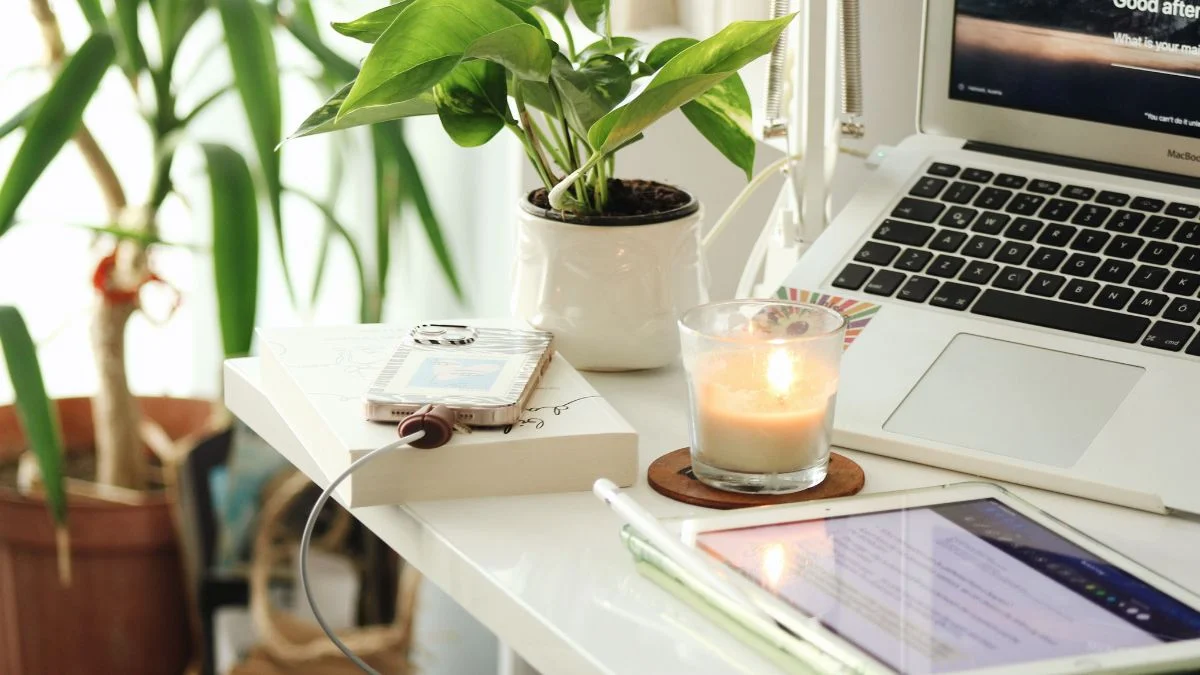
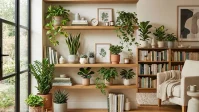
If your home office feels more “gray cubicle” than “productive sanctuary,” the fix might be simpler than a full redesign. Adding the best indoor plants for home office spaces is one of the easiest, cheapest upgrades you can make with no contractor, no Pinterest-worthy budget, just a pot and a bit of soil. If you’re also working on styling your living spaces, a few well-placed plants tie the whole home together.
Beyond looking good on a video call background, houseplants can make your workspace feel calmer and more alive. This guide walks through why plants belong in your office, how to pick the right ones for your light and lifestyle, and which varieties consistently perform well for people working from home.
Table of Contents
Why Add Indoor Plants to Your Home Office?
Plants aren’t just decoration, there’s real science behind why they belong on your desk.
Better air quality. The widely cited NASA Clean Air Study (1989) found that certain common houseplants could remove volatile organic compounds like benzene and formaldehyde from sealed test chambers. It’s worth noting the study was conducted in controlled lab conditions, and real offices don’t work quite the same way but it remains one of the most referenced pieces of research behind the “plants clean the air” idea, and it’s a big part of why office greenery became so popular in the first place.
Lower stress, better focus. A study from the University of Exeter found that employees who worked in “green” offices with plants reported higher wellbeing and were more productive than those in lean, plant-free spaces. You don’t need a jungle, even one or two plants seem to make a measurable difference.
A more inviting space. Working from home can feel isolating. A living plant on your desk adds texture, color, and a small sense of routine (water me on Sundays) that a stack of files never will.
None of this means you need a green thumb. Most of the plants on this list are forgiving, even if you forget them for a week or two.
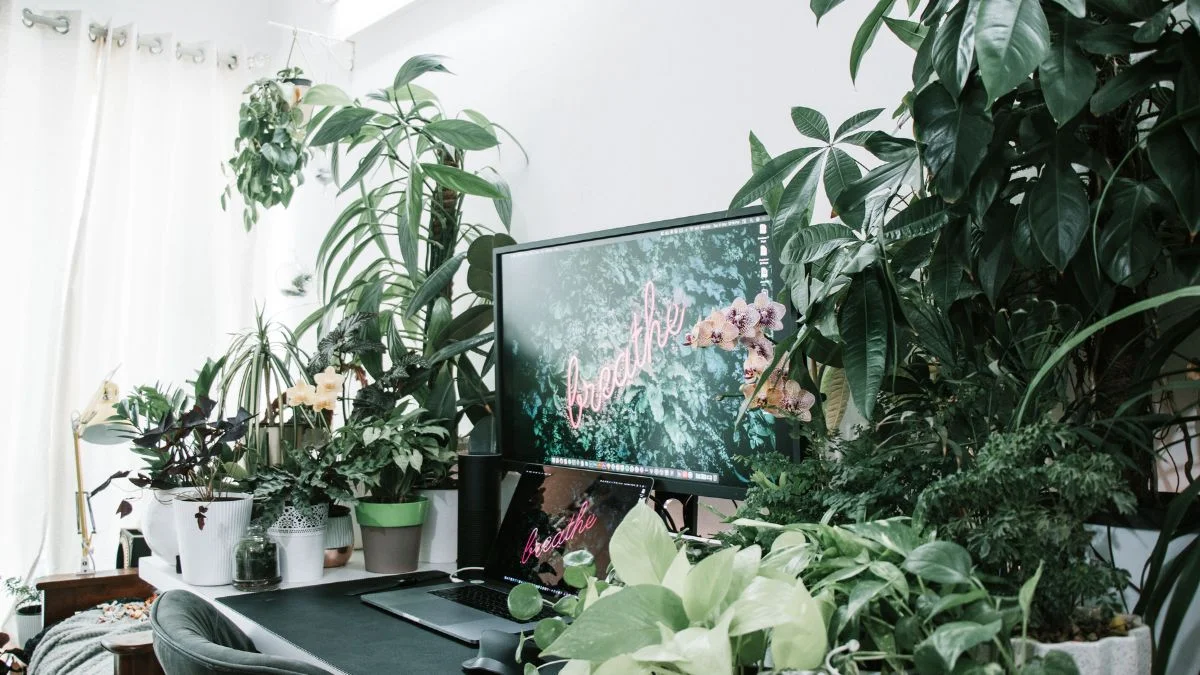
What to Consider Before Choosing Office Plants
Before you buy the first pretty pot you see, think through these basics.
Light Availability
Home offices are notorious for awkward lighting, a north-facing window, a windowless nook under the stairs, or a desk lamp doing most of the work. Check how much natural light your workspace actually gets before choosing a plant, since this matters more than almost anything else for keeping it alive.
Maintenance Level
If you’re already juggling deadlines, you don’t need a plant that demands daily attention. low maintenance indoor plants that tolerate irregular watering are usually the safer bet for a busy home office.
Desk Space and Size
A sprawling fiddle leaf fig looks stunning in a living room, but it’s impractical squeezed next to a monitor and a coffee mug. Compact varieties or hanging options work better for smaller desks.
Pets and Allergies
If cats or dogs share your workspace, check toxicity before bringing a new plant home. The ASPCA’s plant database is a reliable, free resource for confirming whether a species is pet-safe.
Best Indoor Plants for Home Office Spaces
Here’s a practical shortlist of office plants that consistently do well indoors, even in less-than-ideal light.
1. Snake Plant (Sansevieria)
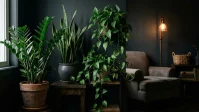
The snake plant is close to indestructible. It tolerates low light, irregular watering, and dry indoor air making it one of the best low light houseplants for offices without much natural sunlight. It’s also a great pick if you’re furnishing other dark corners around your home.
2. Pothos
Pothos is a trailing vine that thrives in a range of light conditions and is famously hard to kill. Set it on a shelf or in a hanging planter and let it cascade down; it adds movement to an otherwise static desk setup without asking much in return.
3. ZZ Plant (Zamioculcas zamiifolia)
If your home office gets minimal natural light, the ZZ plant is one of the most reliable desk plants no sunlight can defeat. Its glossy, dark green leaves store water efficiently, so it handles being forgotten far better than most houseplants.
4. Spider Plant
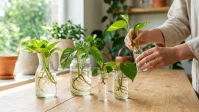
Spider plants are easy-care indoor plants that adapt well to average room light and don’t mind a missed watering. They also produce small “pup” plantlets. You can propagate a nice, low-effort way to expand your office greenery over time. Learn more about propagating houseplants in water if you want to grow your collection for free.
5. Peace Lily
The peace lily prefers slightly brighter, indirect light and rewards you with elegant white blooms. It’s also one of the more expressive plants on this list; it visibly droops when thirsty, which makes overwatering or underwatering easy to catch before real damage happens. Note that it is toxic to pets if ingested.
6. Philodendron (Heartleaf variety)
Compact, trailing, and tolerant of medium to low light, the heartleaf philodendron is a solid choice for shelves or bookcases near your desk. It’s forgiving of inconsistent watering, which suits anyone whose schedule shifts week to week.
7. Aloe Vera
For desks that do get a few hours of direct or bright indirect sunlight, aloe vera is a practical option. It needs infrequent watering and, as a bonus, its gel has long been used for minor skin irritations handy if you nick yourself on a stray staple.
8. Succulents (Echeveria, Jade Plant)
Succulents suit sunnier home offices and a desk near a bright window is ideal. They store water in their leaves, so watering every couple of weeks is usually plenty. Their compact size also makes them easy to line up along a windowsill without crowding your workspace.
Placement and Care Tips for Home Office Plants
Choosing the right plant is only half the job. A few habits will help it actually thrive on your desk.
- Match the plant to the light you have, not the light you wish you had. Moving a sun-loving plant to a dim corner “to see how it does” rarely ends well.
- Avoid direct airflow from air conditioning vents or heaters. If your office runs AC most of the day, check out our guide on plants suited for air-conditioned rooms.
- Use a saucer or drip tray under pots to protect desks and laptops from water damage.
- Rotate the pot every week or two so all sides get even light exposure and the plant grows evenly.
- Check the soil, not the calendar. Sticking a finger an inch into the soil tells you more about when to water than a fixed weekly schedule does.
Common Mistakes to Avoid
Even well-intentioned plant owners run into a few recurring problems.
Overwatering. This is the single most common way indoor plants die. When in doubt, wait a day and check again rather than watering on impulse.
Ignoring drainage. A pot without drainage holes traps excess water around the roots, which can lead to root rot over time. If you love a decorative pot without holes, use it as an outer sleeve and keep the plant in its original nursery pot inside.
Choosing based on looks alone. A plant that photographs beautifully but needs bright, direct sun will struggle on a shaded desk, no matter how well you care for it otherwise.
Skipping the acclimation period. Plants moved from a garden center to a dim office can take a few weeks to adjust. Some leaf drop during this transition is normal and not necessarily a sign you’re doing something wrong.
Final Thoughts
You don’t need a home office covered in greenery to feel the benefits. Even one or two of the best indoor plants for home office spaces chosen to match your actual light and your actual schedule can make the space feel more comfortable and a little more alive. Start with something forgiving like a snake plant or pothos, get a feel for how much attention it needs, and expand from there.
FAQs
1. What are the best indoor plants for a home office with no windows?
Snake plants and ZZ plants are among the most tolerant of low or artificial light and are good starting points for windowless offices.
2. Do office plants actually improve air quality?
Some research, including the NASA Clean Air Study, suggests certain plants can remove specific air pollutants in controlled lab settings. Real-world offices have more airflow and fewer plants than those test chambers, so the effect indoors is likely smaller, but plants still contribute to a fresher-feeling space.
3. How often should I water my desk plants?
It depends on the species, but checking the soil moisture with a finger before watering is more reliable than following a fixed schedule.
4. Which indoor plants are safe for offices with pets?
Spider plants, most succulents like echeveria, and areca palms are generally considered pet-safe. Always double-check a specific plant against a resource like the ASPCA’s plant database before buying.
5. Can indoor plants really help with focus and productivity?
Studies, including research from the University of Exeter, have linked office plants to improved employee wellbeing and productivity, though results can vary by individual and workspace.
6. What’s the easiest low-maintenance plant for beginners?
Pothos and ZZ plants are widely considered beginner-friendly because they tolerate inconsistent watering and a range of light conditions.
7. How many plants should I add to a small home office desk?
One or two well-chosen plants are usually enough for a small desk. Overcrowding a compact space can make it harder to care for each plant properly.
8. Do office plants need special fertilizer?
Most common houseplants only need light feeding during their growing season (spring and summer) with a balanced, diluted liquid fertilizer heavy fertilizing isn’t necessary for a desk plant.

- Be Respectful
- Stay Relevant
- Stay Positive
- True Feedback
- Encourage Discussion
- Avoid Spamming
- No Fake News
- Don't Copy-Paste
- No Personal Attacks
- Be Respectful
- Stay Relevant
- Stay Positive
- True Feedback
- Encourage Discussion
- Avoid Spamming
- No Fake News
- Don't Copy-Paste
- No Personal Attacks
