8 Best Indoor Plants for Dark Corners That Thrive in Low Light
Published: 10 Sep 2026
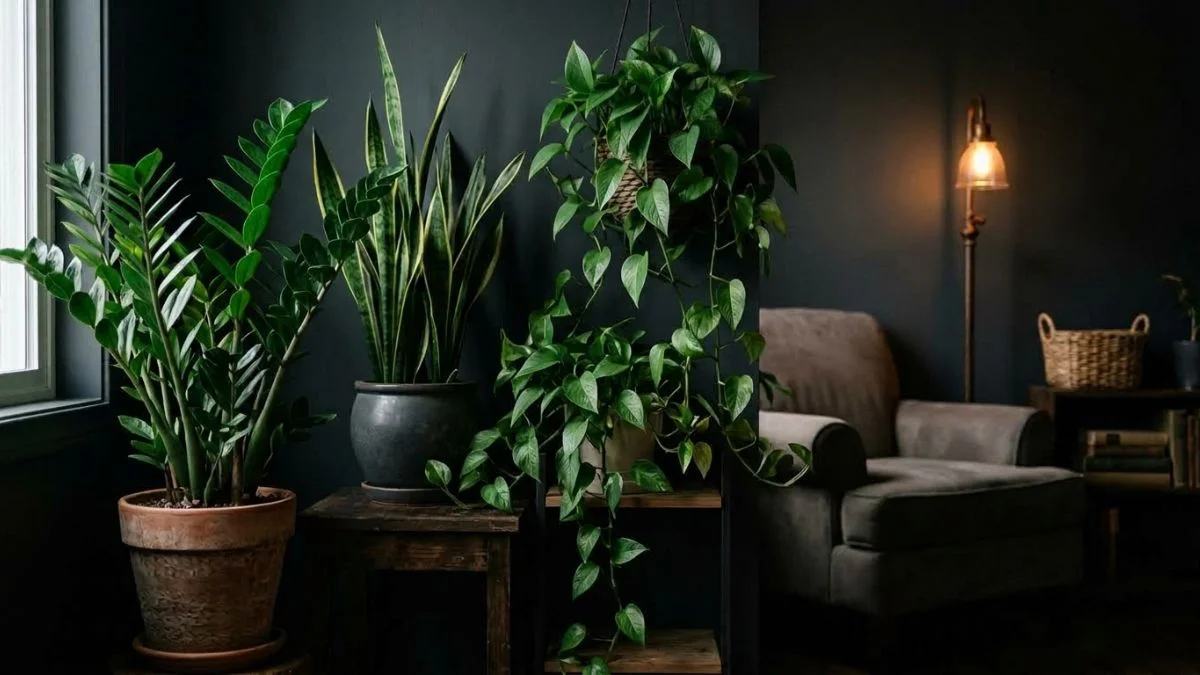
Every home has that one corner. You know the one tucked behind the sofa, facing north, or squeezed between two walls where sunlight seems to be strictly rationed. Most plants take one look at a spot like that and quietly give up. But here’s the good news: some indoor plants for dark corners genuinely thrive in low light, and a few even prefer it.
This isn’t about “plants that survive in the dark” (no plant does that, they all need some light to photosynthesize). It’s about species that have evolved, often as forest-floor natives, to make the most of dim, filtered conditions. Give them a little indirect light, and they’ll reward you with green, leafy corners instead of empty, awkward ones.
In this guide, we’ll walk through the best low light indoor plants for shady rooms, how much light “low light” actually means, and the care habits that make the difference between a plant that limps along and one that flourishes.
Table of Contents
What Does “Low Light” Actually Mean for Plants?
Before picking plants, it helps to understand what you’re working with. According to the University of Missouri Extension, “low light” generally refers to a spot that receives no direct sun but still has enough ambient brightness to read a book comfortably during the day think a few feet from a north-facing window, or a room lit mostly by reflected light from other surfaces.
It’s a common myth that low-light plants need no light at all. Every plant needs some light to carry out photosynthesis; the difference is that shade-tolerant species have adapted to do this efficiently with far less of it, often because they evolved under a forest canopy. A completely windowless interior room like an internal bathroom or a hallway with no natural light source usually isn’t suitable for any live plant without supplemental grow lighting.
If your “dark corner” gets even a sliver of indirect daylight, you have more options than you might think.
Best Indoor Plants for Dark Corners
1. Snake Plant (Dracaena trifasciata)
The snake plant is practically the mascot of low light indoor plants. Its upright, sword-like leaves tolerate dim corners, irregular watering, and general neglect better than almost any other houseplant. It’s a favourite for offices and dark hallways precisely because it doesn’t ask for much.
Care tips:
- Water only when the soil is completely dry overwatering is the main way people kill this plant
- Tolerates low light but grows faster with bright, indirect light
- Prefers well-draining, sandy soil
2. ZZ Plant (Zamioculcas zamiifolia)
With its glossy, dark green leaves, the ZZ plant looks almost artificial but it’s very much alive, and very forgiving. Native to drought-prone regions of East Africa, it stores water in its thick rhizomes, which is why it copes so well with both low light and irregular care much like other plants that hold up well in low-humidity rooms.
Care tips:
- Let soil dry out fully between waterings
- Avoid direct sun, which can scorch the leaves
- Wipe leaves occasionally to keep them dust-free and photosynthesising efficiently
3. Pothos (Epipremnum aureum)
Pothos is one of the most forgiving trailing plants for shade-tolerant houseplant collections. It grows well in hanging baskets, on shelves, or trained along a wall, making it a flexible choice for awkward, dim corners.
Care tips:
- Water when the top inch of soil feels dry
- Variegated varieties (like golden or marble queen pothos) may lose some leaf patterning in very low light, reverting to solid green
- Trim regularly to keep growth full rather than leggy
4. Peace Lily (Spathiphyllum)
The peace lily is one of the few low-light plants that flowers indoors, producing elegant white blooms even in dim rooms. It’s also known for signalling its thirst clearly; the leaves droop noticeably when it needs water, which takes the guesswork out of care.
Care tips:
- Keep soil lightly moist but not soggy
- Avoid direct sunlight, which can scorch the leaves
- Note: peace lilies are toxic to pets if ingested, according to the ASPCA (ASPCA Toxic Plants list)
5. Cast Iron Plant (Aspidistra elatior)
True to its name, the cast iron plant is remarkably tough. Victorian-era households favoured it precisely because it tolerated the dim, gas-lit, poorly ventilated parlours of the time, a good sign of how well it copes with modern dark corners too.
Care tips:
- Extremely slow-growing, so patience is required
- Water moderately; allow soil to dry between waterings
- Avoid direct sun, which can bleach its deep green leaves
6. Chinese Evergreen (Aglaonema)
Chinese evergreens come in a range of leaf patterns, from deep green to silver-splashed varieties, and adapt well to low-light rooms. They’re commonly used in offices and interior plantscaping because they handle fluorescent or artificial light reasonably well too making them a solid pick among plants suited for cooler, air-conditioned spaces.
Care tips:
- Keep soil evenly moist, not waterlogged
- Prefers warm, humid conditions a bathroom with a small window can work well
- Darker-leaved varieties tolerate lower light better than variegated ones
7. Spider Plant (Chlorophytum comosum)
Spider plants are a classic no-sunlight-friendly choice, known for their arching, striped leaves and easy propagation through baby “spiderettes.” They’re also listed by NASA’s Clean Air Study as one of several houseplants studied for their ability to filter certain indoor air pollutants under lab conditions (NASA Clean Air Study) worth noting, though real-world air-purifying impact in an average room is far more limited than lab results suggest.
Care tips:
- Water moderately; let soil dry slightly between waterings
- Tolerates low light but variegation is more vivid with brighter, indirect light
- Great for hanging planters in dim corners
8. Parlor Palm (Chamaedorea elegans)
The parlor palm brings a soft, tropical look to shaded spaces without demanding much sunlight. It was another Victorian favourite for exactly this reason, and it remains popular for offices and dim living rooms today.
Care tips:
- Keep soil lightly moist; avoid letting it sit in water
- Prefers humidity, so occasional misting helps
- Slow-growing, so it won’t quickly outgrow a small corner
How to Help Any Plant Succeed in a Dark Corner
Picking the right species is half the job. A few care adjustments make a real difference too:
- Rotate the pot every couple of weeks so growth doesn’t lean entirely toward whatever faint light source exists.
- Wipe the leaves regularly. Dust blocks light absorption, and in a dim room, every bit of light matters.
- Water less than you think. Plants in low light use less water since they’re growing more slowly. Overwatering is the single biggest killer of “shade-tolerant” plants.
- Consider a grow light if the corner gets truly minimal light. A small LED grow light can supplement natural light without looking out of place.
- Check humidity. Many low-light species (like Chinese evergreen and parlor palm) also prefer higher humidity, so a small humidifier or pebble tray can help them settle in.
Common Mistakes to Avoid
- Assuming “low light” means “no light.” Even shade-tolerant plants need some ambient brightness to survive long-term.
- Overwatering out of guilt. Slower growth doesn’t mean the plant is unhappy, it usually just needs less water than a sun-loving plant would.
- Ignoring the pot’s drainage. Dark corners often mean less airflow, so soil stays wet longer. A pot with drainage holes is essential.
- Skipping the occasional light check. If new leaves come in noticeably smaller or paler over several months, the corner may be too dark even for a low-light species, and it’s worth relocating the plant.
Conclusion
Dark corners don’t have to stay empty or lifeless. With the right low light indoor plants snake plant, ZZ plant, pothos, peace lily, and a handful of other shade-tolerant houseplants even the dimmest part of your home can hold some greenery. The key is matching the plant to the actual light level, watering less than you would in bright spots, and giving leaves an occasional wipe so they can make the most of what light is available.
Start with one or two of the hardier options above, see how they settle in, and expand from there. A dark corner is really just an under-decorated one waiting for the right plant.
FAQs
1. Can any plant survive with zero natural light?
No. Every plant needs some light for photosynthesis. What’s sold as a “low light plant” simply tolerates dim, indirect light better than most a completely windowless room typically needs a grow light to support live plants.
2. What is the easiest indoor plant for a dark corner?
The snake plant and ZZ plant are usually considered the easiest, since both tolerate low light, irregular watering, and general neglect better than most houseplants.
3. How often should I water plants in low light?
Less than you’d expect. Plants in dim corners grow more slowly and use less water, so watering only when the soil is fully dry (for most of the species above) helps prevent root rot.
4. Do low-light plants need fertilizer?
Occasionally, but sparingly. Since growth is slower in low light, these plants need less feeding, a diluted, balanced fertilizer once every 1–2 months during the growing season is usually enough.
5. Can I use artificial light instead of natural light?
Yes. A basic LED grow light can supplement or replace natural light in very dim rooms, and many of the plants listed here adapt well to it.
6. Are low-light houseplants safe for pets?
Not all of them. Peace lilies, for example, are toxic to cats and dogs if ingested. Always check a plant’s pet safety before placing it somewhere accessible to animals.
7. Why are my low-light plant’s leaves turning yellow?
This is most often overwatering, not lack of light. Check that the soil is drying out between waterings and that the pot has proper drainage.
8. Which low-light plant grows the fastest?
Pothos and spider plants tend to grow fastest among shade-tolerant options, especially with some indirect light, regular watering, and occasional feeding.

- Be Respectful
- Stay Relevant
- Stay Positive
- True Feedback
- Encourage Discussion
- Avoid Spamming
- No Fake News
- Don't Copy-Paste
- No Personal Attacks
- Be Respectful
- Stay Relevant
- Stay Positive
- True Feedback
- Encourage Discussion
- Avoid Spamming
- No Fake News
- Don't Copy-Paste
- No Personal Attacks
