Living Room Lighting Ideas: A Practical Guide to a Warmer, Brighter Space
Published: 24 Aug 2026
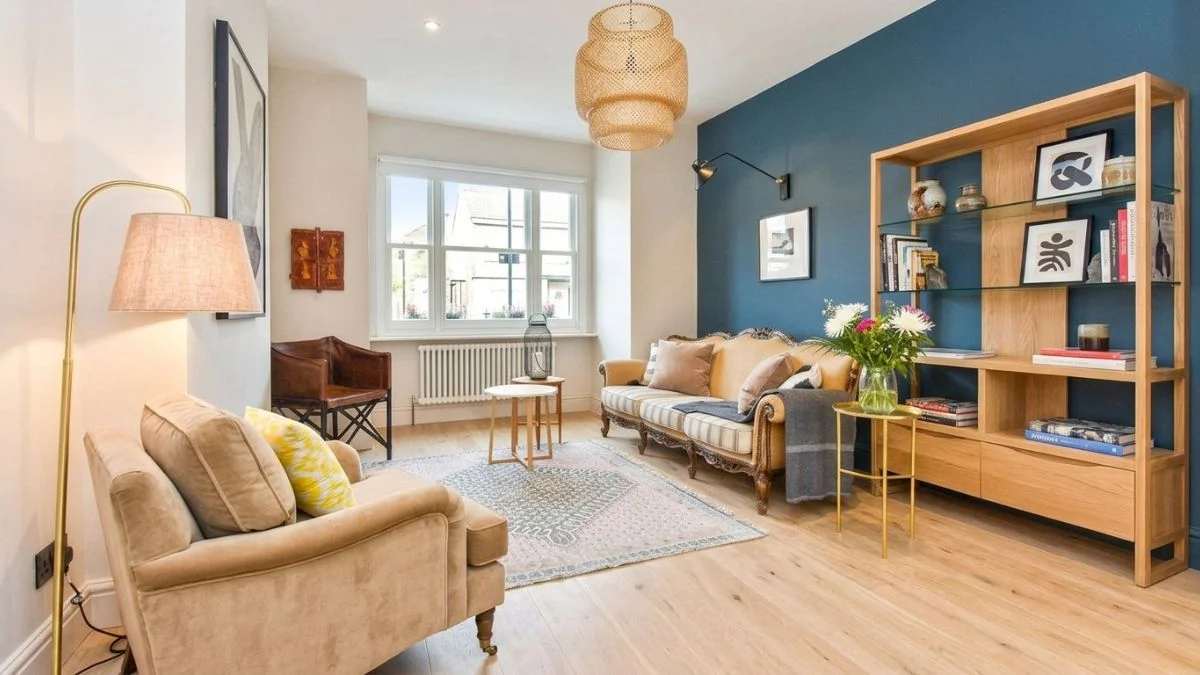
Most living rooms don’t have a decor problem. They have a lighting problem.
You can buy the perfect sofa, the right rug, and a coffee table that ties the whole room together but if the only light source is a single overhead fixture buzzing away at full brightness, none of it will look right. Good living room lighting isn’t about one big light. It’s about layers.
This guide walks through how to actually light a living room the way designers do: with a mix of ambient, task, and accent lighting, smart placement, and a few tricks that make a room feel bigger, cozier, and more finished without a full renovation.
Table of Contents
Why Layered Lighting Matters More Than a Single Fixture
Interior designers rely on a concept called layered lighting combining three types of light so a room works for every activity and every hour of the day.
- Ambient lighting is the general, overall light in the room (ceiling fixtures, recessed lights).
- Task lighting is focused light for specific activities (reading, working, playing games).
- Accent lighting highlights specific features, artwork, a bookshelf, a plant corner and adds depth.
A single ceiling light gives you ambient light and nothing else. Flat, shadowless, and honestly a little clinical. According to the U.S. Department of Energy, combining multiple light sources at different levels not only improves how a room looks, but also cuts down on energy waste, since you’re not lighting an entire room at full power just to read a book in one corner.
The goal is simple: every corner of the room should have a job, and every light source should support that job.
1. Start With a Layered Lighting Plan
Any good living room lighting plan starts before you buy a single lamp. Walk through your living room and note what happens in each zone. TV watching, reading, conversation, homework, board games. Each zone needs its own light source rather than relying on one central fixture to do everything.
A typical layered setup includes:
- One ambient source (ceiling light, recessed lighting, or a large floor lamp)
- Two to three task lights (a reading lamp beside the sofa, a desk lamp near a work corner)
- One or two accent lights (picture lights, LED strips, or a spotlighted plant shelf)
This is the same layering principle used in small living room decor planning, where every element has to earn its space lighting is no different.
2. Choose the Right Color Temperature
This is where a lot of living room lighting plans go wrong. Color temperature is measured in Kelvin (K), and it changes the entire mood of a room.
- 2700K–3000K — warm white, cozy and residential. Best for living rooms.
- 3500K–4100K — neutral white, more energetic. Works for task-heavy zones.
- 5000K+ — daylight, cool and clinical. Better suited for garages or offices, not living rooms.
The American Lighting Association recommends staying in the 2700K–3000K range for main living spaces because it mimics the warmth of natural evening light, which is what most people associate with comfort. If your current bulbs feel harsh or “hospital-like,” this is usually the fix.
3. Use a Statement Ceiling Fixture But Don’t Rely on It Alone
A chandelier, a sculptural pendant, or a modern flush-mount fixture sets the tone for the whole room, and it’s usually the centerpiece of any living room lighting setup. It’s often the first thing people notice when they walk in.
But treat it as ambient lighting only. It shouldn’t be the only light source running at night, because overhead-only lighting casts shadows on faces and flattens the room. Pair your statement fixture with lamps at a lower height to balance the light across different planes of the room floor level, seating level, and eye level. If you’re rethinking lighting across your entire home, our guide on general home lighting strategies covers the same layering principles room by room.
4. Add Floor Lamps for Height and Warmth
Floor lamps do double duty: they fill vertical gaps in a room and add a softer, more human-scale light than anything mounted on the ceiling.
Arc floor lamps work well positioned near a sofa to provide reading light without needing a side table. Tripod or torchiere-style floor lamps are better for uplighting a corner and bouncing light off the ceiling for a softer glow.
If your living room feels dim even with the main light on, a floor lamp in an empty corner is usually a faster fix than adding more overhead fixtures.
5. Layer in Table Lamps for Task Lighting
Table lamps on side tables or console tables handle the close-range tasks reading, phone scrolling, laptop work without lighting up the entire room.
A few practical notes:
- Choose lampshades that diffuse light downward and outward rather than glaring bulbs
- Match lamp height to seated eye level so the bulb isn’t directly visible
- Use a warm-toned bulb (2700K) to keep it consistent with the rest of the room
Table lamps are also one of the easiest ways to introduce texture and color into a room, similar to how bedroom lighting choices affect the overall mood of a space.
6. Don’t Skip Accent Lighting
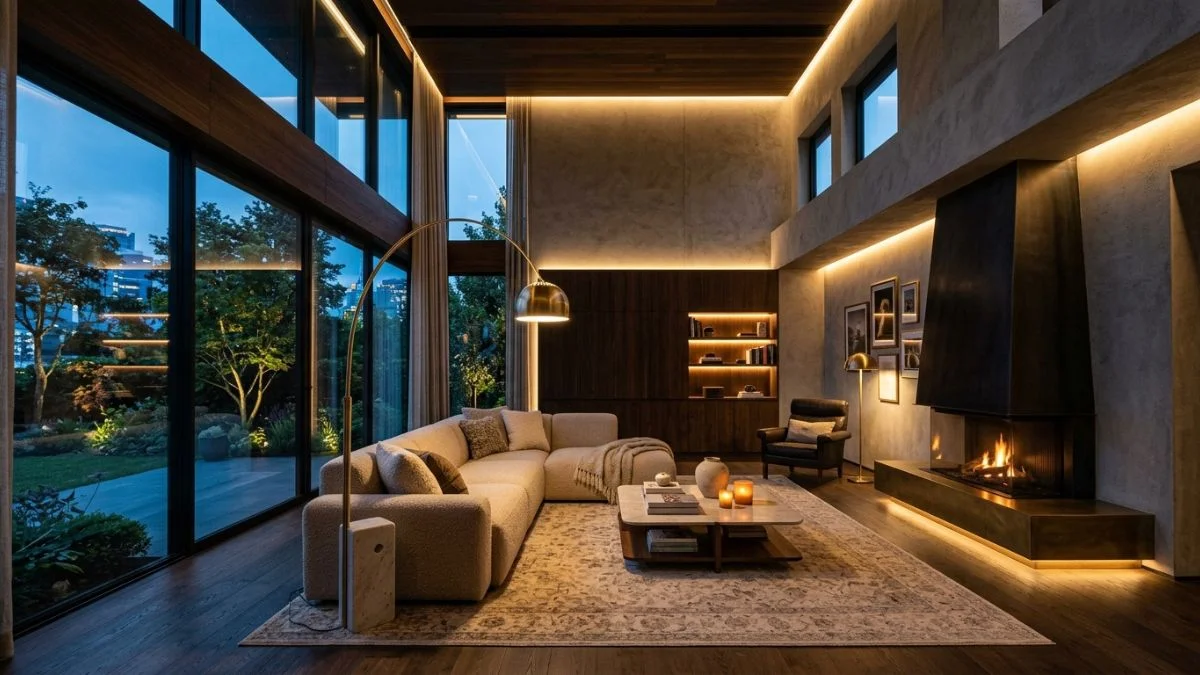
Accent lighting is the layer most people forget, and it’s the one that makes a room feel designed rather than just furnished.
Wall lights can also work as a practical way to add focused or ambient light without taking up floor or table space.
Ideas that work well in living rooms:
- Picture lights above framed art or a gallery wall
- LED strip lighting behind a TV or along a bookshelf for a soft glow
- Uplighting for tall plants or architectural features
- Spotlighting a reading nook or entryway corner shelf, echoing the same principle used in entryway wall decor styling
Accent lighting typically uses only 5–10% of a room’s total light output, but it adds a disproportionate amount of visual depth.
7. Install Dimmer Switches Wherever Possible
If there’s one upgrade that instantly improves living room lighting, it’s a dimmer switch. A single fixture on a dimmer can shift from bright, functional daytime light to soft evening ambiance in seconds.
The National Kitchen & Bath Association notes that dimmable lighting is one of the most requested features in modern home lighting plans because it allows one fixture to serve multiple moods without needing separate lamps for every scenario. Most standard fixtures can be retrofitted with a dimmer switch for a relatively low cost, and LED-compatible dimmers are widely available at any hardware store.
8. Consider Smart Lighting for Flexibility
Smart bulbs and smart plugs let you control brightness, color temperature, and scheduling from a phone app useful if your living room serves multiple purposes throughout the day (bright for cleaning, warm for movie night, dim for reading).
You don’t need to convert every fixture. Start with the one or two lights you adjust most often usually the main ceiling fixture or a frequently used floor lamp and expand from there if it’s useful.
9. Balance Natural Light With Window Treatments
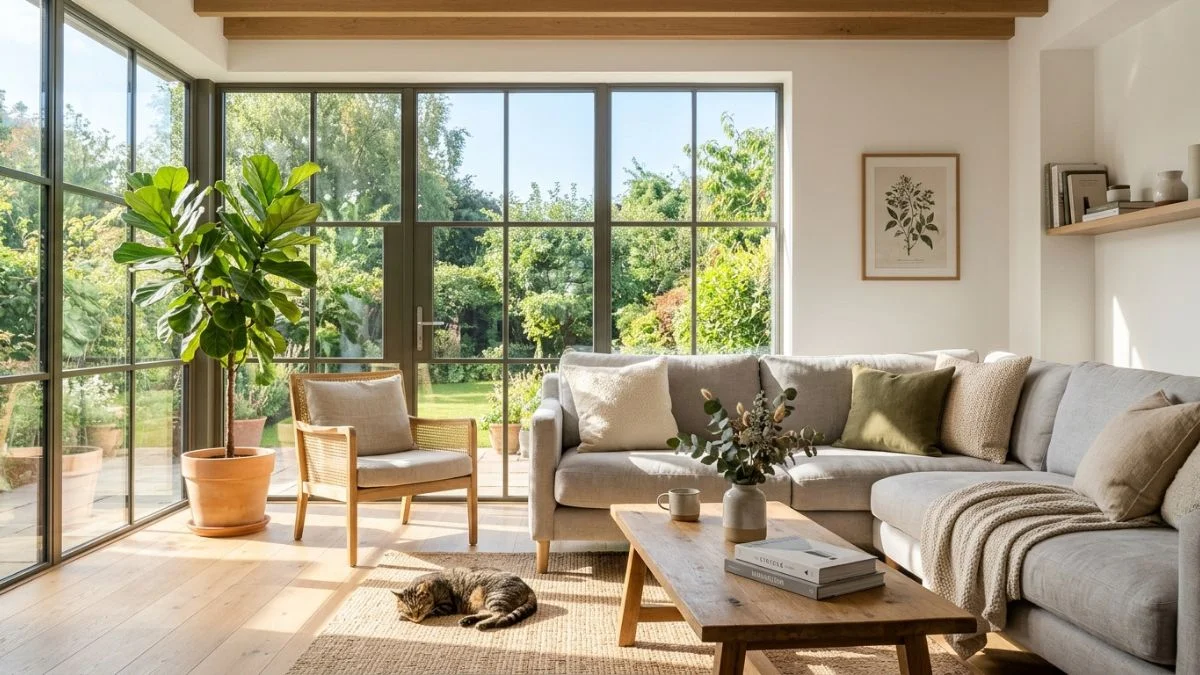
Lighting isn’t only about bulbs. Natural daylight plays a big role in how a living room feels, and it’s free.
Sheer curtains let in soft, diffused daylight during the day while still offering privacy. Layer them with heavier drapes for evening light control. Positioning a mirror across from a window is a classic trick for bouncing natural light deeper into the room, especially useful in smaller or north-facing living rooms. This also helps if you’re styling low-light indoor plants for the living room, since even reflected daylight can make a real difference for plant placement.
10. Match Lighting to Room Size and Ceiling Height
A common mistake in living room lighting is scaling fixtures to the room’s square footage but ignoring ceiling height. High ceilings can swallow light from smaller fixtures, while low ceilings make oversized fixtures feel cramped.
A rough guideline for a main ceiling fixture: add the room’s length and width in feet, and that number in inches is a reasonable fixture diameter. A 12×14-foot living room, for example, works well with a fixture around 26 inches in diameter. It’s not a strict rule, but it’s a useful starting point before shopping.
Common Living Room Lighting Mistakes to Avoid
- Relying on one overhead light for the entire room
- Mismatched color temperatures across different fixtures (mixing 3000K and 5000K bulbs in the same room)
- Placing lamps too low or too high relative to seated eye level
- Ignoring accent lighting entirely, which leaves the room feeling flat
- Skipping dimmers, which limits flexibility for different times of day
Final Thoughts
Good living room lighting isn’t about buying more lights it’s about buying the right combination and placing them with intention. Start with layered lighting, get the color temperature right, and add dimmers or smart controls where they’ll actually get used. Once the basics are in place, accent lighting and natural light do the rest of the work.
Small changes: a warm-toned bulb swap, a floor lamp in a bare corner, a dimmer switch on the main fixture often make a bigger visual difference than an expensive new light fixture ever could.
FAQs
1. What is the best color temperature for living room lighting?
Most designers recommend 2700K to 3000K (warm white) for living rooms, since it creates a cozier, more relaxed atmosphere than cooler daylight tones.
2. How many lamps should a living room have?
There’s no fixed number, but most well-lit living rooms use at least three light sources: one ambient (ceiling or floor lamp), one or two task lamps, and one accent light.
3. Should living room lighting be on a dimmer?
Yes, where possible. Dimmable lighting lets a single fixture adapt to different activities and times of day without needing extra lamps.
4. What is layered lighting?
Layered lighting combines ambient, task, and accent light sources at different heights and intensities so a room is functional and visually balanced rather than flat.
5. Are LED strip lights good for living rooms?
Yes, especially as accent lighting behind a TV, along a bookshelf, or under a console table. They’re energy-efficient and widely adjustable in color and brightness.
6. How do I make a small living room feel brighter?
Use warm-toned layered living room lighting, add a floor lamp in dark corners, position a mirror to reflect natural light, and avoid heavy, light-blocking curtains during the day.
7. What size ceiling light fixture do I need for my living room?
A rough rule of thumb: add the room’s length and width in feet, and use that number in inches as the fixture’s diameter. Adjust based on ceiling height and personal preference.
8. Is natural light considered part of a lighting plan?
Yes. Natural daylight should be factored in alongside artificial lighting, particularly when choosing window treatments and planning where task lamps are needed during the day.




- Be Respectful
- Stay Relevant
- Stay Positive
- True Feedback
- Encourage Discussion
- Avoid Spamming
- No Fake News
- Don't Copy-Paste
- No Personal Attacks
- Be Respectful
- Stay Relevant
- Stay Positive
- True Feedback
- Encourage Discussion
- Avoid Spamming
- No Fake News
- Don't Copy-Paste
- No Personal Attacks
