Indoor Plants for Shelves and Bookcases: 12 Easy Picks That Actually Thrive
Published: 21 Sep 2026
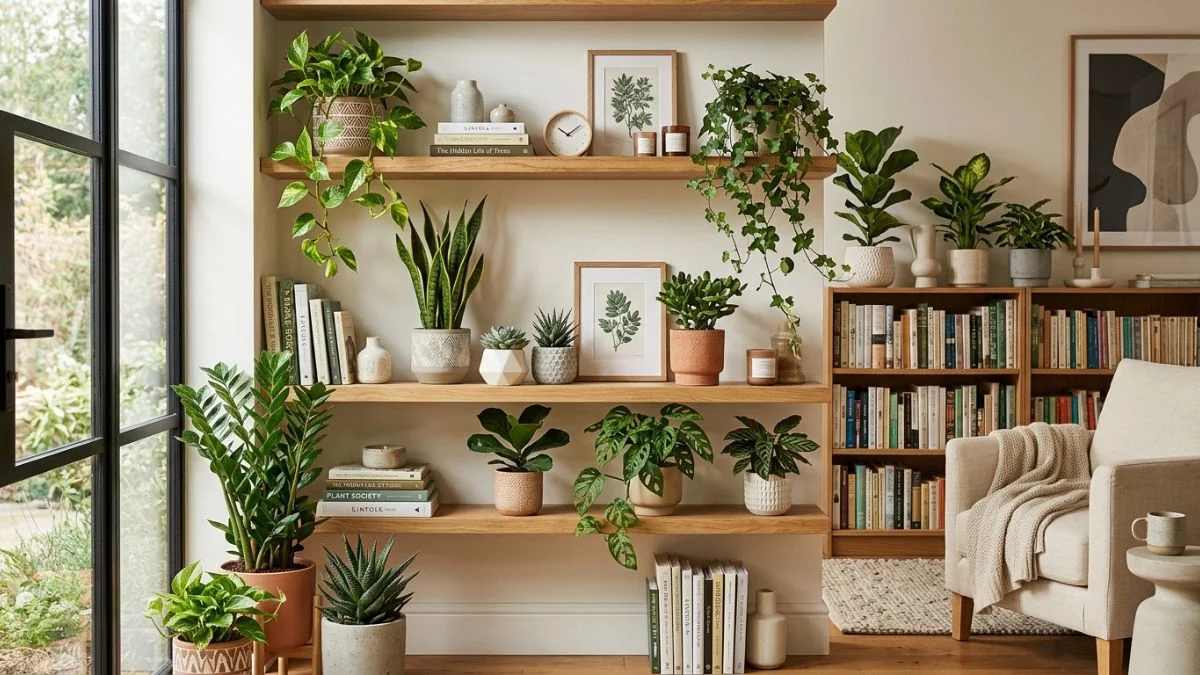
Rows of books look tidy. Add a pothos spilling down the side, and the whole bookcase suddenly feels lived-in and cared for.
The right indoor plants for shelves and bookcases bring color, softness, and varied height to furniture that can otherwise look stiff. But shelves come with their own headaches: dim light, cramped spots, and the constant worry that a watering session will stain your favorite books.
This guide walks you through which plants cope with those conditions, how to match them to the light you actually have, and how to protect both your greenery and your furniture.
Table of Contents
Why Shelves Make Great Homes for Plants
Using Vertical Space Wisely
Wall-side shelving is space you’re already paying for. Filling it with plants frees up floor area, which matters in apartments and small rooms where a large floor pot quickly becomes an obstacle.
A Small Boost for Your Mood
A 2015 randomized crossover study published in the Journal of Physiological Anthropology compared handling indoor plants with doing a computer task. Young adults showed lower physiological and psychological stress after the plant activity. The sample was small, so read it as a hopeful sign rather than a guarantee.
The Air-Purifying Myth
Many blogs claim houseplants scrub the air in your home. That’s overstated. The famous 1989 NASA experiment used sealed chambers, not real living spaces. A 2019 review by Cummings and Waring concluded that plants aren’t a practical way to clear pollutants from ordinary rooms. Grow them because they’re beautiful and calming, and open a window when you want fresher air.
How to Choose the Best Indoor Plants for Shelves and Bookcases
Four questions will narrow your options quickly.
1. Start With Light
Light decides whether a plant survives or thrives. Shelves usually sit further from windows than sofas do, and brightness drops off fast with distance.
Try this: stand by the shelf around noon and look at the shadow your hand casts.
- Crisp, dark shadow: bright light
- Soft, blurry shadow: medium light
- Barely visible shadow: low light
In the Northern Hemisphere, north-facing rooms tend to be the dimmest, while south- and west-facing windows give the most light. If your bookcase lives in a gloomy corner, a compact full-spectrum LED light on a timer can make it workable. Many houseplants are happy with around 10 to 14 hours of light daily, though each species differs.
2. Match Plant Shape to Shelf Position
- trailing plants such as pothos and string of hearts belong on the top shelf, where vines can hang freely.
- Small, upright plants such as peperomia and haworthia suit middle shelves without crowding your books.
- Tall, architectural plants such as snake plants do best on the lowest shelf or on the floor beside the unit.
3. Think About Pets and Children
Some of the most popular shelf plants are harmful if chewed. The ASPCA runs a searchable database of toxic and non-toxic plants for cats, dogs, and horses. Look up any plant before buying, especially if your cat treats dangling leaves like toys.
4. Be Realistic About Your Watering Habits
If you often forget, go for succulents or snake plants. If you enjoy a regular routine, ferns and hoyas will reward you. A plant that fits your habits beats a trendy one every time. If you also want greenery near your workspace, these low-maintenance plants for your desk area are worth a look.
12 Best Indoor Plants for Shelves and Bookcases
These picks span different light levels and skill levels. Botanical names are included so you can double-check care details before buying.
1. Pothos (Epipremnum aureum).
The all-time favorite. Its heart-shaped leaves trail gracefully, and it copes with dim light better than most. Growth slows in shade, but it keeps going. Toxic to pets, so keep it out of reach.
2. Heartleaf philodendron (Philodendron hederaceum).
A close cousin of pothos with thinner, softer leaves. It shrugs off a missed watering and looks lovely draped over a shelf edge. Also toxic to pets.
3. ZZ plant (Zamioculcas zamiifolia).
Glossy, upright, and famously tough. Thick underground rhizomes store water, so occasional neglect isn’t a problem. It tolerates low light but grows faster in brighter spots. Keep it away from pets.
4. Snake plant (Dracaena trifasciata).
Handles low light and irregular watering with ease. Standard varieties grow tall, so choose a compact type such as ‘Hahnii’ for shelves. Mildly toxic to pets.
5. Spider plant (Chlorophytum comosum).
Arching foliage and dangling baby plantlets make it a shelf classic. The ASPCA lists it as non-toxic to cats and dogs, so it’s a smart choice for pet households.
6. Peperomia (Peperomia spp.).
Dozens of leaf styles, all staying compact. Many store water in their leaves, so go easy with the watering can. The ASPCA lists them as non-toxic.
7. String of hearts (Ceropegia woodii).
Slender vines with silvery, heart-shaped leaves. It looks delicate but tolerates a slightly dry spell. Give it bright, indirect light. If you have pets, check the ASPCA database first.
8. Rhipsalis (mistletoe cactus).
A jungle cactus rather than a desert one. Its thin, hanging stems look like green noodles and add unusual texture to a bookcase. It prefers bright, indirect light and moderate watering.
9. String of pearls (Curio rowleyanus).
Bead-like leaves cascade beautifully, but it needs strong light and careful watering. Overwatering is the quickest way to lose it. Toxic to pets.
10. Hoya (Hoya carnosa).
Waxy leaves, plus clusters of star-shaped blooms when it’s content. Slow-growing and happiest in bright, indirect light. The ASPCA lists Hoya carnosa as non-toxic.
11. Haworthia (Haworthia spp.).
A small succulent that squeezes into almost any gap and handles less light than most of its relatives. Water sparingly. The ASPCA lists zebra haworthia as non-toxic.
12. Boston fern (Nephrolepis exaltata).
Lush, feathery fronds bring drama, but ferns want steady moisture and higher humidity. A shelf near a bathroom suits it better than a dry, heated study. Non-toxic to pets per the ASPCA.
Setting Up Your Bookshelf So Plants and Books Both Survive
Even great shelf plants struggle in a poor setup. These steps protect your greenery and your furniture.
Protect the Wood
Water and bookcases don’t mix. Use a pot with drainage holes, place it in a saucer, and set that inside a decorative cachepot. Even better, carry the plant to the sink, water it thoroughly, let it drain, then return it. Waterproof trays or cork mats add another layer of defense.
Watch the Weight
Wet soil is heavy. One liter of water weighs about one kilogram, so a big, freshly watered pot adds up fast. Many particleboard shelves sag under constant load. Keep heavier pots close to the vertical supports and check the manufacturer’s load rating if you can find it.
Pick Pots Wisely
Lightweight plastic or fiberglass pots reduce strain on the shelf. Terracotta looks great and dries soil faster, which suits succulents, but it’s heavier. If choosing gets overwhelming, our guide to the best pots for indoor plants simplifies it.
Rotate Regularly
Plants lean toward light. Give each pot a quarter turn every week or two to keep growth even. A stretched, leggy plant is telling you it wants more light.
Keep Air Moving
Still air and constant dampness invite fungus gnats and mold. Leave a little breathing room between pots and books instead of filling every gap.
Styling Ideas for a Plant-Filled Bookcase
Once your plants are healthy, arrange them so the display looks deliberate.
- Mix heights and textures: a trailing plant up top, a compact upright one in the middle, a chunky planter near the bottom.
- Repeat a color: matching pot colors or materials tie different plants together.
- Leave breathing space: a crowded shelf looks messy, and empty gaps help each plant stand out.
- Blend with decor: pair plants with framed prints, candles, or books stacked sideways. These ideas also work in our small space home decor guide.
- Try groups of three: three objects of different sizes usually look balanced and natural. The same trick works on a table too, so try styling groups of three on your coffee table as well.
Common Mistakes to Avoid
- Overwatering: more houseplants die from too much water than too little. Test the soil with your finger before every watering.
- Ignoring light: a plant that’s alive isn’t necessarily thriving. Pale, stretched growth usually signals it needs more light.
- Skipping quarantine: new plants can bring pests. Keep newcomers separate for a couple of weeks before adding them to your shelf.
- Buying for looks alone: read the care tag. A light-hungry plant will struggle in a dark spot no matter how pretty it is.
Final Thoughts
The best indoor plants for shelves and bookcases are the ones that match your home. First, check how much light your shelf gets. Then choose plants that grow the right way for each shelf. Keep your furniture safe from water, and only water when the plant really needs it.
Pothos, spider plants, and peperomia are forgiving starters. Once you feel confident, try a hoya or a string of hearts. Your bookcase will look better for it, and so will your reading nook.
FAQs
1. Which plants are best for shelves with low light?
Pothos, heartleaf philodendron, ZZ plant, and compact snake plants cope with dim conditions. Growth will be slow, but they outlast most other options. A small grow light helps in very dark spots.
2. What are the best trailing plants for high shelves?
Pothos, heartleaf philodendron, string of hearts, and string of pearls all trail well. Pothos is the easiest, while string of pearls needs the brightest light.
3. Are shelf plants safe for cats and dogs?
Some are, some aren’t. The ASPCA lists spider plants, peperomia, and Boston ferns as non-toxic. Pothos, philodendrons, snake plants, and ZZ plants are toxic. Always check the ASPCA database before buying.
4. How can I water bookcase plants without damaging the wood?
Water at the sink and let the pot drain completely before putting it back. Use a saucer or cachepot, with a waterproof tray as backup.
5. Can plants grow on a bookshelf with no natural light?
Not on their own. Plants need light for photosynthesis. A full-spectrum LED on a timer can make it possible.
6. How many plants should a bookcase hold?
There’s no fixed number. A sensible start is one plant per shelf, or two to three per bookcase, with room to breathe. Add more after you see how your light and watering routine work out.
7. Do shelf plants attract bugs?
Any houseplant can attract pests like fungus gnats or spider mites, usually from overwatering or dry, dusty conditions. Let the soil dry between waterings and inspect new plants before adding them.
8. Can succulents live on a bookshelf?
Yes, provided the shelf gets bright light. Haworthia is the most forgiving. Most other succulents stretch and weaken in dim spots.

- Be Respectful
- Stay Relevant
- Stay Positive
- True Feedback
- Encourage Discussion
- Avoid Spamming
- No Fake News
- Don't Copy-Paste
- No Personal Attacks
- Be Respectful
- Stay Relevant
- Stay Positive
- True Feedback
- Encourage Discussion
- Avoid Spamming
- No Fake News
- Don't Copy-Paste
- No Personal Attacks
