Entryway Bench Ideas: How to Choose and Style One That Actually Works
Published: 22 Aug 2026
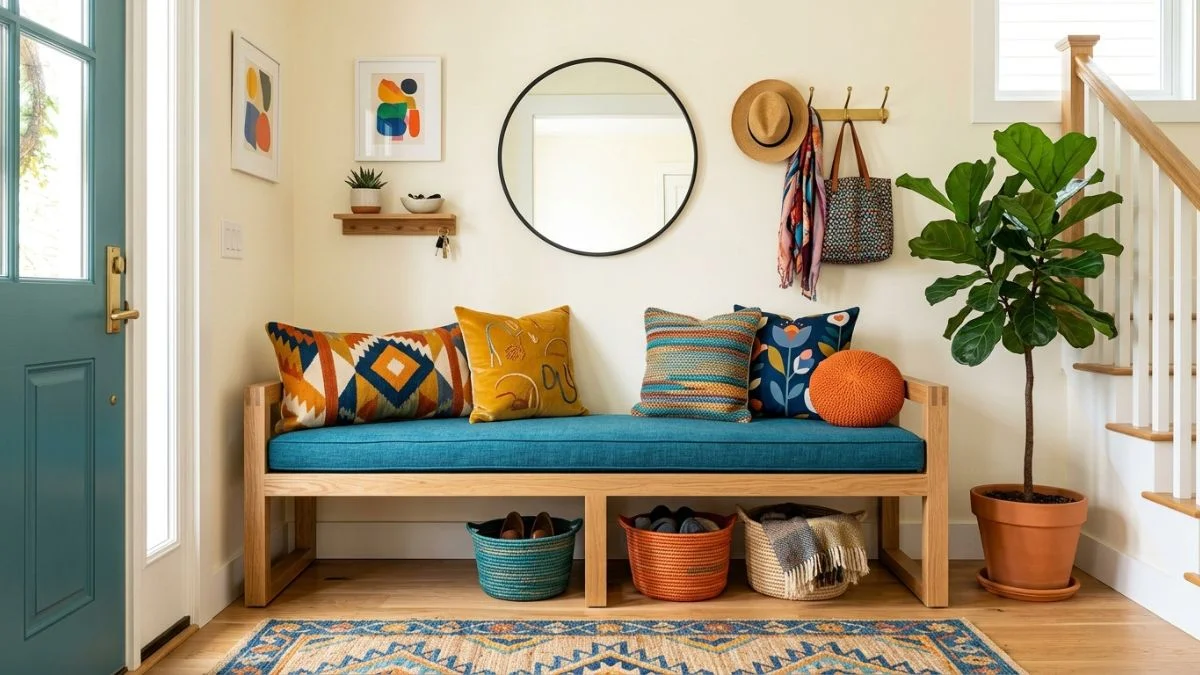
Walk into most homes and the entryway tells you everything: shoes kicked off in a pile, bags dropped on the floor, mail scattered across whatever surface is closest to the door. A good entryway bench fixes most of that in one move. It gives you somewhere to sit while you tie your shoes, a spot to stash baskets or bins, and if you pick the right one a piece of furniture that actually makes your entryway look pulled together instead of chaotic.
This guide walks through real entryway bench ideas for different space sizes, styles, and budgets, along with the practical details (dimensions, materials, storage types) that most articles skip over.
Table of Contents
Why an Entryway Bench Is Worth the Investment
Among the many Entryway Bench Ideas out there, one thing stays true: an entryway bench isn’t just a place to sit. It’s functional furniture that solves a specific problem the daily bottleneck of coats, shoes, bags, and keys that piles up near the front door.
According to the National Association of Home Builders, entryways and mudrooms are consistently ranked among the features homebuyers care about most, largely because organized entry spaces reduce clutter throughout the rest of the home. A bench anchors that organization. It gives every item from muddy boots to a toddler’s backpack a defined place to land.
There’s also a design payoff. Paired with the right entryway wall decor, a well-chosen bench sets the tone for your home before guests even step past the doormat. It’s the first piece of furniture people see, so it carries more visual weight than its size suggests.
What to Consider Before You Buy or Build
Before jumping into styles, it helps to nail down the basics. A bench that looks great in a photo can be completely wrong for your actual space if you skip this step.
1. Measure Your Space First
Entryways vary wildly in size; some homes have a generous foyer, others have a narrow hallway barely wide enough to open the front door. Measure the width, depth, and ceiling height before you shop.
A general rule: leave at least 36 inches of clear walking space in front of the bench so it doesn’t create a traffic jam. If your entryway is under 40 inches wide, look for a slim bench (12–16 inches deep) rather than a standard 18–20 inch depth.
2. Decide What You Need It to Store
If you want to go beyond just the bench, check out these broader entryway storage ideas for the rest of the space. Not every entryway bench needs built-in storage, but most benefit from it. Think about what actually piles up near your door:
- Shoes and boots (seasonal rotation matters here)
- Bags, backpacks, or diaper bags
- Mail, keys, and sunglasses
- Pet leashes and gear
If shoes are the main clutter culprit, a bench with an open shelf underneath works well for airflow. If you need to hide clutter completely, look for lift-top storage or cubbies with baskets.
3. Match the Material to Your Traffic Level
Entryways take a beating wet shoes, dropped bags, kids climbing on and off. According to EPA guidance on indoor moisture control, materials exposed to repeated moisture need proper sealing to prevent warping and mold growth over time. Solid wood and engineered wood with a durable finish hold up better than particleboard over time. If you’re in a humid climate or a home with a mudroom-style entry, materials with moisture resistance (like sealed wood or metal-frame benches) are worth the extra cost.
Entryway Bench Ideas by Style
Farmhouse and Rustic Entryway Benches
Farmhouse-style benches lean into visible wood grain, simple joinery, and a slightly worn or distressed finish. They pair naturally with shiplap walls, woven baskets, and warm lighting.
A classic option is a reclaimed wood bench with a single shelf underneath for baskets. The exposed wood texture adds warmth without feeling overly styled, which is part of why farmhouse decor has stayed popular for entryways specifically, it tolerates real-life mess better than sleeker styles.
Modern and Minimalist Entryway Benches
For a cleaner look, choose a bench with simple lines, a neutral color palette (black, white, walnut, or oak), and minimal ornamentation. Floating benches mounted to the wall with no visible legs are a strong choice for modern entryways because they make the floor space feel more open and are easier to clean under.
Metal-frame benches with a wood or upholstered seat also fit the modern aesthetic while adding a bit of visual contrast. For more inspiration, browse these modern entryway design ideas.
Upholstered Entryway Benches
If comfort matters more than storage, an upholstered bench softens the entryway and gives it a more finished, “lived-in” feel. Choose a performance fabric (stain-resistant, easy to wipe down) since this bench will see dirt, moisture, and daily wear.
Upholstered benches work particularly well in entryways that double as a transitional space near a living room, where the bench needs to feel like part of the home’s overall furniture, not just utilitarian storage.
Bohemian and Eclectic Entryway Benches
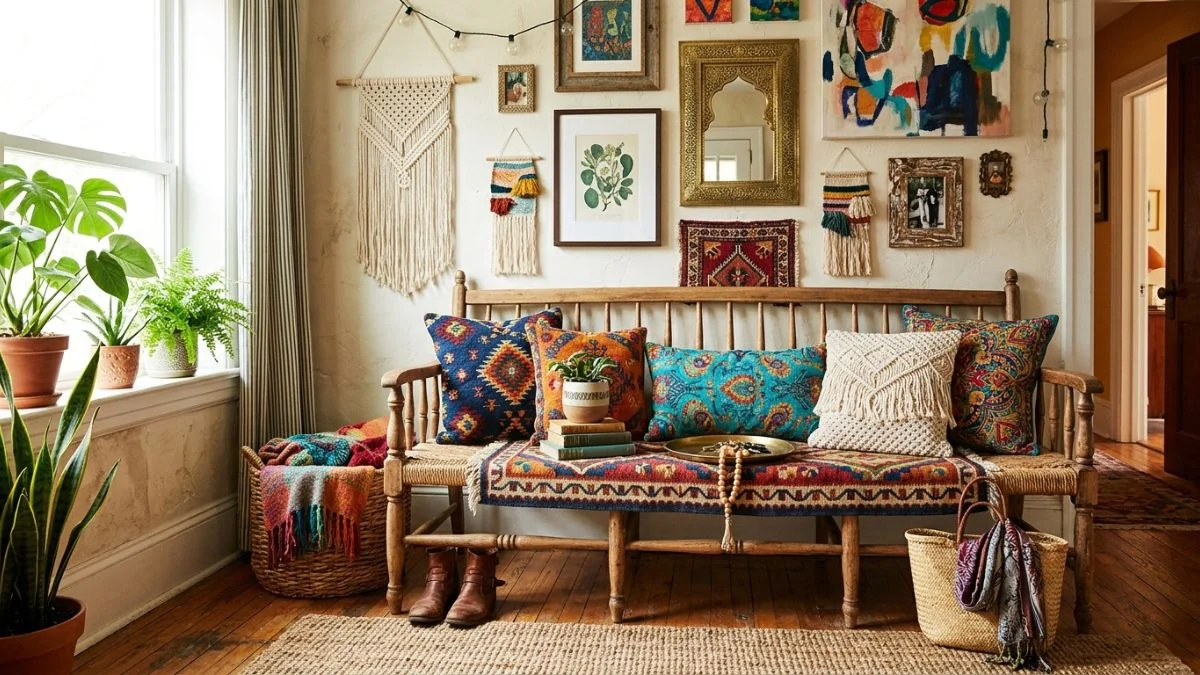
For a livelier, more layered look, a bohemian-style entryway bench leans into texture and color instead of avoiding it. Think a weathered wood or rattan-frame bench piled with patterned pillows, a woven throw draped over one arm, and a mix of macrame or global-inspired wall art behind it.
This style works especially well in entryways with a lot of natural light, since the mix of patterns and textures kilim-print cushions, jute rugs, potted plants reads as curated rather than cluttered. It’s also a practical choice if you tend to collect textiles or art over time, since a bohemian entryway naturally absorbs new pieces without looking mismatched.
Built-In and Custom Entryway Benches
For homes with an awkward nook, an angled wall, or a mudroom being renovated, a built-in bench is often the most efficient use of space. Built-ins can be designed with cubbies above, drawers below, and a cushioned seat on top essentially a full mudroom system in one footprint.
This option costs more upfront and usually requires a contractor or experienced DIYer, but it maximizes every inch of an irregular space in a way that store-bought furniture can’t.
Small Space Entryway Bench Ideas
Not everyone has a dedicated foyer. For narrow hallways or apartment entries, consider:
- A slim console bench (12–14 inches deep) with hooks mounted above it
- A corner bench that tucks into an unused angle
- A fold-down wall-mounted bench that stays flat against the wall when not in use
These small space decor principles apply well here too the goal in tight spaces isn’t to fit in everything it’s to fit in enough. One well-placed bench with two or three hooks above it often does more for a small entryway than an oversized storage unit that blocks the walkway.
Storage-Focused Entryway Bench Ideas
If clutter is your main frustration, prioritize storage type over style. Here are the most common configurations:
Lift-top storage benches the seat lifts up to reveal a hidden compartment, ideal for stashing shoes, umbrellas, or seasonal gear out of sight.
Cubby benches with baskets open compartments underneath, usually sized for fabric or wicker bins. Great for households where everyone needs their own designated spot (one basket per family member works well) a similar labeling approach works well in bedroom storage setups too.
Bench with shoe rack underneath an open, slatted shelf that keeps shoes visible and lets them air out, which matters more than people expect in humid climates or after rain.
A bench with coat hooks or a mounted rack above pairs the seating with vertical storage, useful when floor space is limited but wall space isn’t.
Styling Tips That Make a Real Difference
Once you’ve picked the bench itself, a few styling choices help it look intentional rather than just functional.
Layer in a runner or rug. A textured rug underneath the bench grounds the space and adds visual warmth, especially on hardwood or tile floors.
Add a mirror above it. Beyond the practical use (a last glance before heading out), a mirror bounces light around a typically dim entryway and makes the space feel larger.
Keep decor minimal on top. A tray with a candle, a small plant, or a single decorative object works better than a cluttered surface. Remember, the bench needs to stay functional as a landing spot for daily items.
Use baskets that match your color scheme. Woven baskets in neutral tones tend to blend with more design styles than bright plastic bins, and they hide mess more effectively than open shelving.
Light it well. A wall sconce or pendant light above the bench draws the eye and makes the entryway feel welcoming rather than like an afterthought.
Common Mistakes to Avoid
Choosing a bench that’s too deep for the space. This is the most common issue. An 18-inch-deep bench looks fine in a showroom but can make a narrow hallway feel cramped and awkward to walk through.
Ignoring weight capacity. If multiple people will sit on it at once (kids putting on shoes, for example), check the bench’s weight rating before buying cheaper benches often max out lower than expected.
Skipping a trial placement. Before committing, tape out the bench’s footprint on the floor with painter’s tape and walk through the space for a day. It’s a low-effort way to catch spacing problems before they become permanent.
Overlooking maintenance. Wood benches near an entry door are exposed to sun, moisture, and temperature shifts. A finish that isn’t sealed properly can warp or fade faster than expected, something worth asking about before purchasing.
Final Thoughts
The best entryway bench isn’t necessarily the most stylish one; it’s the one that matches your space, storage needs, and daily habits. A narrow hallway calls for a slim bench with hooks above it. A busy family with kids benefits more from cubbies and baskets than an upholstered showpiece. And a generous foyer has room to make more of a design statement.
Start with your measurements and your actual clutter problem, then choose the style that fits both. Whichever direction you go, these Entryway Bench Ideas show that done right, an entryway bench becomes one of the most-used pieces of furniture in the house, not just a decor choice.
FAQs
1. What is the standard height for an entryway bench?
Most entryway benches sit between 17 and 19 inches high, which matches standard seat height for comfortable sitting while putting on or removing shoes. When picking from different entryway bench ideas, this height range works well for most households.
2. How deep should an entryway bench be?
A typical depth ranges from 14 to 20 inches. For narrow hallways, choose a bench under 16 inches deep to keep enough clearance for walking past comfortably.
3. What’s the best material for an entryway bench in a humid climate?
Sealed solid wood, engineered wood with a moisture-resistant finish, or metal-frame benches hold up better than untreated wood or particleboard in humid or wet conditions a key factor to keep in mind while exploring different Entryway Bench Ideas for your space.
4. Can I use a regular bench as an entryway bench?
Yes, as long as it fits the space and can handle daily wear. Just keep in mind that entryway-specific benches are usually built with more durable finishes and storage features suited to shoes, bags, and foot traffic.
5. How do I add storage to an entryway bench without buying a new one?
Add baskets or bins underneath an existing bench, mount hooks on the wall above it, or place a small shoe tray beside it all low-cost ways to boost function without replacing the furniture.
6. What’s the difference between a mudroom bench and an entryway bench?
A mudroom bench is typically built for heavier-duty use of muddy boots, wet gear, pet supplies and often includes more enclosed storage. An entryway bench can be lighter-duty and more decorative, especially in homes without a separate mudroom.
7. Should an entryway bench match the rest of my furniture?
It should complement your home’s overall style, but it doesn’t need to match exactly. Many designers treat the entryway as a slightly separate style moment since it’s the first space guests see.
8. How much weight can a typical entryway bench hold?
This varies by construction, but many mid-range benches are rated to hold 250–350 pounds. Always check the manufacturer’s weight rating, especially if multiple people will use it at once.





- Be Respectful
- Stay Relevant
- Stay Positive
- True Feedback
- Encourage Discussion
- Avoid Spamming
- No Fake News
- Don't Copy-Paste
- No Personal Attacks
- Be Respectful
- Stay Relevant
- Stay Positive
- True Feedback
- Encourage Discussion
- Avoid Spamming
- No Fake News
- Don't Copy-Paste
- No Personal Attacks
