Sofa Styling Tips for Small Living Rooms: Make Every Inch Count
Published: 21 Jun 2026
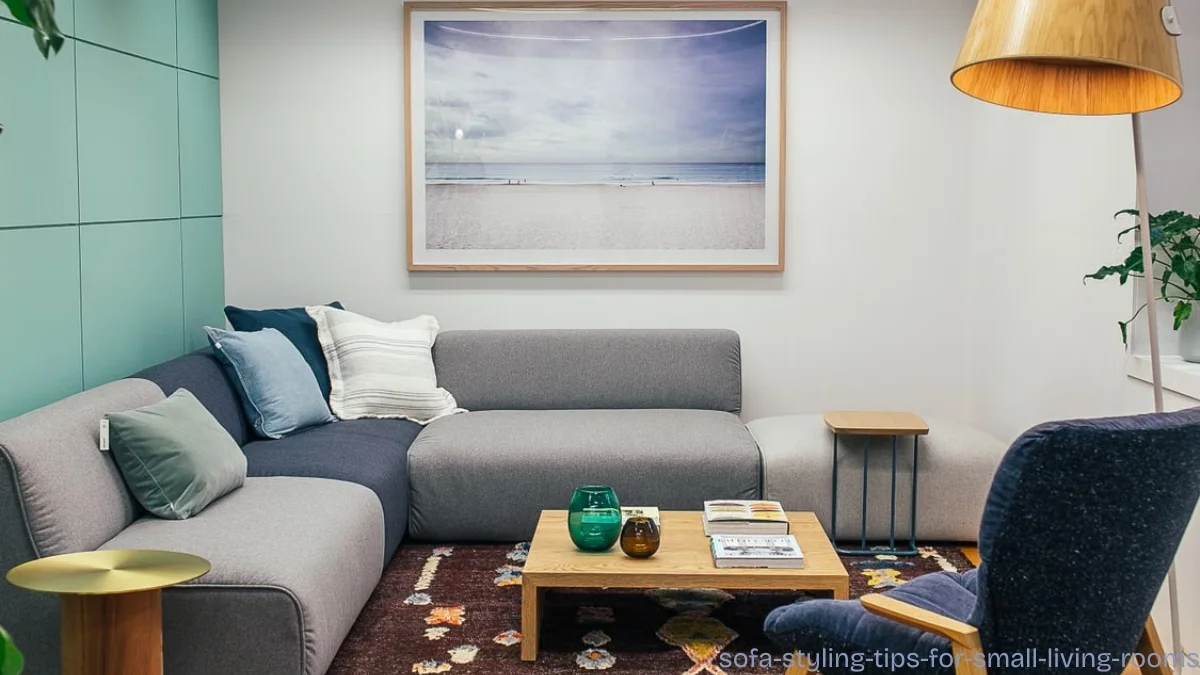
A small living room doesn’t have to feel cramped. With the right sofa and a few smart sofa styling tips for small living rooms, even the tightest spaces can feel open, functional, and genuinely inviting. The key is knowing what works and what quietly eats up your square footage without giving anything back.
Whether you’re furnishing a studio apartment, a compact flat, or a cozy terraced house, this guide walks you through everything you need to know about small living room sofa ideas, furniture placement, and space-saving choices. No fluff. Just practical advice that actually helps.
Table of Contents
Why Your Sofa Choice Matters More in a Small Room
In a large living room, a poorly chosen sofa is just a mild inconvenience. In a small one, it can completely dictate how the space feels and functions.
The sofa is almost always the largest single piece of furniture in a living room. That means it sets the visual tone for everything else the layout, the colour scheme, the sense of openness (or lack of it). Getting it right from the start saves a lot of rearranging later.
Interior designers often follow the general rule that your sofa should take up no more than two-thirds of your wall width. This is why sofa styling tips for small living rooms always start with size it preserves visual breathing room and allows for natural movement around the space.
Choosing the Right Sofa Size and Shape
Go Smaller Than You Think You Need
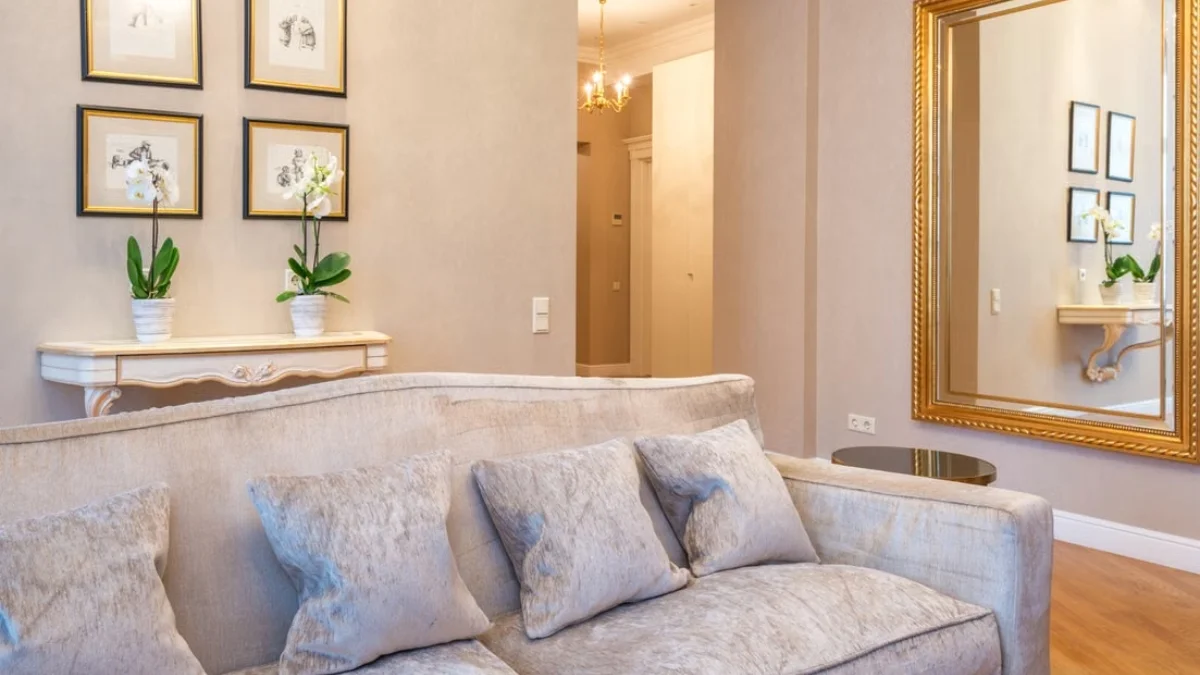
This sounds obvious, but it’s easily the most common mistake people make. That three-seater sofa that looked fine in the showroom can completely overwhelm a small living room once it’s in place.
A two-seater or compact loveseat is often the smarter choice for rooms under 12 feet wide. You’re not sacrificing comfort, you’re reclaiming floor space that makes the whole room feel larger.
If you regularly host guests, consider a sofa bed or a small sectional with a chaise instead of a full three-seater. You get versatility without permanently sacrificing floor area.
Low-Profile Sofas Open Up Vertical Space
The height of your sofa matters just as much as its width. Low-profile sofas those with a seat height of around 15 to 17 inches and a lower back sit below eye level and allow the eye to travel further across the room. This creates the perception of more space.
Sofas with high backs and heavy arms, while comfortable, can feel like walls within the room. In a small space, this makes everything feel boxed in.
Look for clean lines, slim arms, and raised legs. Exposed legs in particular create visual lightness; the floor is visible beneath the sofa, which makes the room feel less crowded.
The Shape of Your Sofa
For very small or awkward rooms, an L-shaped sofa (small sectional) tucked into a corner can actually be a better use of space than two separate pieces of furniture. It anchors the room, defines the seating area, and frees up the centre of the floor.
That said, L-shaped sofas only work well in rooms with the right geometry. Measures carefully allow at least 18 inches of clearance between the sofa and any coffee table, and ensure there’s a clear walkway of at least 30 inches around the main traffic path.
Sofa Placement Strategies for Small Living Rooms
Float the Sofa Away From the Wall
It sounds counterintuitive, but pushing your sofa flush against the wall doesn’t necessarily make a small room feel bigger. Interior designers frequently recommend floating furniture slightly away from walls even just 2 to 4 inches to create depth and make the room feel more intentional and spacious.
This works especially well when the sofa faces the main focal point of the room, such as a fireplace or a TV unit.
Use the Sofa to Define Zones
In open-plan spaces or studio apartments, a sofa can act as a natural room divider. Positioning it with its back to the kitchen or dining area subtly separates the living zone from the rest of the room without needing a wall or partition.
This kind of zoning makes a small flat feel more organised and purposeful two things that go a long way toward making a space feel larger than it is.
Align With Natural Light
Wherever possible, arrange your sofa to face or sit adjacent to your main light source. Natural light makes any space feel more open. If you place the sofa with its back to the window, you block light from flowing into the room and often end up in shadow while sitting.
If the layout of your room doesn’t allow this, ensure your lighting plan compensates with well-placed floor lamps or wall-mounted sconces that bounce light around the room.
Colour and Fabric Choices That Work in Small Spaces
Light Colours Visually Expand the Room
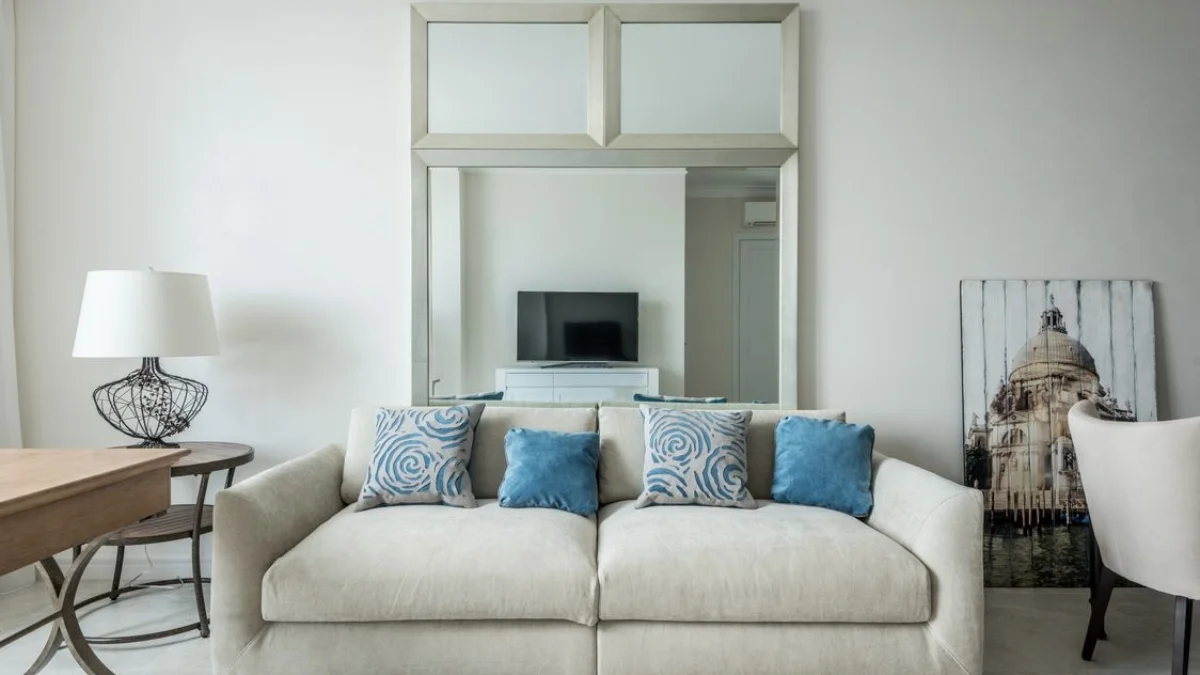
Light-toned sofas think soft whites, warm creams, dusty grey, or pale sage reflect light and help the room feel airier. Dark sofas can absolutely work in small rooms, but they need to be balanced with lighter walls and flooring to avoid the space feeling heavy.
If you love dark tones, consider a dark sofa against a white or very light wall. The contrast works well and the lighter surroundings prevent the room from feeling dense.
Match or Tone With Your Flooring
One subtle but effective trick: choose a sofa colour that sits within the same tonal family as your flooring. When furniture and floor don’t compete visually, the eye reads the space as more unified which makes the room feel larger.
This doesn’t mean matching exactly. A warm oak floor pairs well with a warm cream or camel sofa. A grey or concrete-style floor works with cool-toned upholstery like slate blue or charcoal.
Fabric Matters Too
Velvet and heavy boucle sofas tend to absorb light and can feel visually heavy in small spaces. Linen, cotton blends, and performance fabrics with a matte or low-sheen finish tend to sit more lightly in a room. They’re also practical particularly if your small living room doubles as a family or multipurpose space.
Styling the Sofa Itself
Keep Cushions Minimal and Deliberate
A small sofa piled with eight cushions starts to look like a cushion storage unit rather than a place to sit. In a small living room, restraint is your friend.
Two to four cushions in complementary tones is usually enough. Choose sizes that are proportionate to your sofa oversized cushions on a compact two-seater look awkward and make the seating area feel smaller than it is.
Vary the textures slightly rather than going all-in on a matching set. A linen cushion next to a slightly textured knit gives the arrangement depth without visual clutter.
A Throw Adds Warmth Without Bulk
A single, neatly folded throw draped over one arm of the sofa adds warmth and personality. In a small room, this is usually more than enough. A throw also makes a sofa look deliberately styled rather than just placed.
Choose a throw that picks up a secondary colour in your cushions or rug this ties the room together without requiring matching sets of anything.
The Right Coffee Table Makes a Difference
This sits adjacent to the sofa but affects the overall feel significantly. In a small living room, a glass-top or acrylic coffee table is almost always the better choice over a heavy wooden one. You can see through it, which keeps the floor visible and the room feeling open.
Alternatively, a nest of small side tables gives you surface area when you need it and tucks away when you don’t genuinely useful in tight spaces.
Mirrors, Rugs, and the Space Around the Sofa
A large mirror placed opposite or adjacent to the sofa reflects both light and the room itself, effectively doubling the perceived depth of the space. This is one of the oldest tricks in interior design, and it still works.
A rug helps anchor the sofa and define the seating area. In a small room, choose a rug large enough that the front legs of the sofa sit on it this connects the furniture to the rug and makes the grouping feel intentional. A rug that’s too small floats in front of the sofa and actually makes the room feel more cluttered.
Keep the area behind and beside the sofa clear. Avoid stacking items behind it or using the back as a shelf. Clean, uncluttered surroundings let the sofa read as a piece of furniture, not a divider between chaos.
Multi-Functional Sofa Choices for Small Rooms
If your living room is also your guest room, home office, or study, a sofa bed is worth serious consideration. Modern sofa beds have improved considerably in quality and comfort. Look for models with a sprung mattress rather than a foam one. The sleeping experience is notably better, and the sofa sits more comfortably too.
A sofa with built-in storage (usually in the form of a lift-up seat or under-seat drawers) is another practical option. In a small living room, any extra storage you can build into existing furniture reduces the need for additional pieces.
Common Small Living Room Sofa Mistakes to Avoid
- Buying a sofa before measuring the room including doorways and hallways it needs to pass through
- Choosing a sofa with thick, padded arms that eat into the seating width
- Matching every single piece of furniture to the sofa (a room that’s too matchy reads as smaller)
- Using a rug that’s too small it disconnects the furniture from the floor
- Over-accessorising the sofa with cushions and throws until the seating disappears
- Placing the sofa in front of a radiator, which affects both heating efficiency and furniture longevity
Final Thoughts
Styling a sofa in a small living room is really about making deliberate choices the size, the shape, the colour, the placement, and the accessories around it. None of these decisions need to be complicated. They just need to be considered.
The good news is that working with a small space often produces more thoughtful, visually coherent rooms than larger ones. These sofa styling tips for small living rooms prove that constraints push you toward intention. And intention, in interior design, almost always leads to better results.
Start with the sofa. Get your small living room furniture arrangement right, and the rest of the room tends to follow.
FAQs
1. What size sofa is best for a small living room?
For rooms under 12 feet wide, a small sofa for small living room like a two-seater (around 50 to 60 inches wide) or a compact loveseat tends to work best. The key is to leave at least 18 to 24 inches of clearance on either side and in front for comfortable movement.
2. Should a sofa be against the wall in a small room?
Not necessarily. Floating the sofa 2 to 4 inches away from the wall is one of the most effective small living room sofa placement tips it often makes the room feel more spacious and intentional. Pushing furniture flush to every wall is a common instinct in small rooms, but it doesn’t always produce the best result.
3. What sofa colour is best for a small living room?
Light and neutral tones cream, soft grey, warm white, or light sage — are the best sofa colors for small living rooms because they reflect light and don’t visually dominate the space. Dark sofas can work too, but they need lighter surroundings to balance..
4. Is a sectional sofa a good idea in a small room?
A small L-shaped sectional can actually work very well in certain small rooms, particularly if it tucks into a corner and frees up the centre of the floor. The key is careful measurement and ensuring there’s still clear walkway space of at least 30 inches.
5. How many cushions should go on a small sofa?
Two to four cushions is generally enough for a compact sofa. More than that tends to make the sofa feel cluttered and goes against the basic sofa styling tips for small living rooms it reduces the actual seating area and makes the space feel tight.
6. Should I use a rug under my sofa in a small living room?
Yes but choose the right size. The front legs of the sofa (at minimum) should sit on the rug. A rug that’s too small makes the room feel disjointed and can actually make the space appear smaller.
7. What type of coffee table works best in a small living room?
Glass-top, acrylic, or slimline wooden coffee tables work best. The visual transparency of glass and acrylic keeps the floor visible and prevents the room from feeling crowded. Alternatively, nesting tables offer flexible surface area without permanent bulk.
8. Can a sofa bed work in a small living room?
Absolutely. Modern sofa beds are significantly better than older versions in both comfort and appearance. Choose one with a sprung mattress for better sleep quality, and ensure there’s enough clear floor space to unfold it when needed.




- Be Respectful
- Stay Relevant
- Stay Positive
- True Feedback
- Encourage Discussion
- Avoid Spamming
- No Fake News
- Don't Copy-Paste
- No Personal Attacks
- Be Respectful
- Stay Relevant
- Stay Positive
- True Feedback
- Encourage Discussion
- Avoid Spamming
- No Fake News
- Don't Copy-Paste
- No Personal Attacks
