

If you want your bedroom to feel calm, uncluttered, and genuinely restful, choosing the right minimalist bedroom furniture is the fastest way to get there. This design approach isn’t about empty rooms or stark austerity, it’s about clean lines, purposeful pieces, and a look that feels open and intentional. When furniture is chosen with care, your space instantly feels larger, more organized, and more peaceful, even if the bedroom is small.
The key with minimalist bedroom furniture is to let each piece do more than just exist; each must contribute to storage, comfort, or visual harmony. Neutral palettes, hidden storage, and simple forms all help to create a room that stays tidy and looks modern for years. Below are 12 concrete ideas, each practical and easy to implement so you can redesign or refresh your bedroom in one go, boosting the presence of minimalist bedroom furniture throughout.
Table of Contents
1) Start with a low, platform bed
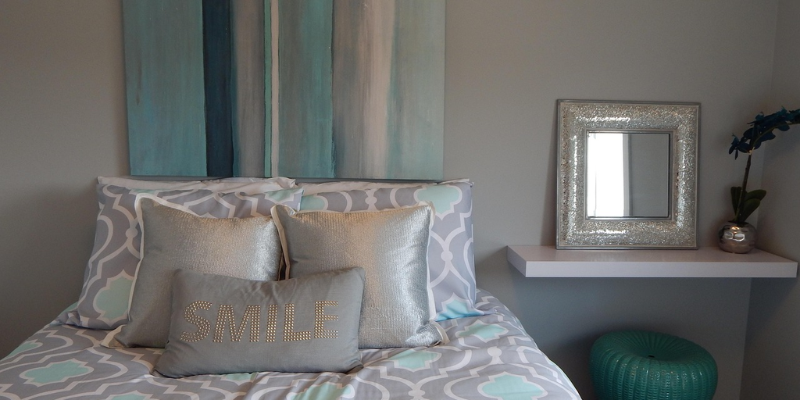
A low platform bed is almost synonymous with minimalist bedroom furniture. It keeps the room feeling grounded without dominating the space. Because it sits close to the floor, the ceiling feels higher and the room appears larger. Choose simple wood or a matte finish in light or medium neutral tone white, beige, light oak, or pale gray to match a calm palette.
How to pick the best version: look for a frame with a thin profile, minimal or no headboard, and no ornate legs or trim. This lets the bed blend into the room and gives you freedom to add a slim nightstand or open shelf without clutter.
2) Use nightstands with hidden storage
Floating or wall‑mounted nightstands are a powerful trick for maintaining a neat look. Even small drawers or a single concealed compartment can hide chargers, books, or bedside essentials, so surfaces stay clear and tidy. Nightstands that appear to float also emphasize the floor, another hallmark of minimalist bedroom furniture and give a sense of airiness that’s hard to get with heavy, bulky pieces.
Opt for neutral finishes or natural wood, and almost nothing else on the top surface except a small lamp or one personal item. That restraint keeps the rest of the room calm.
3) Choose a streamlined dresser
A dresser is essential, yet it can become a visual eyesore if too ornate or colorful. For strong minimalist bedroom furniture, use a dresser with a flat front, thin hardware, or recessed pulls, and soft neutral tones. Aim for widths that fit tightly under a window or along a single wall with no oversized, unnecessary bulk.
Dresser drawers are perfect storage for folded clothes, removing the need for extra racks or baskets that make the room look busy. When paired with a simple wall mirror or a minimal piece of art, the combo feels clean, purposeful, and very modern.
4) Integrate built‑in or sliding wardrobes
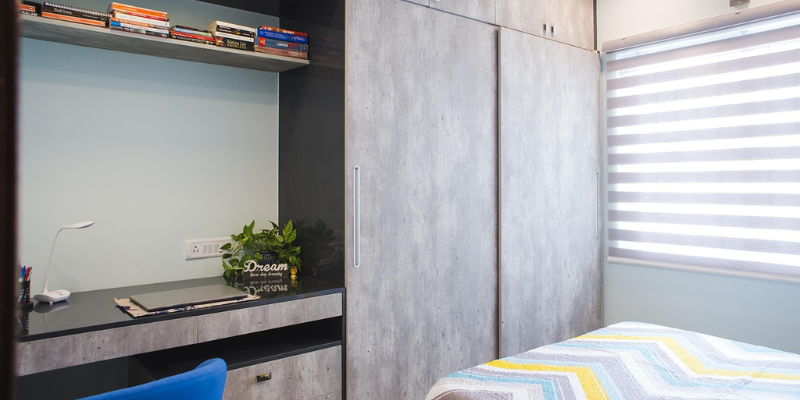
If your space allows, built-in wardrobes or closets with sliding doors are a top upgrade. They eliminate the jagged edges and protruding knobs of traditional cabinets, giving you an expansive, unbroken wall surface. Sliding doors save floor space and keep the room visually cohesive, exactly what minimalist bedroom furniture aims for.
In small bedrooms, mirrored sliding doors also reflect light and enlarge the visual field. Even with bright or dark interiors, the outward look remains neutral and calm. Use hidden shelves inside to keep things organized, and limit outside decorations to one or two small items to maintain the minimalist feel.
5) Go multi‑functional with storage beds or ottomans
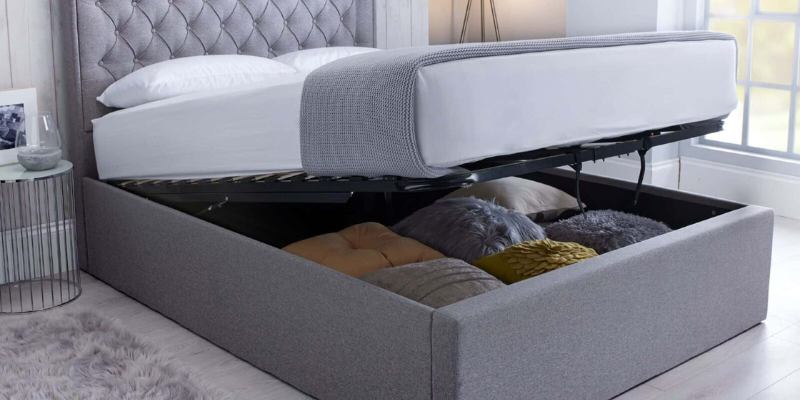
For maximum efficiency, pick pieces that serve double duty: a bed with drawers underneath, an ottoman that doubles as a storage trunk, or a small bench at the foot of the bed with hidden space. This reduces the number of distinct furniture items needed and keeps surfaces bare core principles of minimalist bedroom furniture.
These choices are especially helpful in apartments or shared rooms, where every square foot matters. By handling storage within the furniture itself, you avoid extra shelves or baskets that crowd the room’s lines.
6) Favor a soft, neutral color palette
Neutral shades white, beige, taupe, gray, light wood tones are widely recognized in minimalist interiors because they make everything feel calm and modern. A notable design guide underlines that minimalist rooms often rely on simple forms, neutral palettes, and streamlined storage to avoid visual clutter, yet still feel elegant and purposeful.
When choosing paint, textiles, and furniture, keep most surfaces in light or mid‑tone neutrals, and only introduce muted accents when needed. Darker hues can work in very small amounts, but the main furniture should remain understated to strengthen the minimalist effect.
7) Add one subtle accent chair
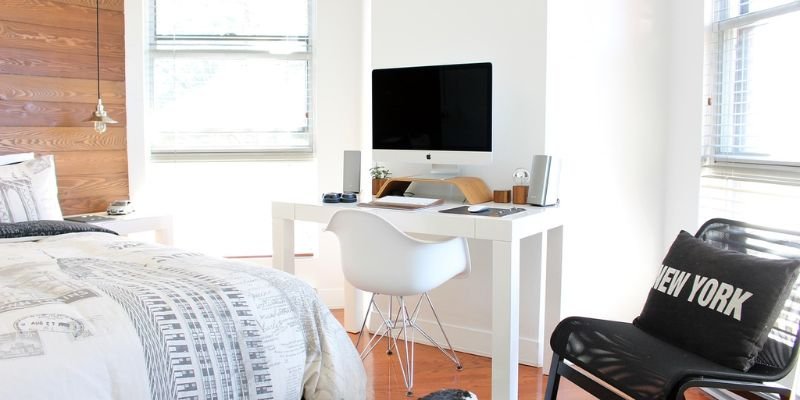
A single accent chair near a window or beside the bed can improve comfort without overwhelming the space. Choose slim legs, a small footprint, and a neutral fabric. This becomes a dedicated spot for reading or dressing, but still feels part of the overall minimalist plan.
Avoid chairs with heavy patterns, big arms, or excessive pillows. One clean silhouette is all you need to add function and style while staying true to minimalist bedroom furniture principles.
8) Keep lighting slim and purposeful
Lighting choices should echo the furniture’s simplicity. Slim floor lamps, sleek table lamps, or mounted wall sconces are excellent because they don’t take up much space or draw attention away from the room’s minimal layout. Use warm LED bulbs for softness and comfort, rather than harsh bright white, which can make a room feel clinical.
Place lamps where they serve a clear purpose: bedside reading, highlighting a mirror, or softly lighting a corner chair without adding extra decorative elements.
9) Use open shelving sparingly and intentionally
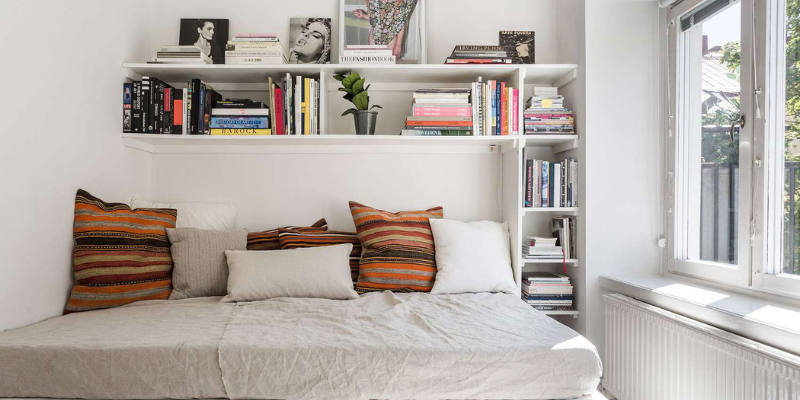
Open shelves have value in a minimal bedroom when you style them carefully. One or two shelves high on a wall can display a plant, a single book stack, or one small artwork. The goal is to keep surfaces clear and let the furniture stand out, not to display every item at once.
Pick shelves in the same finish as your furniture light wood or neutral metal so they blend seamlessly into the room rather than competing for attention.
10) Limit accessories to a few high‑impact pieces
The strongest minimalist rooms often use fewer than five decorative elements. Think one large mirror, one piece of abstract art, a single vase, or a small plant. Too many accents undermine the calm, purpose‑driven look of minimalist bedroom furniture.
When you replace a decorative item, choose something with a neutral tone or a subtle texture that continues the room’s restful feel. This keeps the space visually interesting without cluttering.
11) Choose natural materials for texture and warmth
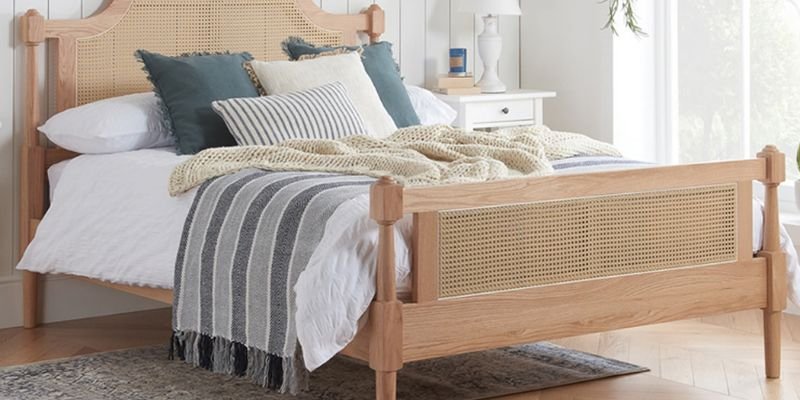
Minimalism doesn’t mean cold or lifeless. Natural materials wood, stone, linen, cotton, jute add texture and warmth while staying neutral. A linen duvet cover on a low platform bed, a light wooden dresser, or a cotton rug in beige or gray all support the minimalist theme.
This approach keeps the room comfortable and inviting, even though it uses minimal decoration and neutral colors. It’s a simple but effective way to upgrade any set of minimalist bedroom furniture.
12) Plan furniture layout around space flow
Finally, how you position your furniture matters as much as the pieces themselves. Leave clear pathways around the bed, dresser, and wardrobe. Avoid pushing every item to the wall; sometimes a small gap between furniture and wall adds a sense of space and ease. Arrange pieces so they don’t block windows or doors, which helps maintain an airy environment.
A thoughtful layout lets you enjoy all the benefits of minimalist bedroom furniture, open feel, easy maintenance, and a serene visual mood.
FAQs
1. Can minimalist bedroom furniture work in very small rooms?
Yes, it works perfectly because minimalist pieces maximize floor space and reduce clutter. Clean lines and smart storage make even the smallest rooms feel open and airy.
2. Are darker neutrals acceptable for minimalism?
Yes, but use them lightly to avoid overwhelming the space. Pair darker tones with soft neutrals to maintain balance and calmness.
3. How many pieces of furniture are too many?
Stick to only the essentials needed for comfort and storage. Anything without purpose or function should be removed to maintain a clean look.
4. Is minimalist design too cold or sterile?
Not when warmed with natural materials and soft textures. Minimalism feels peaceful, inviting, and personal when styled with intention.
5. How often should I refresh minimalist furniture?
Minimalist furniture remains timeless, so updates are rarely needed. Small swaps like new lamps or plants keep the space feeling fresh.