

Drying laundry inside the home is becoming more common for people living in apartments, small homes, or climates with unpredictable weather. Whether you’re avoiding outdoor pollution or simply lack a backyard, learning how to manage air drying clothes indoors can transform the way you handle laundry. This method protects fabric quality, lowers electricity bills, and supports an eco-friendly lifestyle. With the right techniques, anyone can make air drying clothes indoors fast, effective, and hassle-free.
Table of Contents
Benefits of Air Drying Clothes Indoors
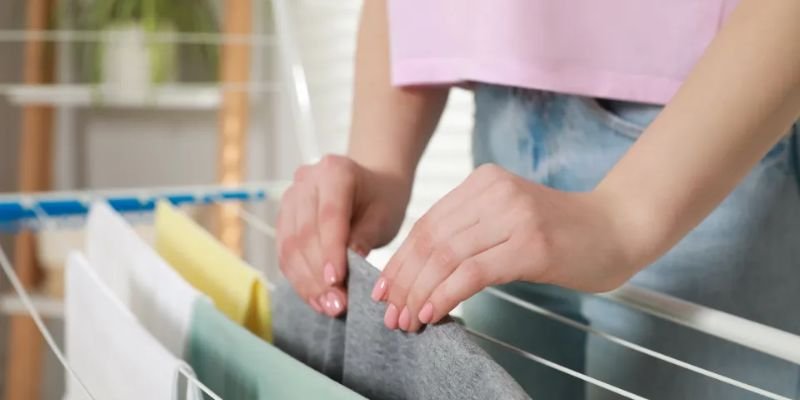
Choosing to dry laundry inside the home comes with several advantages. One of the biggest benefits is fabric longevity. Traditional machine dryers weaken fibers, cause shrinkage, fade colors, and wear out elastic. When you rely on air drying clothes indoors, your garments receive gentle treatment, helping them last much longer.
Indoor drying also reduces your monthly electricity bill. Since electric dryers consume a high amount of energy, switching to natural drying can save money instantly. It’s especially helpful for large families and small apartments where energy-efficient living is essential.
Another benefit is its suitability for urban living. Many modern apartments lack balconies or outdoor areas. In such cases, air drying clothes indoors becomes the most practical and space-saving method. It’s also an environmentally friendly choice since it requires zero electricity and reduces overall carbon footprint.
How to Improve the Process of Air Drying Clothes Indoors
To make drying more efficient, location matters. Always choose a spot with adequate ventilation. A room with an open window, a balcony door, or a fan helps moisture escape quickly. Avoid small, sealed areas where humidity builds up, as this slows drying time.
Proper tools also make a big difference. Use foldable drying racks, wall-mounted lines, ceiling pulley racks, or clip hangers. These keep clothes spaced out so air can circulate freely. Overcrowding clothes will trap moisture and produce musty smells.
Sunlight is another powerful helper when air drying clothes indoors. Position your rack near a bright window. Light naturally kills bacteria, reduces damp odors, and helps clothes dry faster.
If your climate is humid or it’s the winter season, airflow becomes even more critical. A rotating fan, ceiling fan, or dehumidifier will greatly speed up drying times. A dehumidifier is especially effective because it extracts moisture from the air, preventing dampness inside the room.
Another simple trick is to increase the washing machine’s spin speed. The more water removed during spinning, the shorter your indoor drying time will be. Always shake out clothes before hanging them to avoid stiffness and wrinkles.
Common Problems When Air Drying Clothes Indoors
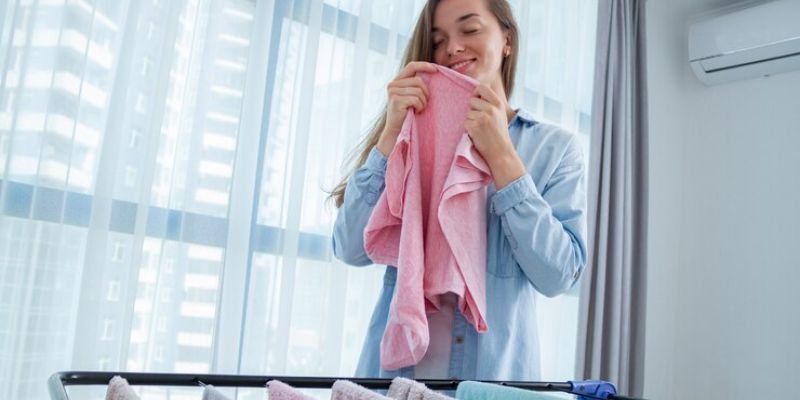
Drying laundry inside can be incredibly convenient, but it’s not without challenges. One major issue is humidity buildup. When multiple items dry simultaneously, the moisture they release can make your home feel damp. This is easily prevented with ventilation and airflow.
Another common mistake is drying laundry in bedrooms. Humidity can affect sleep quality and increase the risk of mold over time. Choose open areas, utility rooms, or well-ventilated living spaces instead.
People also tend to overcrowd drying racks, which suffocates airflow. When drying towels, jeans, and thick fabrics, leave extra space between items. This shortens drying time and prevents unpleasant odors.
Lastly, avoid placing clothes directly on heaters or radiators. Although it may seem faster, it damages fibers and increases the risk of fabric scorching.
Smart Tools That Improve Air Drying Clothes Indoors
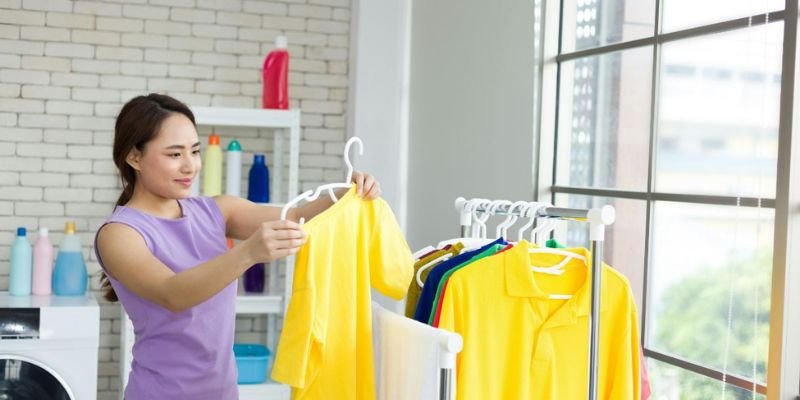
You can simplify your drying routine with a few helpful items. Heated drying racks are great for winter or humid regions. They gently warm clothes without damaging them.
Clip hangers are perfect for socks, undergarments, kitchen towels, and baby clothing. They help maximize vertical space and keep small items organized.
Retractable wall lines are great for multipurpose rooms. You can pull them out when needed and retract them afterward, keeping your space clutter-free.
If you partially dry clothes in a dryer before hanging, wool dryer balls help remove extra moisture and reduce drying time.
Mistakes to Avoid While Air Drying Clothes Indoors
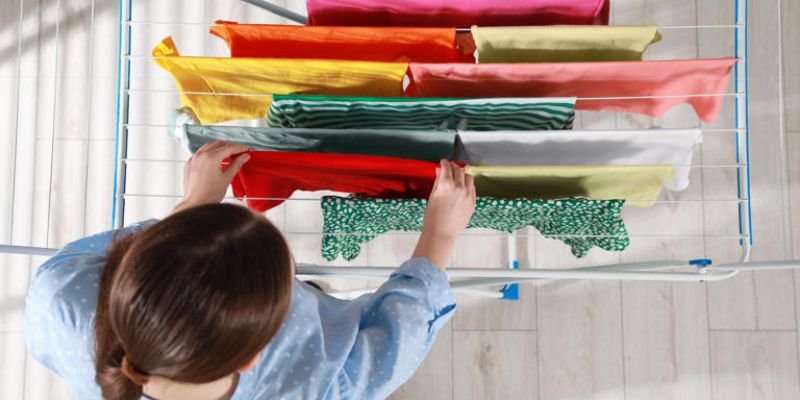
There are a few mistakes people commonly make. Leaving wet laundry sitting in the washer creates musty smells before drying even begins. Always remove clothes right after the cycle ends.
Never dry clothes in completely closed rooms. Moisture will stay trapped and make fabrics smell damp. Combining a fan and a slightly open window works wonders.
Also, avoid piling clothing layers on top of each other. Every item needs airflow around it. Spread garments out evenly to improve freshness and speed.
Best Indoor Practices for Air Drying Clothes Indoors
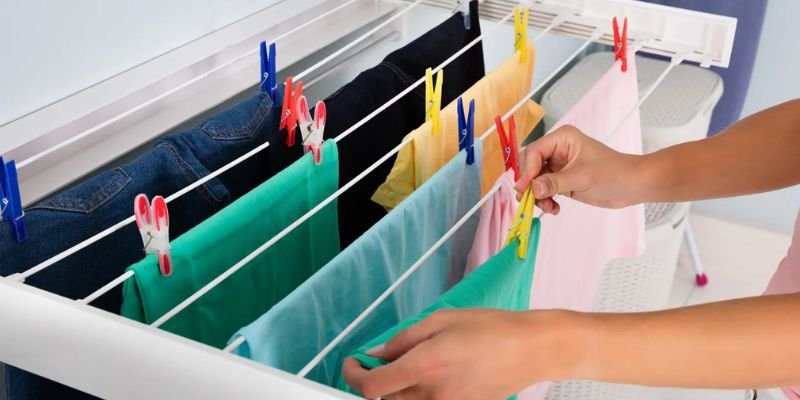
To improve results when air drying clothes indoors, start by spreading out your laundry loads so moisture doesn’t build up in one room. Dry clothes during the daytime for better airflow and natural warmth.
Place heavier items like jeans or towels near fans or windows, while lighter garments can dry farther away. Use hangers for shirts and delicates to keep their shape and boost air circulation.
Rotating clothes halfway through drying ensures even results and prevents damp smells. Keeping your drying area clean and clutter-free also helps clothes dry faster and stay fresh.
Conclusion
Learning the art of air drying clothes indoors is a game changer for small homes, apartments, and energy-conscious households. With the right placement, tools, airflow, and drying habits, you can dry clothes naturally without sacrificing time or quality. This method is gentle on fabrics, friendly on the wallet, and great for the environment. When done correctly, air drying clothes indoors becomes a smooth and effective part of everyday home care leaving your laundry fresh, clean, and long-lasting.
FAQs
1. Does air drying clothes indoors take longer?
Yes, depending on airflow and fabric type. Thin fabrics dry within hours, while thicker items may take 12–24 hours.
2. Can mold grow when drying inside?
Only with poor ventilation. Using a fan, open window, or dehumidifier prevents moisture buildup.
3. Is air drying healthier for clothing?
Yes, it protects fibers, prevents shrinkage, and helps clothes retain color and shape.
4. How do I stop clothes from smelling musty?
Ensure good airflow, do not overcrowd racks, and shake garments before hanging.
5. What room is best for drying laundry indoors?
A well-ventilated living room, laundry area, or sunny hallway works best. Avoid bedrooms.