Best Plants for North-Facing Windows: 10 Low-Light Picks That Actually Work
Published: 9 Oct 2026
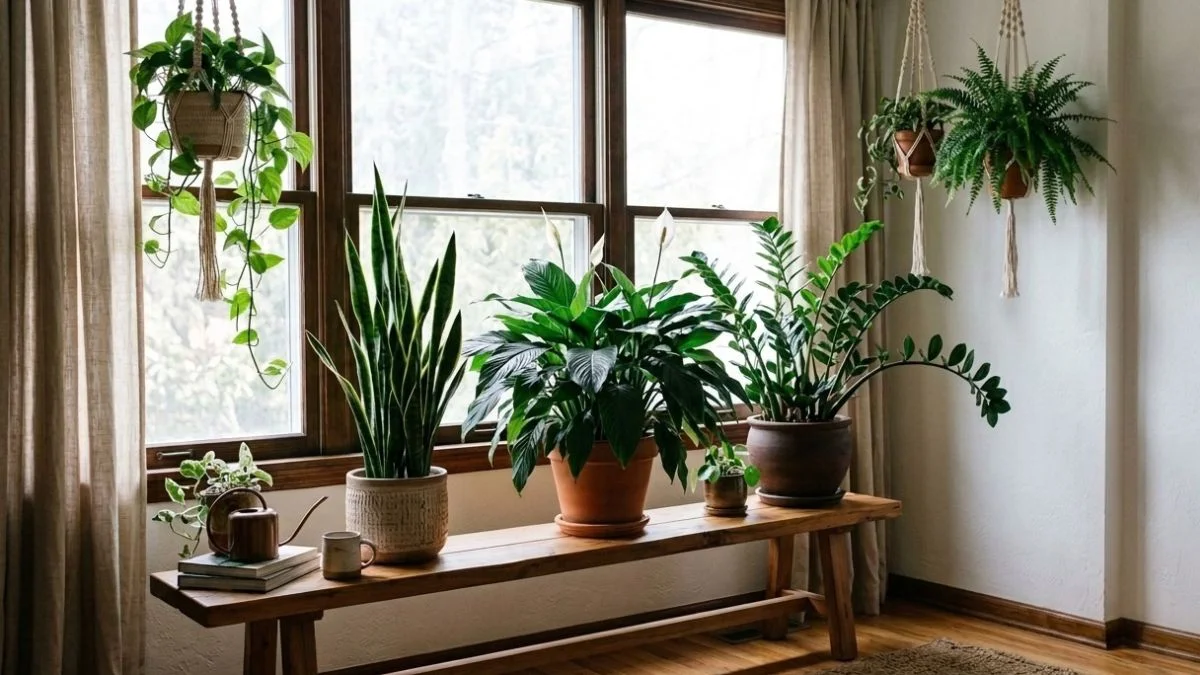
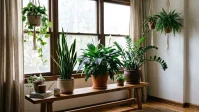
Although north-facing windows get less direct sunlight, they can still provide suitable conditions for many indoor plants. While many sun-loving houseplants need stronger light, the best plants for north-facing windows are comfortable with softer, indirect light.
The trick is choosing a plant that matches the conditions instead of trying to force a high-light plant to survive in a dim room. Plants that naturally grow beneath tree canopies are often much better suited to this type of location.
Below are 10 reliable choices for north-facing windows, plus practical tips for watering, lighting, and everyday care. If you’re new to houseplants or short on space, our guide to the best indoor plants for beginners in small homes is a good place to start too.
Table of Contents
What Is the Light Like at a North-Facing Window?
In the Northern Hemisphere, a north-facing window usually receives little or no strong direct sunlight. The light tends to be indirect and relatively gentle.
This can work well for foliage plants that do not require intense sun. Cacti, many succulents, and herbs such as rosemary generally need more light and may struggle in a darker window.
Your location also matters. In the Southern Hemisphere, the direction of the strongest sunlight is different, so a north-facing window can be considerably brighter.
Check the Light Before Choosing a Plant
Check the area at the brightest time of day and use a quick shadow test to gauge the available light:
- Strong, defined shadow: brighter light
- Soft shadow: medium light
- Very weak shadow: low light
The plant’s distance from the window also matters. A pot sitting on the sill receives much more usable light than one placed several feet away.
Curtains, trees, neighboring buildings, tinted glass, and even dirty windows can reduce the amount of light reaching your plants.
10 Best Plants for North-Facing Windows
1. Snake Plant (Dracaena trifasciata)
Snake plants are a strong choice for people who want an easy-care houseplant. Their upright leaves take up little space, so they work especially well beside a window, on a narrow stand, or in a small apartment.
They can handle low light and periods without water. In a darker room, expect slower growth rather than a constant stream of new leaves.
The main problem to avoid is excessive watering. Let the potting mix dry before watering again and use a container with drainage holes.
Pet safety: Snake plants can be harmful to cats and dogs if eaten.
2. ZZ Plant (Zamioculcas zamiifolia)
The ZZ plant is another dependable option for a dim room. Its thick underground rhizomes store water, allowing the plant to cope with dry periods better than many houseplants.
Its shiny foliage can brighten a dark corner without needing direct sun.
Growth can be quite slow when light is limited, so don’t assume something is wrong just because the plant looks unchanged for a while.
Keep the soil from staying wet for long periods, as excess moisture can cause root and rhizome problems.
Pet safety: ZZ plants can be harmful to cats and dogs if they are eaten.
3. Pothos (Epipremnum aureum)
Pothos is a highly adaptable houseplant that works well in many indoor settings. Its trailing stems can spill from a hanging planter, run along a shelf, or climb a support.
It can tolerate lower light, although its growth may become slower. Variegated varieties may also develop greener leaves when light is limited because the plant produces less of its lighter patterning.
If you want a plant that is easy to style and beginner-friendly, pothos is a practical choice.
Pet safety: Pothos can be harmful to cats and dogs if they chew or eat the plant.
4. Cast Iron Plant (Aspidistra elatior)
Few houseplants have a tougher reputation than the cast iron plant. It handles shade and lower-light conditions well and is generally forgiving when care is not perfect.
Its wide, dark green leaves give rooms a calm, classic appearance. It is particularly useful where you want greenery but do not have a bright window.
Do not worry if it grows slowly. This plant is valued more for its toughness than for rapid growth.
Pet safety: Cast iron plants are considered non-toxic to cats and dogs.
5. Peace Lily (Spathiphyllum)
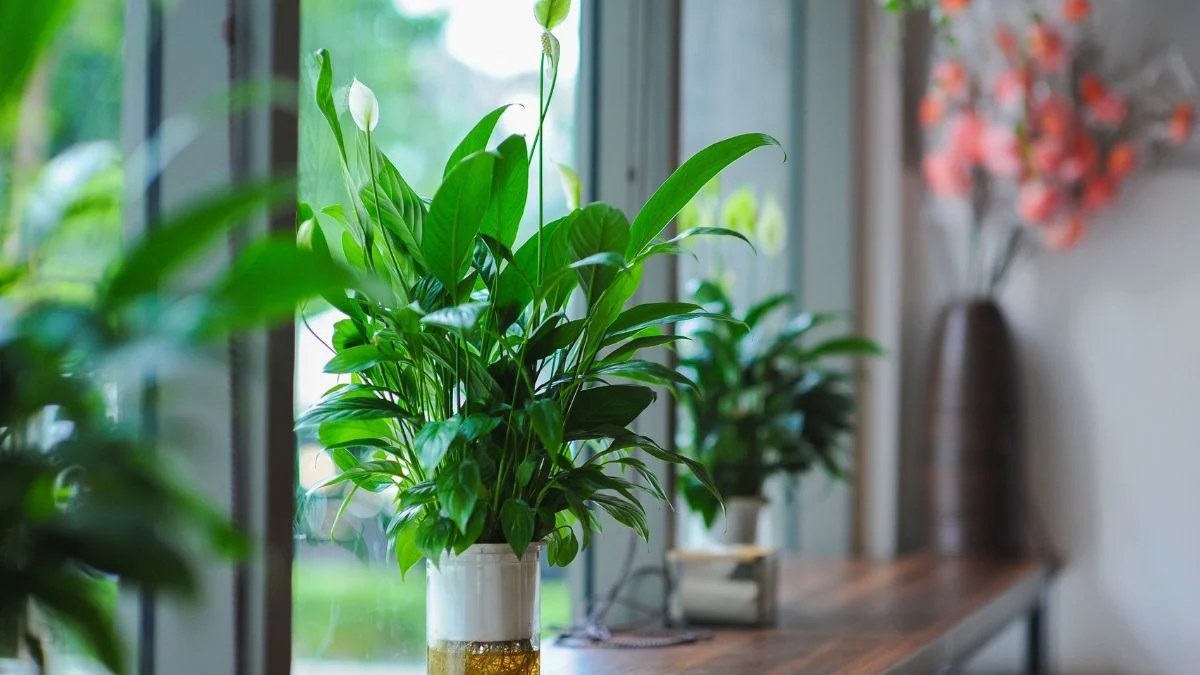
A peace lily can be a good choice when you want foliage as well as occasional white flowers. It tolerates lower light, although limited light can reduce flowering.
Peace lilies also tend to make their water needs obvious. When the plant needs water, its leaves may start to droop visibly. After proper watering, the foliage may recover.
Avoid keeping the pot constantly wet. Good drainage is essential.
Brown leaf tips can occur for several reasons, including dry conditions or minerals in tap water.
Pet safety: Peace lilies can be harmful to cats and dogs if they chew or ingest the plant.
6. Chinese Evergreen (Aglaonema)
Chinese evergreen offers plenty of variety. Depending on the cultivar, its leaves may be dark green, silver, pink, or red.
For a particularly dim north-facing window, a darker green variety is usually a better option than a highly variegated plant. Plants with more colorful foliage may need stronger light to maintain their markings.
Pet safety: Chinese evergreens can be harmful to cats and dogs if they chew or ingest the plant.
7. Heartleaf Philodendron (Philodendron hederaceum)
With its heart-shaped leaves and trailing growth, heartleaf philodendron is an easy way to add greenery to shelves, bookcases, and plant stands.
It does well in indirect light and can also handle lower-light areas. If the stems become overly long or sparse, trimming the tips can encourage a fuller appearance.
As with many indoor plants, good drainage and careful watering are more important than following a rigid schedule.
Pet safety: Philodendrons are toxic to pets.
8. Parlor Palm (Chamaedorea elegans)
Want a palm without a sunny room? The parlor palm is worth considering. It tolerates lower light and usually remains manageable in size, making it suitable for apartments and smaller rooms.
Keep its soil lightly moist without allowing the roots to sit in water. Indoor air can become especially dry when heating or air conditioning is running, so moderate humidity can also be helpful.
Its softer, arching foliage can add a relaxed tropical touch without demanding intense sunlight.
Pet safety: Parlor palms are considered non-toxic to cats and dogs.
9. Spider Plant (Chlorophytum comosum)
Spider plants grow well in a range of indoor environments and tolerate low to moderate indirect light.
One of their most appealing features is the production of small plantlets, or “pups,” along their stems. These can eventually be grown into new plants.
Brown leaf tips are common and may be related to dry soil or mineral and fluoride buildup from tap water. If the problem continues, filtered water may be worth trying.
Pet safety: Spider plants are considered non-toxic to cats and dogs.
10. Boston Fern (Nephrolepis exaltata)
Boston ferns naturally prefer shaded environments, making them a possible match for a north-facing space.
Their long, curved fronds create a lush, fuller look, but they do best with more consistent humidity.
Dry indoor air can leave fern fronds brown and crispy. A humid bathroom or a position near a humidifier may be more suitable than a very dry room.
Pet safety: Boston ferns are generally considered safe for cats and dogs.
North-Facing Window Plants at a Glance
| Plant | Light | Care | Pet-Safe |
| Snake Plant | Low to bright | Very easy | No |
| ZZ Plant | Low to medium | Very easy | No |
| Pothos | Low to bright | Very easy | No |
| Cast Iron Plant | Low to medium | Very easy | Yes |
| Peace Lily | Low to medium | Easy | No |
| Chinese Evergreen | Low to medium | Easy | No |
| Heartleaf Philodendron | Low to medium | Easy | No |
| Parlor Palm | Low to medium | Easy | Yes |
| Spider Plant | Low to bright | Easy | Yes |
| Boston Fern | Medium | Moderate | Yes |
If you have pets, check the exact species or cultivar before buying. Common plant names can sometimes refer to different plants, so don’t rely only on a store label.
How to Care for Plants in Low Light
Low-light plants need a little different care than plants kept near bright windows. One of the most common mistakes is watering them too much.
Water According to the Soil
Plants tend to use less water when they don’t get much light.. Watering on the same schedule every week can therefore leave the soil wet for too long.
Instead, check the potting mix before watering. Push your finger into the upper inch or two. If it still feels damp, wait.
Use pots with drainage holes and do not leave excess water sitting in the saucer.
Turn the Pot Occasionally
A plant naturally bends toward its light source. Since a north-facing window provides light mainly from one direction, the plant may begin leaning toward the glass.
Give the container a small turn every week or two to encourage more balanced growth.
Wipe Dust From Leaves
Dust can collect on foliage and interfere with the light reaching the leaves. This is even more important when the plant gets very little light.
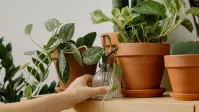
Every few weeks, gently clean broad leaves with a soft, damp cloth.
Don’t Overuse Fertilizer
Slow growth doesn’t always mean the plant needs more fertilizer. Too much can contribute to salt buildup and root damage.
During active growth, use a suitable balanced houseplant fertilizer according to its instructions. Plants generally need less feeding during winter.
Pay Attention to Winter
Shorter winter days can make an already dim window even darker. A plant that looked fine during summer may begin producing stretched or pale growth.
If that happens, move it closer to the glass or consider adding artificial light.
When Is a Grow Light Useful?
A grow light is not automatically necessary for every north-facing window. Many shade-tolerant plants can live without one.
However, supplemental light can help when a plant is clearly struggling. Look for signs such as:
- Thin or stretched stems
- Pale foliage
- Large spaces between leaves
- Dropping lower leaves
- Very little new growth
A full-spectrum LED grow bulb can provide additional light for foliage plants. Follow the manufacturer’s instructions for placement and operating time rather than guessing the distance.
Think of supplemental lighting as an option when natural light is insufficient, not something every plant needs.
Common Mistakes to Avoid
Choosing plants that need bright light: Cacti, many succulents, rosemary, and some flowering plants usually grow best in bright, sunny spots.
Keeping the plant too far from the window: Light decreases as the distance from the glass increases. A plant that succeeds on a windowsill may struggle across the room.
Watering by the calendar: Always check the soil first.
Changing locations too often: Give a plant time to adjust before deciding that its new position is unsuitable.
Expecting fast growth: Plants often grow more slowly in low light. That doesn’t mean they are unhealthy or need extra care. A healthy plant may simply take longer to produce new leaves..
Do These Plants Really Purify Indoor Air?
Houseplants are often promoted as natural air cleaners, partly because of research conducted in controlled, sealed environments.
Those conditions are very different from an occupied home where air moves in and out through ventilation.
A later review in the Journal of Exposure Science & Environmental Epidemiology concluded that ordinary houseplants are unlikely to remove indoor pollutants at a meaningful rate under normal ventilation.
So choose plants for their appearance, greenery, and the atmosphere they create rather than expecting a few pots to replace proper ventilation.
Final Thoughts
A north-facing window does not have to be a plant-free zone. The key is choosing the best plants for north-facing windows: species that match the available light instead of demanding more sunshine than the spot can provide.
For beginners, snake plants, ZZ plants, pothos, and cast iron plants are especially practical places to start. Once you understand how bright your window is throughout the year, you can experiment with other varieties.
Keep watering under control, provide drainage, watch seasonal changes, and give slow-growing plants time to settle in. With the right choices, even a low-light window can become a simple and attractive part of your indoor garden.
FAQs
1. Can plants grow near a north-facing window?
Yes. Several houseplants tolerate the indirect light found near north-facing windows. Snake plants, ZZ plants, pothos, and cast iron plants are among the easier options.
2. Which plant is easiest for a north-facing window?
Snake plants and ZZ plants are excellent beginner choices because they tolerate lower light and do not need frequent watering.
3. Are succulents suitable for a north-facing window?
Most succulents prefer brighter conditions. In a dim location, they may become stretched and weak. Snake plants are an exception because they tolerate lower light better than many other succulents.
4. Can a peace lily flower in a north-facing window?
It can, but flowering may be reduced when light is very low. If flowers are a priority, brighter indirect light or supplemental lighting may produce better results.
5. Which plants here are safe for cats and dogs?
Cast iron plants, parlor palms, spider plants, and Boston ferns are generally considered non-toxic to cats and dogs. Snake plants, ZZ plants, pothos, peace lilies, philodendrons, and Chinese evergreens are considered toxic.
6. How frequently should low-light plants be watered?
There’s no one watering schedule that works for every plant. Check the soil before watering and wait if the upper portion is still damp. Lower-light plants commonly need less water than plants in bright locations.
7. Why are my leaves turning yellow?
Overwatering is a common problem, especially for plants growing in low-light conditions. Poor drainage, insufficient light, or cold conditions can also contribute. Check the soil and pot drainage before watering again.
8. Is a grow light necessary for a north-facing window?
Not always. Many suitable plants can grow without one. A grow light becomes useful when plants develop weak, stretched, pale, or very slow growth because the natural light is insufficient.

- Be Respectful
- Stay Relevant
- Stay Positive
- True Feedback
- Encourage Discussion
- Avoid Spamming
- No Fake News
- Don't Copy-Paste
- No Personal Attacks
- Be Respectful
- Stay Relevant
- Stay Positive
- True Feedback
- Encourage Discussion
- Avoid Spamming
- No Fake News
- Don't Copy-Paste
- No Personal Attacks
