Best Indoor Plants for Beginners in Small Homes: 8 Easy Picks That Actually Survive
Published: 30 Sep 2026
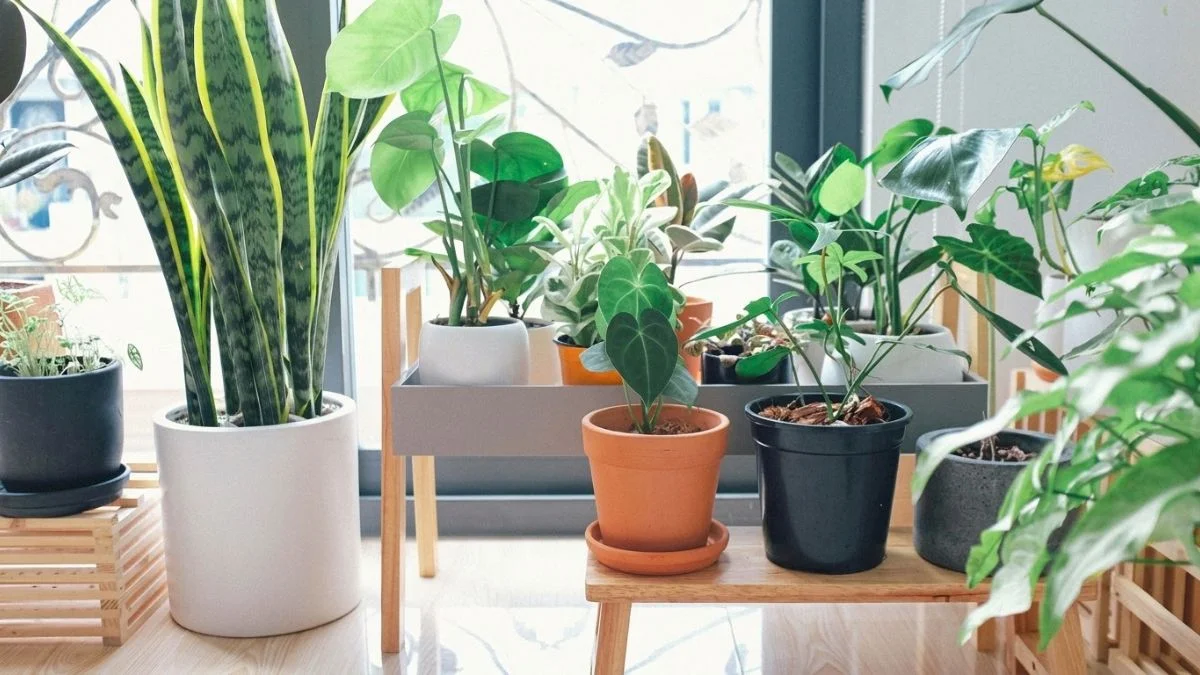
Living in a small apartment doesn’t mean you have to give up on indoor greenery. The best indoor plants for beginners in small homes add color, texture, and life without taking up much space.
For beginners, it helps to choose plants that are compact, easy to care for, and suited to your home’s light and watering routine. Before you buy, think about available space and whether you have pets. Several of these plants are also indoor plants that don’t need frequent watering, which helps if you forget a watering now and then.
Here are eight beginner-friendly indoor plants that work well in smaller homes, along with simple care tips to help them stay healthy.
Table of Contents
What Should Beginners Look For?
NA plant that thrives with little effort in one home may need much more care in another. Your first choice should depend on the conditions you can actually provide.
For a small home, look for plants that offer:
Good resilience: Hardy plants are more likely to recover from minor care mistakes.
Flexible light needs: Useful when different areas of your home have different levels of daylight.
Forgiving care: Helpful if you occasionally forget to water.
Manageable growth: Upright or compact plants are easier to fit into tight areas.
Simple maintenance: Slow-growing varieties usually need less pruning and repotting.
Check the Light Before Buying
The amount of light your plant receives plays a major role in keeping it healthy indoors. Look at the exact place where you plan to keep the plant rather than choosing based only on how the room feels.
Bright, indirect light means placing the plant close to a well-lit window where it gets plenty of light without sitting in strong, direct sunlight for hours.
Medium light describes a spot that gets daylight but is farther from the window.
Low light refers to spaces that receive very little natural sunlight, such as a room with a small window or a spot far from a window. It does not mean a completely dark room.
A shadow check around midday can give you a rough idea of the available light. A sharp shadow usually indicates stronger light, while a faint shadow suggests lower light.
Window direction also matters. In the Northern Hemisphere, south- and west-facing windows generally receive stronger light than north-facing windows. A windowless room may need a grow light.
8 Best Indoor Plants for Beginners in Small Homes
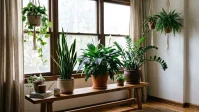
These eight plants forgive missed waterings and less-than-perfect light, and most stay compact enough for a shelf, windowsill, or corner.
1. Pothos (Epipremnum aureum)
Pothos is especially useful in a small home because its vines can grow downward instead of taking up floor space. Put it on a bookshelf, cabinet, wall shelf, or hanging planter and let the stems trail.
- Light: Low to bright indirect light
- Water: Let the top inch or so of potting soil dry before giving the plant another drink.
- Small-space idea: Use a high shelf or hanging planter
- Extra feature: Stem cuttings can be rooted in water
- Pet safety: The ASPCA lists pothos as toxic to cats and dogs
2. Snake Plant (Sansevieria, now often listed as Dracaena trifasciata)
Snake plants are a good match for narrow rooms because their leaves grow vertically. A tall pot can sit beside furniture or in a corner without spreading across much floor space.
- Light: Low to bright indirect light
- Water: Allow the soil to dry between waterings
- Small-space idea: Place it beside furniture or in a narrow corner
- Care reminder: Avoid keeping the roots constantly wet
- Pet safety: The ASPCA lists snake plants as toxic to cats and dogs
3. ZZ Plant (Zamioculcas zamiifolia)
The ZZ plant is useful for people who sometimes forget about watering. Its underground rhizomes hold water, helping the plant cope with dry spells better than many houseplants that need consistently moist soil.
- Light: Low to medium indirect light
- Water: Let the soil dry well before watering again
- Growth: Relatively slow
- Placement: Works on stands, shelves, or in corners
- Pet safety: The ASPCA lists ZZ plants as toxic to cats and dogs; its sap can irritate skin
4. Spider Plant (Chlorophytum comosum)
Spider plants offer plenty of foliage without needing a large floor footprint. Their long leaves arch naturally, making them attractive in hanging baskets or elevated containers.
- Light: Medium to bright indirect light
- Water: Keep the mix lightly moist without leaving it soggy
- Small-space idea: Try a hanging planter or shelf
- Care note: Brown tips can sometimes occur with dry conditions or minerals in tap water
- Pet safety: The ASPCA lists spider plants as non-toxic to cats and dogs
5. Peperomia (Peperomia species)
Peperomias come in many shapes, colors, and textures, but many varieties stay compact. That makes them useful for desks, bedside tables, shelves, and windowsills.
- Light: Medium to bright indirect light
- Water: Wait until the top layer of soil feels dry before watering the plant again.
- Best spots: Desks, shelves, and small tables
- Space benefit: Many types remain relatively compact
- Pet safety: The ASPCA lists peperomias as non-toxic to cats and dogs
6. Cast Iron Plant (Aspidistra elatior)
The cast iron plant has a reputation for handling less-than-ideal indoor conditions. It can tolerate lower light and some inconsistency in watering, which can be helpful for beginners.
- Light: Low to medium indirect light
- Water: Let the soil dry slightly between waterings
- Placement: Keep it away from strong direct sunlight
- Growth: Slow and manageable
- Pet safety: The ASPCA lists cast iron plants as non-toxic to cats and dogs
7. Chinese Evergreen (Aglaonema)
Chinese evergreens can add visual interest without requiring a large collection of decorative pieces. Depending on the variety, the foliage may include green, silver, pink, or patterned markings.
Keep the plant away from cold drafts.
- Light: Low to medium indirect light
- Water: Let the upper soil dry before watering
- Placement: Useful in lower-light indoor areas
- Care reminder: Avoid cold drafts
- Pet safety: The ASPCA lists Aglaonema as toxic to cats and dogs
8. Parlor Palm (Chamaedorea elegans)
A parlor palm can give a small room a softer, tropical appearance without the footprint of a large palm. Its foliage can add height to a corner or low table.
Unlike snake plants and ZZ plants, parlor palms prefer more consistent moisture. Keep the soil moist but never waterlogged.
- Light: Medium to bright indirect light
- Water: Keep the soil moderately moist
- Best spots: Corners and low tables
- Space benefit: Adds height without needing a very wide base
- Pet safety: The ASPCA lists parlor palms as non-toxic to cats and dogs
Quick Comparison
| Plant | Light | Watering Style | Pet-Safe (per ASPCA) |
| Pothos | Low to bright indirect | Let top soil dry | No |
| Snake plant | Low to bright indirect | Every 2–4 weeks | No |
| ZZ plant | Low to medium | Sparingly | No |
| Spider plant | Medium to bright indirect | Lightly moist | Yes |
| Peperomia | Medium to bright indirect | When top inch dries | Yes |
| Cast iron plant | Low to medium | Moderate | Yes |
| Chinese evergreen | Low to medium | When top soil dries | No |
| Parlor palm | Medium to bright indirect | Evenly moist | Yes |
Pet-safety lists can change, so double-check any plant on the ASPCA’s toxic and non-toxic plant database before you buy.
A Simple Care Routine for New Plant Parents
You don’t need a strict or complicated routine to keep easy-care houseplants healthy. Focus on a few basic habits.
Check the Soil Before Watering
Do not give every plant water on the same day. Indoor soil dries at different speeds depending on light, temperature, season, container size, and potting mix.
Instead, check the soil first. Push a finger about an inch into the mix. If that area feels dry, the plant may be ready for water. If it is still damp, wait.
When watering, soak the mix thoroughly enough for excess water to run from the drainage holes. Empty standing water from the saucer afterward.
Use a Container With Drainage
Drainage holes give excess water a way out. If you love a decorative pot that has no holes, keep the plant in a nursery container with drainage and place that inside the decorative pot.
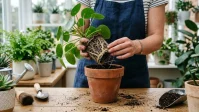
When repotting, avoid choosing a container that is dramatically larger. A pot roughly one to two inches wider than the current root ball is often a practical step.
Use a quality indoor potting mix rather than ordinary garden soil, which may become too compact in a container.
Keep Feeding and Cleaning Simple
Many houseplants benefit from occasional fertilizer during active growth in spring and summer.
Leaves can collect dust, so gently wipe them with a damp cloth when needed.
Smart Ways to Save Space
- Hang trailing plants such as pothos and spider plants.
- Place compact peperomias on suitable windowsills.
- Use a narrow or tiered plant stand.
- Let a pothos trail from a bookshelf.
- Use a snake plant or parlor palm to fill a narrow corner.
If you are new to houseplants, begin with two or three so you can learn their needs before adding more.
Do Houseplants Actually Clean Indoor Air?
A well-known 1989 NASA study examined whether certain plants could remove volatile organic compounds in enclosed environments. The findings helped make the idea of plants improving indoor air popular.
Later research showed that laboratory results do not directly describe typical homes. A 2019 review by Cummings and Waring, published in the Journal of Exposure Science & Environmental Epidemiology, found that potted plants have a limited effect on indoor air quality under normal ventilation.
Enjoy houseplants for their appearance, but do not use them instead of proper ventilation.
Beginner Mistakes to Avoid
Even hardy plants can have problems when their basic needs are overlooked.
- Following a fixed watering calendar: Check the soil instead.
- Using pots without drainage: Excess water needs an escape route.
- Choosing only by appearance: Pick a plant that fits the light conditions in your space, not just one you like the look of.
- Moving plants repeatedly: Give them time to adjust.
- Skipping pet-safety checks: Confirm toxicity before buying.
- Buying too many at once: A smaller collection is easier to manage.
Final Thoughts
Finding the best indoor plants for beginners in small homes is less about filling every empty corner and more about choosing plants that suit your actual conditions.
Start by checking your light. Then consider how often you realistically want to water, how much room you have, and whether pets share the home.
Pothos, snake plants, ZZ plants, spider plants, peperomias, cast iron plants, Chinese evergreens, and parlor palms each offer different advantages. Start small, observe how your plants respond, and build your collection gradually.
A compact home can still feel fresh and green. The right plants simply make it easier to enjoy that greenery without creating extra work.
FAQs
1. What is the easiest indoor plant for a beginner?
Pothos, snake plants, and ZZ plants are popular with beginners because they can handle changes in typical indoor conditions. However, they still need the right amount of light, proper watering, and good drainage to grow well.
2. Which plants are suitable for low-light areas?
Snake plants, ZZ plants, cast iron plants, and Chinese evergreens can tolerate relatively low light. However, low light is not the same as darkness; plants still need usable light.
3. How often should indoor plants be watered?
There is no universal watering schedule. Check the soil before watering. Snake plants and ZZ plants can usually go longer between waterings than houseplants that need consistently moist soil.
4. Are these plants safe for cats and dogs?
Some are and some are not. The ASPCA lists spider plants, peperomias, cast iron plants, and parlor palms as non-toxic to cats and dogs. It lists pothos, snake plants, ZZ plants, and Chinese evergreens as toxic.
5. How many plants should I start with in a small home?
Two or three plants are a manageable starting point for a small home. You can learn their individual needs before adding more.
6. Can plants live in a room without windows?
Not reliably without supplemental light. Plants need light for photosynthesis, so a suitable grow light may be necessary in a windowless room.
7. Why are my plant leaves turning yellow?
Yellow leaves can have several causes, including excess water, insufficient light, nutrient issues, or natural aging. Check the soil and lighting before changing your entire care routine.
8. Do indoor plants really purify the air?
Under normal home conditions, their effect on indoor air quality is limited. Proper ventilation is much more important for maintaining fresh indoor air.

- Be Respectful
- Stay Relevant
- Stay Positive
- True Feedback
- Encourage Discussion
- Avoid Spamming
- No Fake News
- Don't Copy-Paste
- No Personal Attacks
- Be Respectful
- Stay Relevant
- Stay Positive
- True Feedback
- Encourage Discussion
- Avoid Spamming
- No Fake News
- Don't Copy-Paste
- No Personal Attacks
