
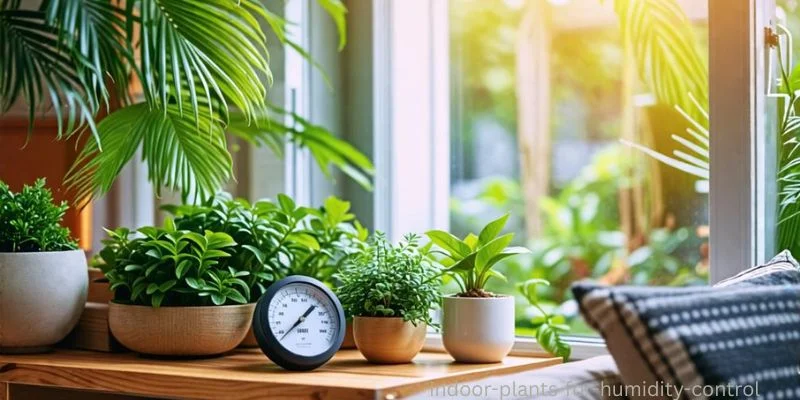
Maintaining the right moisture level inside your home is essential for comfort, health, and even the longevity of your furniture. Indoor Plants for Humidity Control provide a natural, eco-friendly way to manage indoor moisture while enhancing your home’s overall appearance.
Indoor air often becomes too dry due to air conditioners, heaters, or poor ventilation. In contrast, bathrooms and kitchens may experience excessive humidity. Carefully selected indoor plants help balance this moisture by absorbing excess dampness and releasing water vapor when the air becomes dry. This natural process supports healthier living spaces without relying on electrical devices.
Using greenery as a humidity solution also improves indoor air quality, reduces dryness-related discomfort, and adds a calming, decorative touch to modern homes.
Table of Contents
How Indoor Plants Help Regulate Humidity
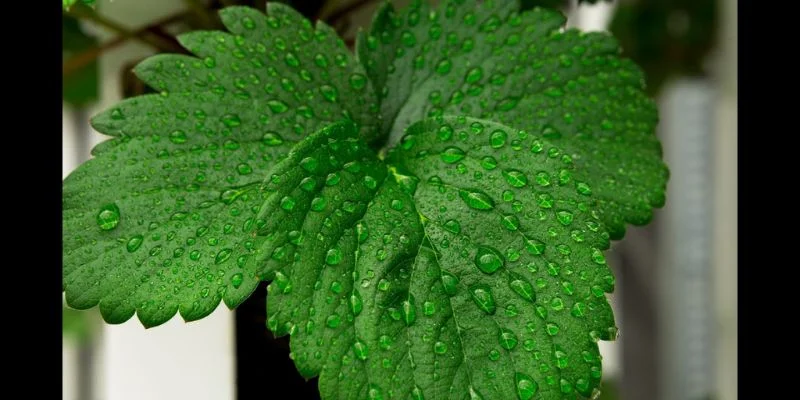
Plants regulate indoor moisture through a natural process called transpiration. During transpiration, plants absorb water through their roots and release it into the air through tiny pores on their leaves.
When indoor humidity levels are high, plants take in excess moisture from the surrounding air. When the air becomes dry, they gradually release moisture back into the environment. This natural cycle helps stabilize indoor humidity without sudden changes.
Homes with multiple Indoor Plants for Humidity Control often experience better air comfort, reduced static electricity, and fewer respiratory problems caused by overly dry air.
Benefits of Using Plants for Humidity Balance
Choosing Indoor Plants for Humidity Control offers more than just moisture regulation:
- Natural humidity balance without electricity
- Improved air quality and reduced airborne toxins
- Healthier skin and easier breathing
- Protection for wooden furniture and flooring
- Enhanced home décor with a calming atmosphere
These benefits make humidity-regulating plants a smart and sustainable choice for any home.
7 Best Indoor Plants for Humidity Control
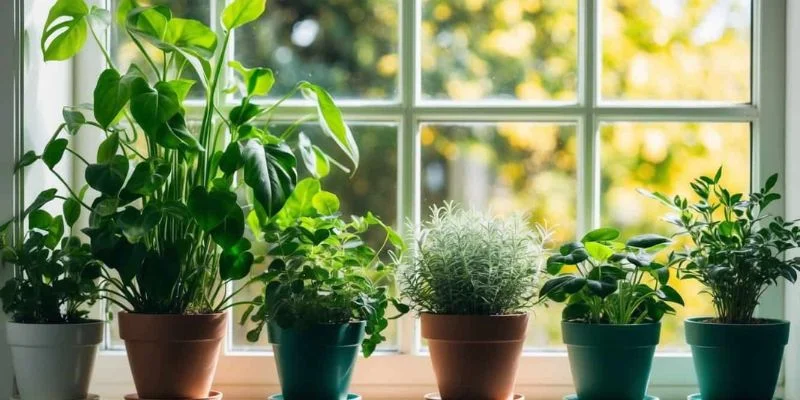
1. Areca Palm
The areca palm is one of the most effective Indoor Plants for Humidity Control, releasing moisture into the air while thriving in bright, indirect light.
2. Peace Lily
Peace lilies absorb excess moisture, making them ideal for bathrooms and kitchens with high humidity.
3. Boston Fern
Boston ferns are excellent for maintaining balanced humidity and improving indoor air quality.
4. Snake Plant
This low-maintenance plant helps stabilize indoor moisture levels and works well in bedrooms.
5. Spider Plant
Spider plants adapt easily to indoor conditions and are perfect for beginners looking for natural humidity control.
6. Rubber Plant
Large, glossy leaves help absorb moisture efficiently while adding a bold design element.
7. English Ivy
English ivy thrives in humid areas and helps reduce moisture buildup and airborne mold.
Best Rooms to Place Indoor Plants for Humidity Control
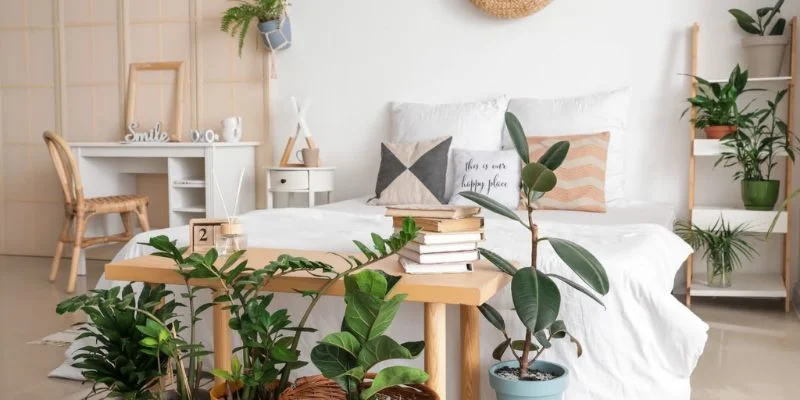
Strategic placement improves the effectiveness of Indoor Plants for Humidity Control:
- Bedrooms: Improve breathing comfort during sleep
- Bathrooms: Reduce excess moisture and mold risk
- Living Rooms: Maintain balanced humidity year-round
- Kitchens: Absorb steam from cooking
Grouping several plants in one space enhances overall humidity regulation.
How Many Plants Do You Need for Balanced Humidity?
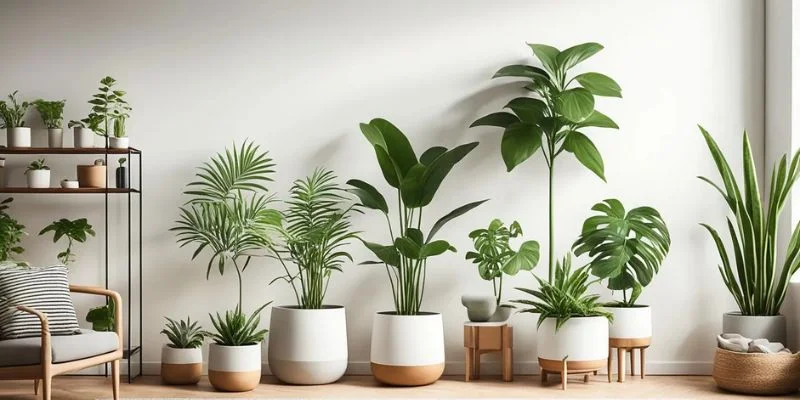
A good general guideline is to place one medium-sized plant per 100 square feet to support healthy indoor moisture levels. This rule works well for most homes and helps plants perform effectively as Indoor Plants for Humidity Control without overcrowding the space.
For larger rooms such as living rooms, open-plan areas, or master bedrooms, 3-5 well-spaced plants are more effective. Distributing plants evenly around the room allows moisture to circulate naturally and improves overall air comfort. Using a mix of foliage sizes also enhances the performance of Indoor Plants for Humidity Control, as larger leaves release and absorb more moisture.
Care Tips for Healthy Humidity-Balancing Plants
- Avoid overwatering
- Clean leaves regularly for better transpiration
- Use breathable pots
- Ensure proper lighting
Healthy plants perform better as Indoor Plants for Humidity Control.
Plants vs Humidifiers
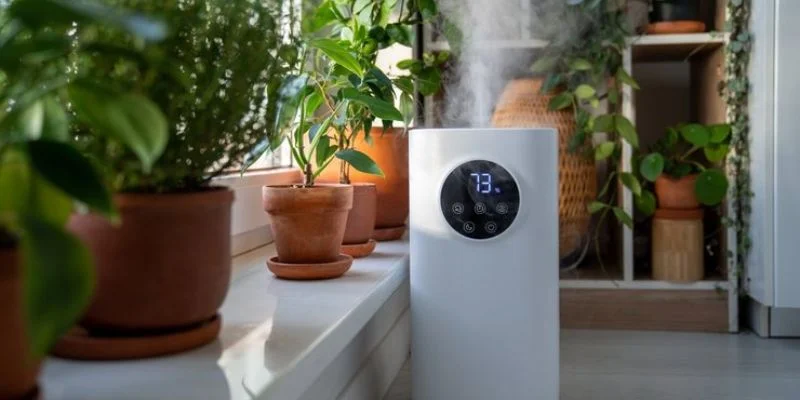
While humidifiers provide quick results, Indoor Plants for Humidity Control offer long-term balance, improved aesthetics, and air purification without increasing electricity bills. Plants work continuously through natural transpiration, helping stabilize moisture levels rather than creating sudden humidity spikes. Unlike machines, they require no filters, no refills, and minimal maintenance once established. Additionally, plants contribute to mental well-being by creating a calm, nature-inspired atmosphere that humidifiers cannot replicate.
Common Mistakes to Avoid
- Placing plants in low-light areas
- Overcrowding plants
- Ignoring airflow
- Choosing plants unsuitable for room conditions
Correct selection ensures your plants regulate humidity effectively.
Conclusion
Creating a comfortable and healthy indoor environment doesn’t always require expensive devices or complex solutions. By choosing the right plants, you can naturally balance moisture levels, improve air quality, and enhance the overall look of your living space. Humidity-regulating plants work quietly in the background, supporting better breathing, healthier skin, and long-term protection for your home’s interiors. With proper placement and simple care, greenery can become a reliable part of your home improvement routine. Incorporating Indoor Plants for Humidity Control is a sustainable, low-maintenance way to maintain balanced indoor moisture while enjoying the beauty and calming benefits of nature indoors.
FAQs – Indoor Plants for Humidity Control
1. Do Indoor Plants for Humidity Control really work?
Yes, they regulate moisture naturally through transpiration.
2. Which plants are best for bedrooms?
Snake plants and areca palms are excellent choices.
3. Can these plants replace humidifiers?
They can support humidity control but may not fully replace humidifiers in very dry climates.
4. How many plants are needed per room?
Two to three medium plants work well for average-sized rooms.
5. Are humidity-regulating plants pet-safe?
Some are pet-friendly, but always check toxicity before placing them.
6. Do these plants help with dry skin?
Yes, balanced indoor humidity reduces skin dryness, and Indoor Plants for Humidity Control help maintain moisture naturally.
7. Are these plants high maintenance?
Most require minimal care, making Indoor Plants for Humidity Control ideal for busy households.
8. Can they reduce mold growth?
Yes, by absorbing excess moisture, Indoor Plants for Humidity Control help lower mold risk indoors.
9. Do they work in winter?
Yes, Indoor Plants for Humidity Control help counter dry air caused by heating systems during winter.
10. Where should they be placed?
Near windows with bright, indirect light for best results.