

Concrete walls are built with high quality and are strong, long-lasting and able to withstand for a long time. However, in fact, they are not immune to cracks. Almost every concrete wall such as your basement wall, exterior boundary wall, garage, or even the foundation can develop cracks mainly due to a variety of reasons such as moisture, temperature changes, settling soil, and structural stress. The positive aspect of this situation is that concrete walls crack repair isn’t something that you have to spend a lot of money on or take to a professional, with the help of appropriate instruments, procedures, and materials you can do this repair job yourself at your home.
This manual teaches you the main causes of the cracks, the process of determining the crack types, and ultimately, permanent concrete wall crack repair procedures with stepwise instructions. The article also delivers some preventative measures so the cracks won’t reappear and that the durability and safety are guaranteed for a long time.
Table of Contents
Understanding Why Concrete Wall Cracks Happen
There are quite a few reasons why concrete wall cracks occur, which are also explained in the article. Knowing these reasons helps you decide on the most efficient repair method.
Natural Shrinkage
Basically shrinkage cracks develop when concrete hardens and goes through a curing process where it loses moisture but the crack is very minor and is mostly a cosmetic issue which can be easily repaired.
Foundation Settlement
The effect of soil shifting or soil compressing is that your foundation will take a slight move, i.e. it will move a bit. This movement is likely to cause the cracks to be vertical or diagonal ones.
Hydrostatic Pressure
A common source of water trapped behind the walls is what leads to a situation when the water presses to the concrete wall from the inside and causes it to push it inward. This is typical for the basement walls.
Structural Stress
Under such circumstances as heavy loads, weather extremes, and temperature changes that occur abruptly, this may cause the windowpane to crack deeper and structurally.
How to Identify Types of Concrete Wall Cracks
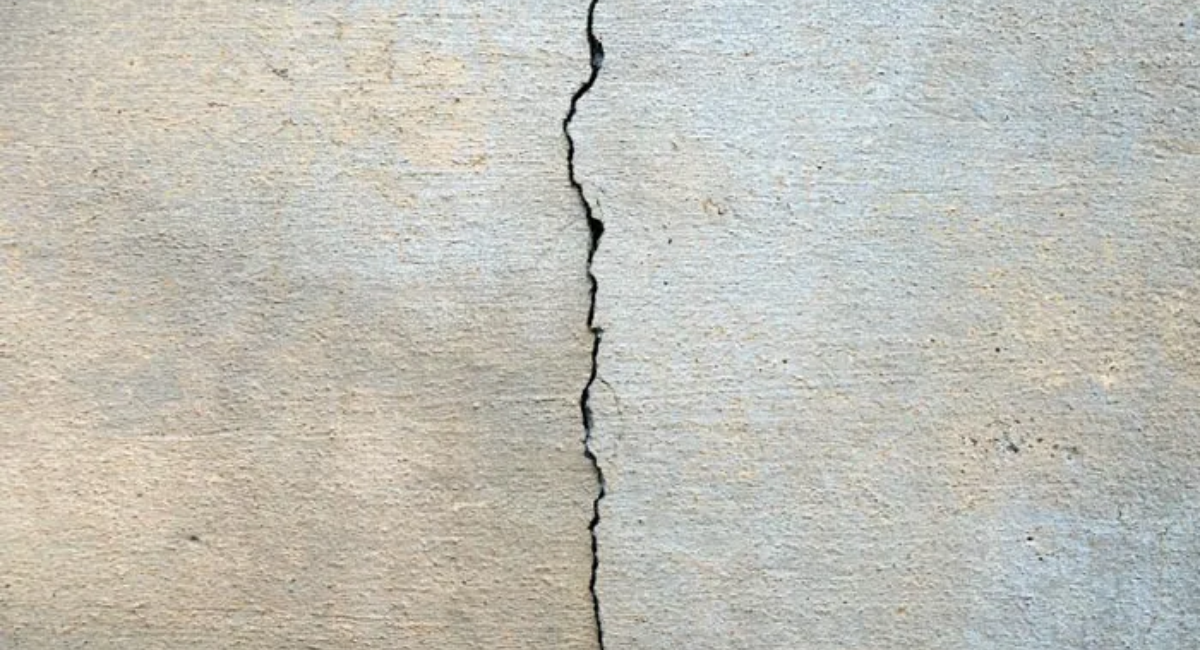
Ways and techniques of repair depend on the type of the cracks, hence, distinguishing them correctly is paramount.
Hairline Cracks
This group of cracks is made up of very narrow and shallow fissures appearing on the surfaces of walls. These cracks result from the drying of the material or its exposure to temperature changes and can be mended simply by a concrete filler or a sealant.
Vertical Cracks
Vertical cracks are those mainly found in foundations and are a result of the latter settling, which is a normal process. In general, they do not pose a threat to the structural integrity of the building, and thus, epoxy or polyurethane injection can restore them.
Horizontal Cracks
Horizontal cracks usually are a bit scary.They show the side pressure of the earth, dampness, or even structural problems. Such a situation calls for a professional assessment and possibly a repair system with reinforcements.
Diagonal Cracks
Such cracks come at an angle of 30–45° and typically signify that the foundation has settled unevenly. If these are minor, you can fix them at home, but if there are deep fissures, you should call a professional.
Tools and Materials Needed
The first thing to do before the repair process is to gather the essentials such as:
- Wire brush
- Chisel and hammer
- Concrete bonding agent
- Epoxy injection kit
- Polyurethane foam sealant
- Premixed concrete patch
- Trowel
- Caulking gun
- Safety gloves and goggles
- Waterproofing paint (optional)
With the correct tools, a repair on a cracked concrete wall will be durable.
Step-by-Step Guide to Concrete Wall Crack Repair
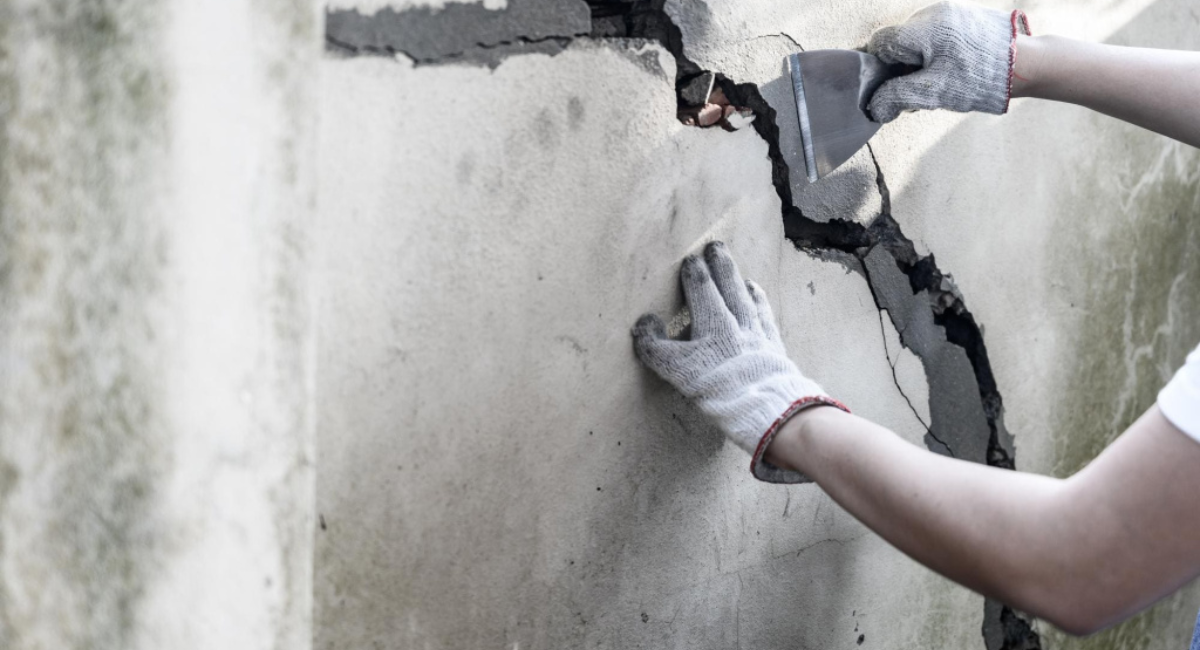
Step 1: Clean the Crack Thoroughly
Dirt, pieces of loose concrete, and debris should be removed by the use of a wire brush. If the crack is too deep, slightly widen it with a chisel so that the repair material can bond firmly.
Step 2: Apply a Bonding Agent
Concrete bonding agent is like a glue between the old and the new material, which makes the whole thing very durable.
Step 3: Choose Your Repair Method
This is the part where the determining factors for the method would be the nature and the depth of the crack.
Method 1: Epoxy Injection for Structural Cracks
Epoxy works best with deep, vertical, or structural cracks as it bonds the concrete back together like glue.
Steps to Apply Epoxy
- Put the injection ports in the crack.
- Close the surface with the epoxy paste.
- With a caulking gun press the epoxy through the ports into the crack.
- Wait for 24 hours for the glue to dry.
- Remove ports and sand a little.
Epoxy produces a permanent repair that can withstand great forces.
Method 2: Polyurethane Foam for Leaking Cracks
When the crack drips during a shower or it is a moisture seepage, the use of a polyurethane foam will be a better choice than an epoxy.
How It Works
The foam is polyurethane which when it is injected it expands thus it can fill the gaps and thus water is blocked. Also, it is not a big issue if the area moves as the foam is flexible.
Method 3: Concrete Patch for Surface Cracks
For small or tiny cracks, just a concrete patch will do.
Steps
- Prepare the concrete patch by mixing it in accordance with the given instructions.
- With a trowel put the mix on the crack.
- Level the surface.
- Let it dry for 24 hours.
This is a simple solution for cosmetic repairs.
Method 4: Mortar Mix for Wide Cracks
As a rule of thumb, if the crack width is over ¼ inch you should turn to the mortar mix.
Steps
- Make a groove in the shape of the letter V along the crack.
- Moisten the area slightly.
- Fill the crack with mortar mix.
- Smooth with a trowel.
Besides, mortar is a quite firm one and hence it is not going to be easy for the crack to widen again.
How to Stop Concrete Walls from Cracking in the Future
Make sure your fixing remains effective by using these prevention methods:
Control Moisture
- Put in efficient drainage facilities around your house.
- Ensure gutters and downspouts are free of debris.
- Use a waterproofing paint to seal the walls of the basement.
Manage Soil Pressure
- Do not plant trees with deep roots close to walls.
- Take care that the soil is sloped away from the foundation of your house.
Inspect Regularly
You should be visually checking your walls every couple of months so that problems can be solved at the early stage.
Conclusion
Repairing cracks in concrete walls is not a nightmare. Simply by determining the nature of the crack, choosing the right fixing way, and obeying the step-by-step instructions, it is possible to not only repair but also reinforce the wall and stop additional cracking. The main thing is to be prompt and fix the cracks before they can become larger whether it is epoxy injection for deep cracks, polyurethane foam for dripping walls, or a concrete patch for scuffs on the surface.
Inspection on a regular basis, adequate moisture management, and easy upkeep routine will bring safety to your home. If done properly, concrete walls will be stable, durable, and without any cracks for a long time to come.
FAQs
1. What product is most effective in concrete wall crack repair?
The best method for structural cracks is epoxy injection, while water-leaking cracks should be treated with polyurethane foam.
2. Are concrete wall cracks hazardous?
Small hairline and vertical cracks are generally not dangerous; however, horizontal cracks might signal structural problems and thus require a professional’s advice.
3. Is It Possible To Do Foundation Wall Crack Repair On My Own?
In the case of minor cracks, you can do the repair by yourself at home; however, for deep or worsening cracks, it is necessary to have an expert take a look.
4. What is the Duration of a Concrete Crack Repair?
The life-span of repairs done with epoxy is in decades; surface patches may require changing every few years.
5. Does Waterproofing Work As A Means To Prevent Cracks?
Waterproofing is a solution to moisture-related crack problems only. It cannot prevent structural cracks resulting from soil movement or pressure.