12 Best Trailing Plants for Kitchen Cabinets and Racks to Revitalize Your Home
Published: 15 Mar 2026
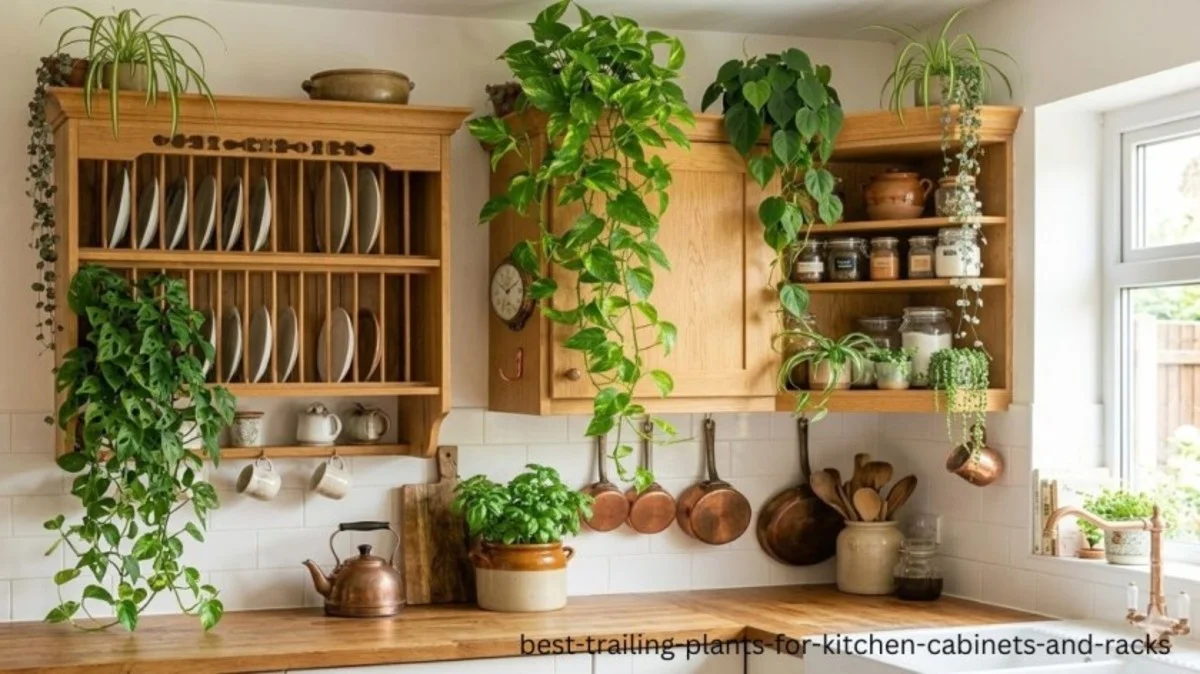
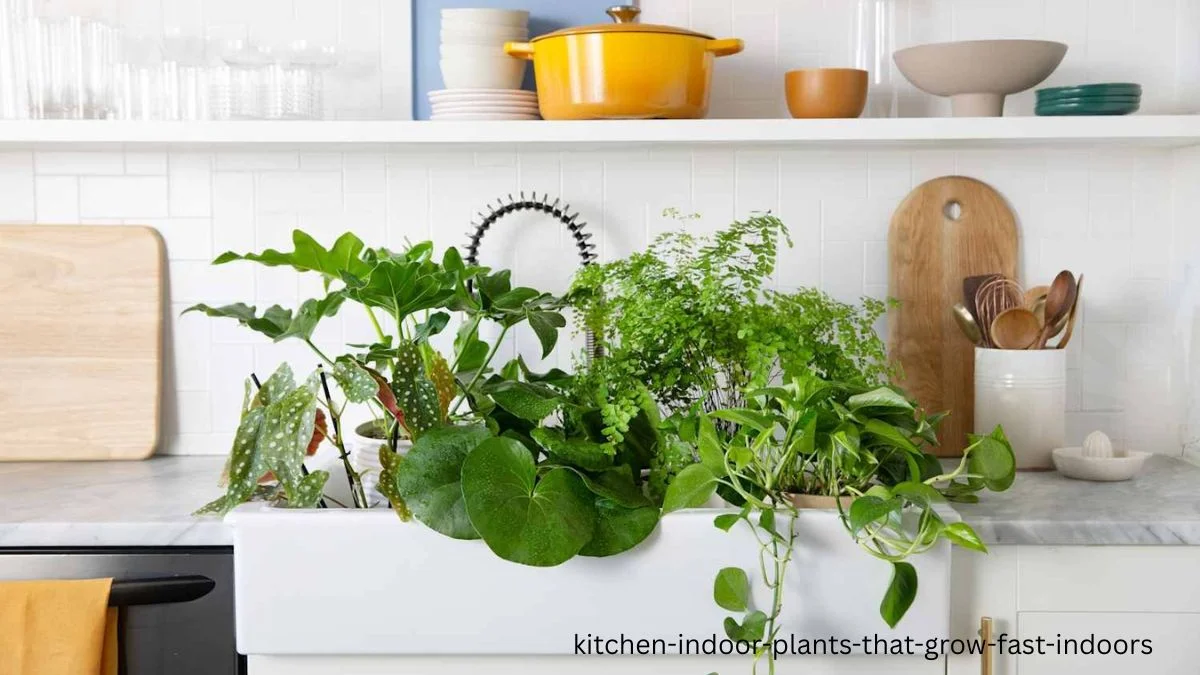
The kitchen is often called the heart of the home, but let’s be honest it can also feel like a sea of hard edges, cold stone, and stainless steel. If your culinary space feels a bit too “utilitarian,” there is no easier way to soften the aesthetic than by introducing greenery. Specifically, finding the best trailing plants for kitchen cabinets and racks can turn a high-up, dusty “dead zone” into a lush, cascading canopy of life. Whether you have open shelving that needs a pop of texture or top-of-cabinet space that is begging for some personality, vining plants are the ultimate interior design hack.
Beyond just looking like a Pinterest-worthy dream, these plants serve a functional purpose in a kitchen environment. Cooking creates heat, grease, and various airborne particles; many trailing varieties are natural air purifiers that thrive in the higher humidity levels found near a steaming stove or a busy sink. In this guide, we will explore the absolute best trailing plants for kitchen cabinets and racks, ensuring you choose species that won’t just survive the kitchen life, but actually thrive in it.
Table of Contents
Why Trailing Plants are the Secret to a Designer Kitchen
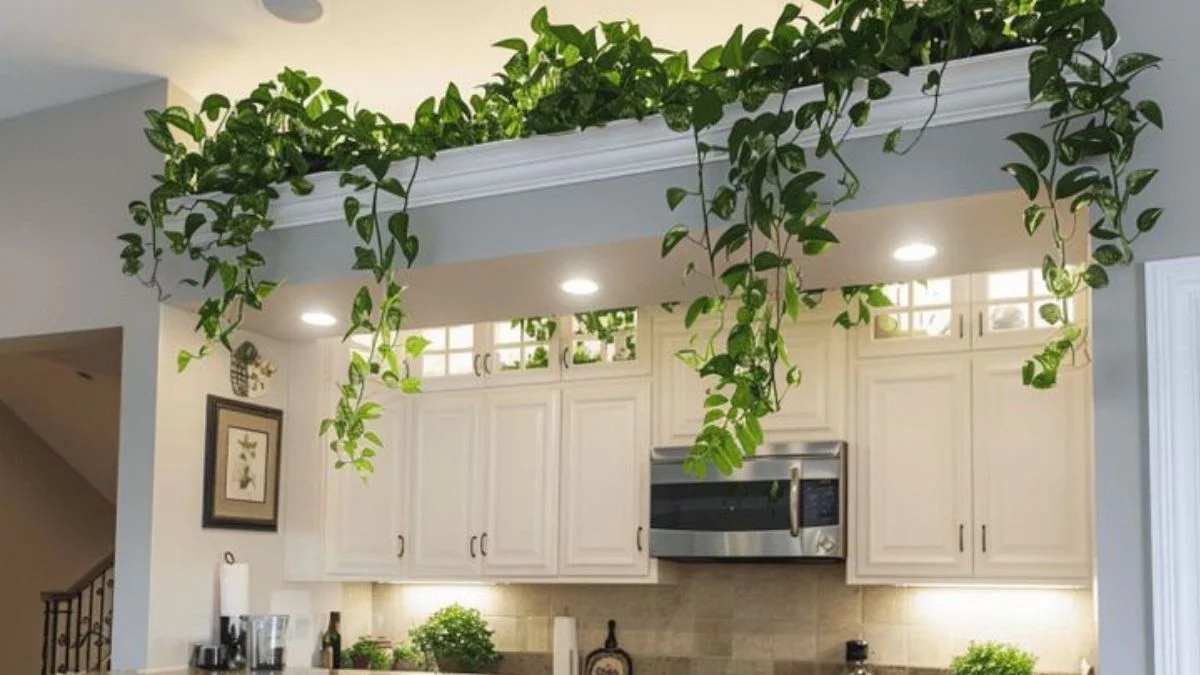
Before we get into the specific plants, let’s talk about why trailing or vining varieties are such a game-changer for your kitchen. Let’s face it: most kitchens are crowded. Between the air fryer, the cutting board, and your coffee machine, there’s barely enough room to prep a sandwich, let alone find space for a bulky plant pot. By choosing the best trailing plants for kitchen cabinets and racks, you’re taking advantage of that “dead space” high up, keeping your counters totally clear.
Here is why they are the perfect fit:
- Softens Sharp Edges: Kitchens are full of hard, boxy shapes like appliances and cabinets. Long, flowing vines help break up those harsh lines, making the room feel cozy rather than clinical.
- Perfect for Dark Corners: Many kitchen racks are tucked away in corners where light is a bit limited. We’ve picked plants that actually enjoy that soft, indirect light.
- They Love the Steam: All that steam from your pasta water or the dishwasher? It’s basically a spa day for these tropical trailers! They thrive in the extra humidity.
1. Golden Pothos (Epipremnum aureum)
Often called “Devil’s Ivy,” the Pothos is arguably the ultimate champion of the best trailing plants for kitchen cabinets and racks. It is nearly indestructible, which is a total lifesaver if you occasionally forget to water your greenery while focusing on a new recipe.
- Why it works: It tolerates the low light often found on top of cabinets.
- Growth habit: Fast-growing vines that can reach lengths of over 10 feet.
- Pro tip: Don’t worry about a strict schedule; just poke your finger into the soil. If the top two inches feel dry and dusty, your plant is ready for a drink!. It will “wilt” slightly to tell you it’s thirsty.
2. Heartleaf Philodendron (Philodendron hederaceum)
While it is often confused with the Pothos, the Philodendron features thinner, perfectly heart-shaped leaves and a more delicate trailing habit. It remains a classic choice among the best trailing plants for kitchen cabinets and racks, especially if you are aiming for that lush, indoor “jungle” vibe without cluttering your workspace.
- Aesthetic: Deep, glossy green leaves that look stunning against white or oak cabinetry.
- Light: Prefers medium indirect light but is very forgiving.
3. String of Pearls (Senecio rowleyanus)
If your kitchen has a sunny window near a baker’s rack, the String of Pearls is a showstopper. This succulent looks like a spill of green marbles and adds a unique architectural element to your decor.
- Best Placement: A high rack that receives at least 4-6 hours of bright light.
- Note: It is sensitive to overwatering; use a well-draining succulent mix.
4. Marble Queen Pothos
If you want something more decorative than plain green, the Marble Queen offers stunning white and cream variegation. It is one of the best trailing plants for kitchen cabinets and racks because it adds a sense of brightness to darker corners.
- Design Tip: Contrast the variegated leaves against dark-colored cabinets (like navy or forest green) for a high-end look.
5. Satin Pothos (Scindapsus pictus)
Not actually a Pothos, but just as easy to care for! Its matte green leaves are speckled with silvery, iridescent spots. It feels incredibly premium and looks beautiful draped over a modern metal spice rack.
- Humidity: It loves the moisture of a kitchen.
- Care: Avoid direct hot sun, which can scorch the delicate silver markings.
6. Spider Plant (Chlorophytum comosum)
While we usually think of these in hanging baskets, they are incredible on top of cabinets. As they grow, they produce “babies” that dangle down like natural ornaments.
- Benefit: Known by NASA as one of the best air-purifying plants for removing formaldehyde and carbon monoxide.
- Pet Safety: Non-toxic to cats and dogs!
7. Hoya Carnosa (Wax Plant)
The Hoya is a collector’s favorite. Its leaves are thick and waxy, and if it’s happy, it will produce clusters of porcelain-like, fragrant flowers.
- Kitchen Perk: They are incredibly drought-tolerant. If your cabinets are so high you need a ladder to water them, the Hoya’s ability to go weeks without a drink is a lifesaver.
8. English Ivy (Hedera helix)
For a timeless, “cottagecore” kitchen look, English Ivy is the go-to. It creates a dense curtain of green that can eventually frame your window or cabinet doors.
- Cooler Temps: Ivy prefers the cooler zones of a kitchen, so keep it away from the direct heat of the oven.
9. String of Hearts (Ceropegia woodii)
This is a delicate, whimsical trailer with purple-backed, heart-shaped leaves. It is a “sophisticated” choice for a minimalist kitchen rack.
- Growth: The vines are very thin (like wire), so they don’t look bulky or cluttered in small spaces.
10. Tradescantia Zebrina (Inch Plant)
Need color? The Zebrina offers deep purple and silver stripes. It’s a fast grower that adds an instant “pop” to a neutral-toned kitchen.
- Pruning: It can get leggy, so don’t be afraid to snip the ends to keep it bushy on top of your cabinets.
11. Burro’s Tail (Sedum morganianum)
This succulent features thick, braided-looking tails. Since this plant is a bit on the heavy side, just make sure your kitchen rack is strong enough to hold its weight!
- Light: Needs plenty of light to maintain its blue-green hue.
- Fragile: The “leaves” fall off easily if bumped, so place it in a low-traffic corner.
12. Creeping Fig (Ficus pumila)
The Creeping Fig has tiny, crinkled leaves that create a lush, carpet-like effect. It is perfect for wrapping around a rustic wooden rack or shelving unit.
- Watering: Unlike the succulents on this list, the Creeping Fig likes to stay consistently moist.
Styling Tips: How to Decorate Kitchen Cabinets with Plants
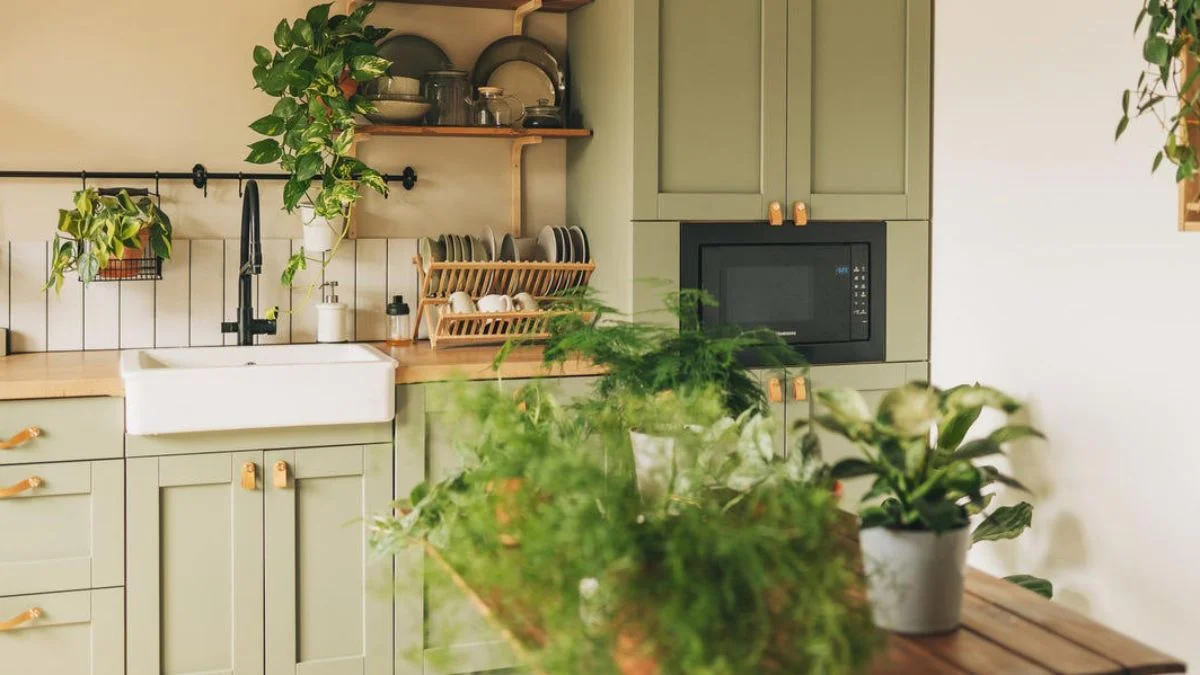
Picking the best trailing plants for kitchen cabinets and racks is really only half the battle. Once you’ve brought them home, you also have to style them correctly so they look like a deliberate design choice rather than just an accidental mess of vines.
- Use Decorative Cachepots: Place the nursery pot inside a decorative ceramic or terracotta pot. This makes watering easier (just take the inner pot to the sink) and prevents water damage to your wood cabinets.
- Vary the Lengths: Group a long-trailing Pothos with a shorter, bushier Spider Plant to create depth and “levels.”
- Command Hooks are Your Friend: If your vines are getting too long and hitting the counter, use clear Command hooks to “train” the vines to grow horizontally along the top of the cabinets.
- Rotation is Key: Plants naturally grow toward the light. Rotate your pots 90 degrees every month so they don’t become “bald” on the side facing the wall.
Maintenance and Care in a Kitchen Environment
The kitchen presents unique challenges, mainly grease buildup. Over time, cooking oils can atomize and coat your plant’s leaves, clogging their “pores” (stomata). Even the best trailing plants for kitchen cabinets and racks will struggle to breathe if their leaves are covered in a sticky film. To keep your vines healthy, simply wipe the leaves with a damp cloth every few weeks to remove any residue.
- Leaf Cleaning: Once a month, wipe the leaves of your kitchen plants with a damp cloth or give them a gentle “shower” in the sink to remove dust and grease.
- Check the Temperature: Do not place plants directly above a stove or toaster. The dry, rising heat can dehydrate even the hardiest Philodendron.
- Drainage: Always ensure your pots have drainage holes. Kitchen plants often suffer from root rot because people overwater them in an attempt to combat the heat of the room.
FAQs
1.which trailing plants can tolerate low light and are perfect for kitchen cabinets and racks?
Pothos and Heartleaf Philodendrons are the absolute champions of low light. They can easily survive in those tricky corners that receive only artificial light or very dim natural light, making them some of the best trailing plants for kitchen cabinets and racks where windows might be far away.
2. Are these plants safe for pets?
Not all of them. Pothos and Philodendrons are toxic if ingested. If you have a cat that loves to jump on counters, stick to the Spider Plant or Hoya, which are non-toxic.
3. How often should I water plants kept high up on cabinets?
Because heat rises, soil on top of cabinets may dry out faster than plants on the floor. Check them weekly, but only water when the soil feels dry to the touch.
4. Can I use artificial trailing plants instead?
Absolutely! If your kitchen has zero windows, high-quality silk or “real-touch” plastic trailing plants can give you the look without the maintenance.
5. How do I prevent water from damaging my kitchen cabinets?
Always use a saucer or a waterproof decorative pot (without a hole in the bottom) to hold the draining nursery pot. Never water the plant directly while it is sitting on the wood.
Conclusion
Transforming your cooking space doesn’t require a full renovation. By selecting the best trailing plants for kitchen cabinets and racks, you can introduce texture, color, and a breath of fresh air into your home. From the resilient Golden Pothos to the elegant String of Hearts, there is a vining plant suited for every light level and decor style. Remember to prioritize plants that can handle the specific humidity and temperature of your kitchen, and don’t forget to give those leaves a wipe-down occasionally to keep them shining. With a little bit of green, your kitchen will feel less like a chore-room and more like a sanctuary.
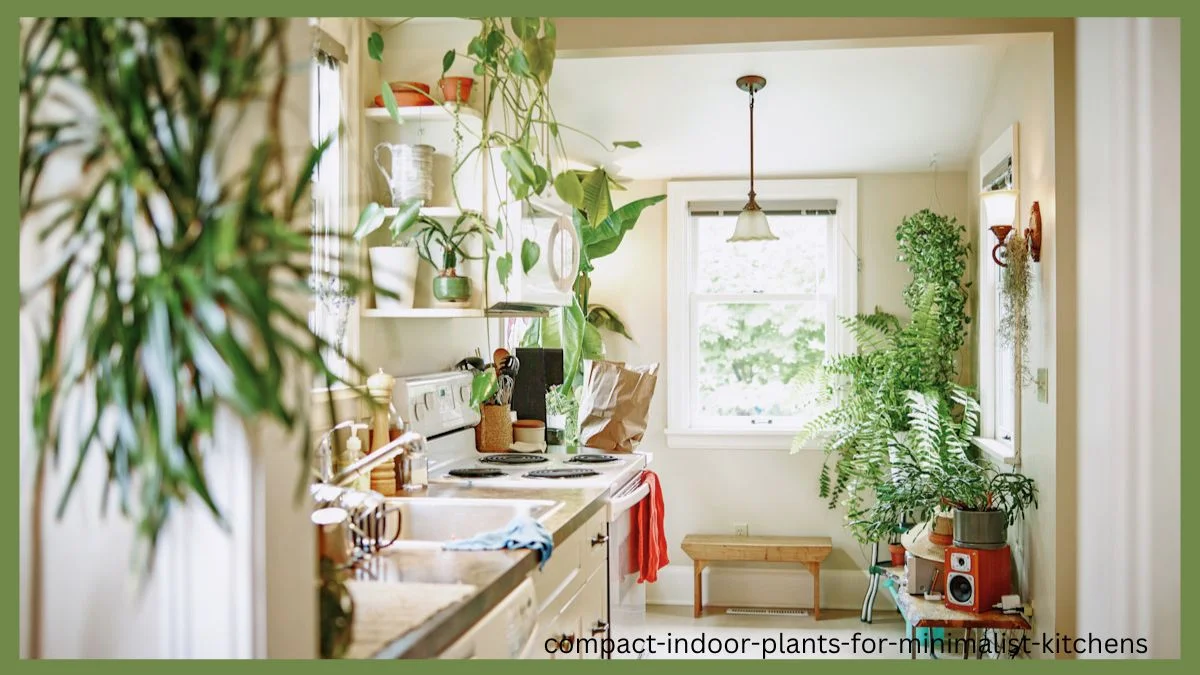
15 Smart & Stylish Compact Indoor Plants for Minimalist Kitchens That Save Space and Add Life

- Be Respectful
- Stay Relevant
- Stay Positive
- True Feedback
- Encourage Discussion
- Avoid Spamming
- No Fake News
- Don't Copy-Paste
- No Personal Attacks
- Be Respectful
- Stay Relevant
- Stay Positive
- True Feedback
- Encourage Discussion
- Avoid Spamming
- No Fake News
- Don't Copy-Paste
- No Personal Attacks
