
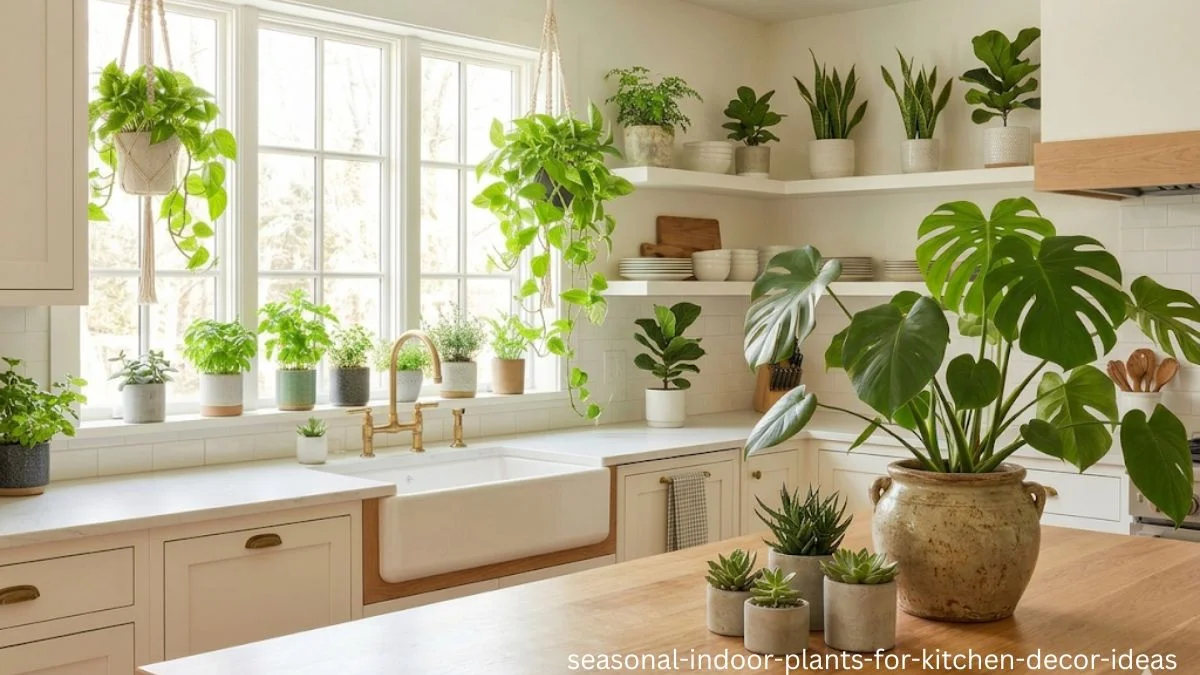
The kitchen is often called the heart of the home, but it can quickly feel sterile with its hard surfaces of granite, stainless steel, and tile. If you are looking to breathe life into your culinary sanctuary, incorporating seasonal indoor plants for kitchen decor ideas is the most effective and affordable way to soften the edges and add a pop of organic color. Plants do more than just sit on a windowsill; they purify the air, boost your mood while meal prepping, and provide a rotating gallery of natural art that changes with the calendar.
Whether you have a sun-drenched breakfast nook or a cozy, low-light galley kitchen, choosing the right flora for the specific time of year ensures your decor stays vibrant and healthy. In this comprehensive guide, we will explore how to transition your greenery through the seasons, ensuring your kitchen remains a lush, inviting space from the first bloom of spring to the final frost of winter.
Why Seasonality Matters in Kitchen Greenery
Before we dive into specific plants, it is important to understand that your kitchen environment changes with the weather. In the summer, your windowsills might become scorching hotspots; in the winter, they turn into chilly drafts. By focusing on seasonal indoor plants for kitchen decor ideas, you are working with nature rather than against it.
Benefits of Seasonal Rotation:
- Pest Management: Certain plants are more prone to pests in specific seasons. Rotating them keeps your collection hardy.
- Light Optimization: Seasonal plants are often naturally adapted to the light levels available during their peak growth periods.
- Visual Freshness: Swapping a bright hibiscus in July for a moody Poinsettia in December keeps your home improvement aesthetic from feeling stagnant.
Spring: A Season of Growth and Herbs
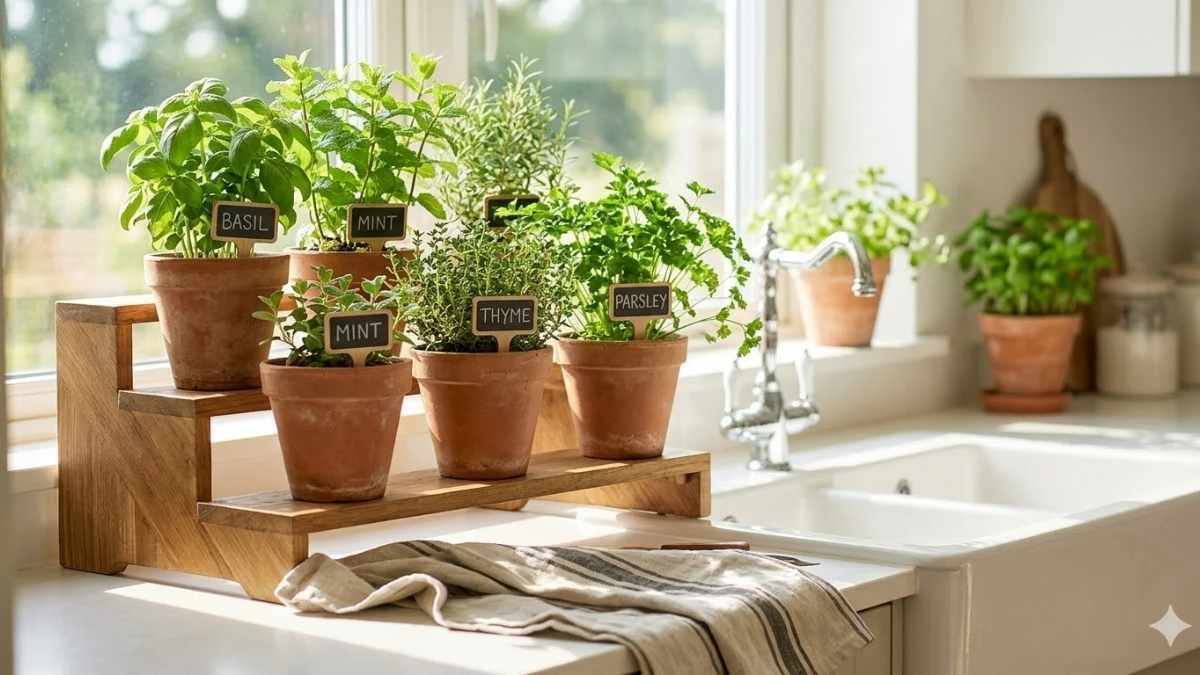
Spring is the time for renewal, making it the perfect season to focus on edible greenery and soft, fragrant blooms when selecting your seasonal indoor plants for kitchen decor ideas.
1. The Culinary Herb Garden
Nothing says “kitchen” like fresh herbs. Spring is the prime time to start an indoor herb garden.
- Plants to use: Basil, Mint, Parsley, and Chives.
- Decor Tip: Use matching terracotta pots on a tiered stand to save counter space.
- Care: Ensure they get at least 6 hours of sunlight near a south-facing window.
2. Spring Bulbs (Forced)
Bring the outdoors in with forced bulbs that offer height and fragrance.
- Plants to use: Hyacinths, Daffodils, and Paperwhites.
- Decor Tip: Place these in glass jars with pebbles and water for a “hydroponic” look that feels clean and modern.
Summer: Sun-Loving Tropical and Bold Colors
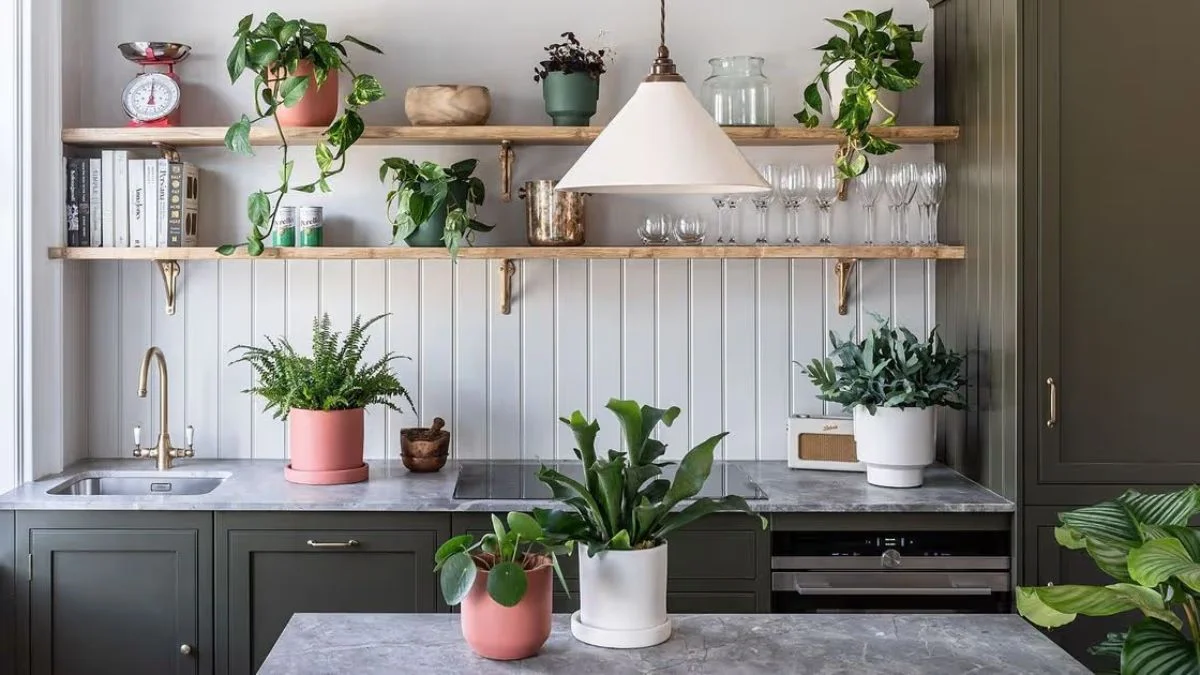
When the sun is at its peak, your kitchen can handle plants that crave heat and high-intensity light. This is the time to go big and vibrant with your seasonal indoor plants for kitchen decor ideas.
1. Aloe Vera
The ultimate kitchen companion. Not only does it love the summer sun, but it’s also a functional first-aid kit for minor kitchen burns.
- Decor Tip: Place a large Aloe in a ceramic pot on the corner of an island.
- Benefit: Extremely drought-tolerant, making it perfect for busy summer months.
2. Ornamental Peppers
For a splash of vibrant color, ornamental peppers offer shades of red, purple, and orange.
- Decor Tip: Use these as a centerpiece for your kitchen table or breakfast bar.
- Note: While beautiful, most ornamental varieties are very spicy and keep them out of reach of pets and toddlers!
3. Air Plants (Tillandsia)
If your kitchen gets humid from boiling water and steam, air plants will thrive.
- Decor Tip: Hang them in glass orbs from the ceiling or mount them on driftwood for a coastal summer vibe.
Autumn: Warm Tones and Hardier Textures
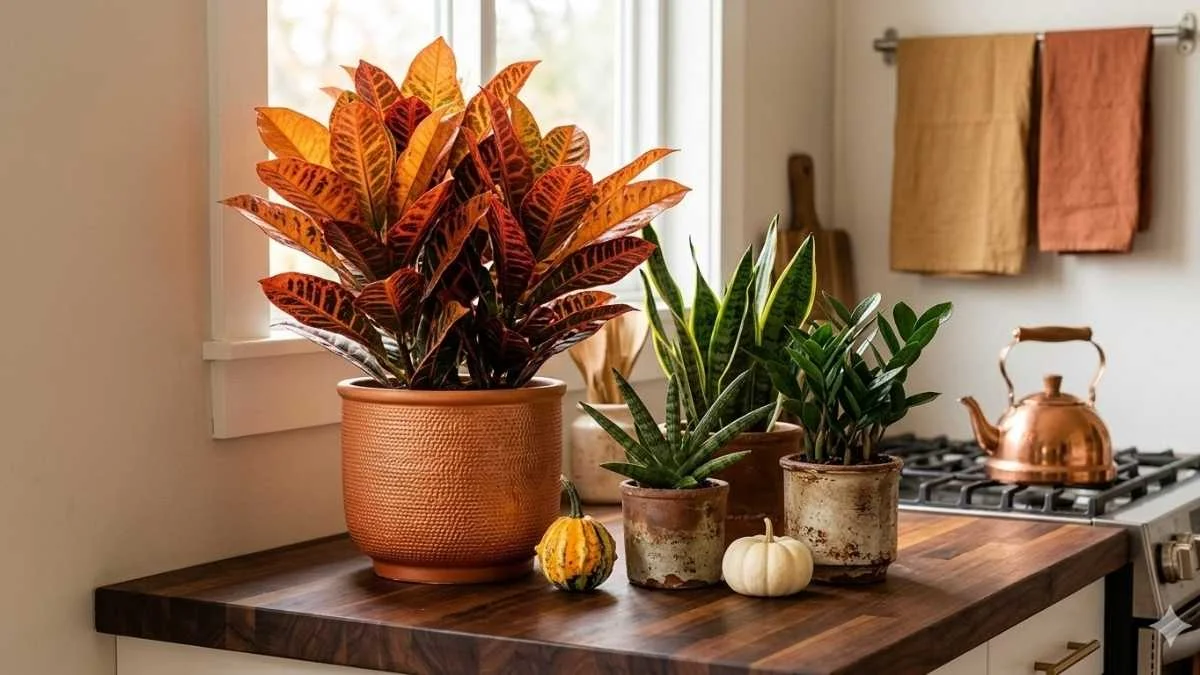
As the light begins to fade and the air turns crisp, transition your kitchen to plants that reflect the golden hues of fall.
1. Crotons
With leaves featuring fire-like splashes of yellow, orange, and deep red, Crotons are the quintessential autumn plant.
- Decor Tip: Pair a Croton with a copper or brass planter to lean into the warm metallic trends of fall home improvement.
2. Snake Plants (Sansevieria)
As we close windows and spend more time indoors, air purification becomes key.
- Decor Tip: Use a tall Snake Plant to fill an empty floor corner next to the pantry.
- Benefit: They are nearly indestructible and tolerate the lower light levels of autumn.
Winter: Evergreens and Festive Blooms
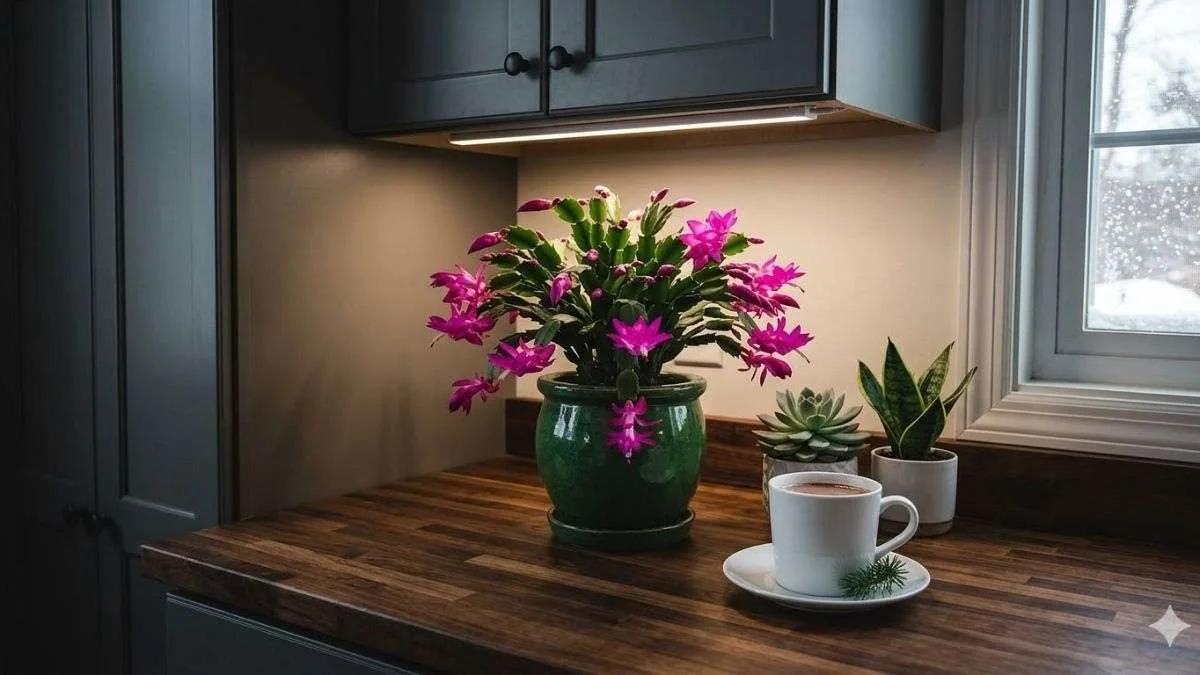
Winter kitchen decor should focus on coziness and surviving the dry indoor heat caused by radiators.
1. Christmas Cactus (Schlumbergera)
Unlike your typical desert cactus, this plant loves the humidity of a kitchen and produces stunning blooms in the dead of winter.
- Decor Tip: Place it on top of the refrigerator (if there’s a light source nearby) where it can drape down beautifully.
2. Poinsettias
A classic for a reason. Modern varieties come in “Glitter” (speckled) or “Rose” shapes.
- Decor Tip: Cluster three small Poinsettias in a woven basket for a rustic, farmhouse kitchen look.
3. Peace Lilies
The white blooms of a Peace Lily look like fallen snow against dark green leaves, making them perfect for winter.
- Decor Tip: These are great for “dead zones” in the kitchen, like the area under a cabinet where light is filtered.
Styling Tips for Kitchen Plants
Integrating seasonal indoor plants for kitchen decor ideas isn’t just about the plant; it’s about the presentation.
- Utilize Vertical Space: Use hanging planters for trailing vines like Pothos to keep counters clear for food prep.
- Symmetry on the Windowsill: Line up three identical plants for a clean, minimalist look.
- Repurpose Kitchenware: Use old teapots, colanders, or vintage tins as unique planters (just ensure you add a layer of gravel for drainage!).
- Group by Water Needs: Place your high-maintenance plants near the sink so you never forget to water them.
Care and Maintenance in the Kitchen Environment
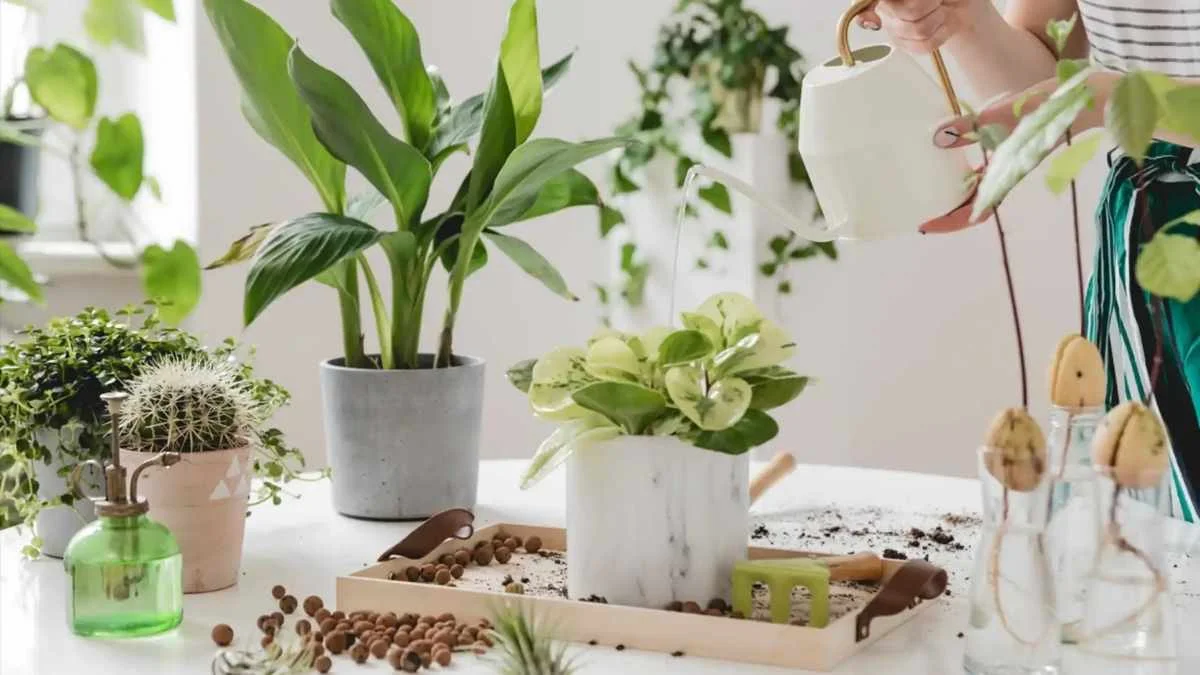
While the kitchen is a great place for greenery, it presents unique challenges like grease buildup and temperature fluctuations that you must consider when selecting your seasonal indoor plants for kitchen decor ideas.
- Clean the Leaves: kitchen plants can get a “filmy” coating from cooking oils. Wipe leaves with a damp cloth every two weeks so they can breathe.
- Watch the Heat: Never place a plant directly next to a stove or oven vent. The dry, localized heat will scorch the foliage.
- Drainage is Key: Many kitchen “pots” are decorative but lack holes. Always keep your plant in a plastic nursery liner inside the decorative pot.
FAQs
Q:1 What is the best plant for a windowless kitchen?
If you have no natural light, opt for a “Zizi” plant (Zamioculcas zamiifolia) or a Snake Plant. You can also use LED grow lights hidden under your upper cabinets.
Q:2 Can I grow vegetables in my kitchen year-round?
Microgreens and certain herbs thrive year-round if you provide supplemental lighting. However, larger vegetables usually require more space and light than a standard kitchen offers.
Q:3 How often should I rotate my seasonal plants?
A good rule of thumb is to change your focal plants every three months (Equinoxes and Solstices). This aligns with the natural light changes in your home.
Q:4 Are kitchen plants safe for cats and dogs?
Not all of them. For example, Lilies and Poinsettias are toxic. Always check the ASPCA list before bringing a new plant into a home with pets.
Q:5 How do I prevent my kitchen plants from getting moldy in a humid cooking environment?
To keep your seasonal indoor plants for kitchen decor ideas healthy, ensure your kitchen has good ventilation by using an exhaust fan while cooking. You should also avoid overwatering, as the natural steam from boiling water already provides extra moisture that stays in the soil longer.
Conclusion
Incorporating seasonal indoor plants for kitchen decor ideas is an evolving journey that connects your home to the rhythm of the outside world. By selecting plants that thrive in specific seasons from the aromatic herbs of spring to the hardy evergreens of winter you ensure a vibrant, healthy environment that enhances your home improvement efforts.
Not only do these plants add aesthetic value, but they also transform your kitchen into a functional, breathing space that promotes wellness and creativity. Start small with a single windowsill succulent, and soon you’ll find yourself curated a lush, seasonal jungle that makes every meal feel like a special occasion.